Hair shaft fracture, also known as trichorrhexis nodosa, is a condition characterized by weak points or breaks in the hair shaft. It can result in hair breakage, thinning, and a compromised appearanc
Hair transplant procedures have evolved significantly over the years, and advancements in technology and surgical techniques have led to improved outcomes and natural-looking results. The success of a hair transplant procedure depends on various factors, including the surgeon’s expertise, patient suitability, the quality and quantity of available donor hair, and realistic expectations.
Both FUT and FUE procedures require skilled surgeons and a team of trained technicians to ensure precise and successful transplantation. The surgical process is typically performed under local anesthesia, ensuring minimal discomfort for the patient.
Following the hair transplant procedure, the transplanted hair follicles undergo a healing process. Initially, the transplanted hair sheds within a few weeks, which is a normal part of the hair growth cycle. However, new hair begins to grow from the transplanted follicles in a few months. The final results are usually visible after several months, with continued hair growth and improvement in density over time
It is essential for individuals considering a hair transplant to consult with a qualified and experienced hair restoration surgeon. During the consultation, the surgeon will evaluate the patient’s hair loss pattern, donor hair availability, and discuss expectations and potential risks. They will develop a customized treatment plan tailored to the individual’s needs.
In conclusion, hair transplant is a surgical procedure that can effectively address hair loss or thinning by transplanting healthy hair follicles to the recipient site. With advancements in techniques, hair transplant procedures can provide natural-looking results and significant improvements in hair density. However, it is crucial to consult with a qualified professional to determine the most suitable approach and ensure realistic expectations are set.
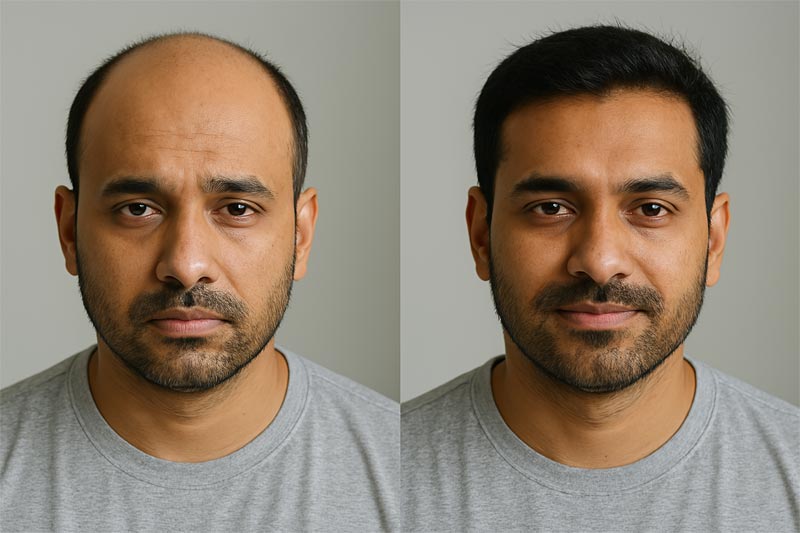

FUE is a minimally invasive technique that involves the extraction of individual hair follicles directly from the donor site. Instead of removing a strip of scalp, each follicular unit is individually harvested using a small circular punch instrument. The extracted grafts are then transplanted into the recipient site. FUE leaves tiny, dot-like scars at the donor site, which are less noticeable than the linear scar associated with FUT. FUE can be performed manually or with the assistance of automated devices.
FUE is a minimally invasive technique that involves the extraction of individual hair follicles directly from the donor site. Instead of removing a strip of scalp, each follicular unit is individually harvested using a small circular punch instrument. The extracted grafts are then transplanted into the recipient site. FUE leaves tiny, dot-like scars at the donor site, which are less noticeable than the linear scar associated with FUT. FUE can be performed manually or with the assistance of automated devices.
Get a Free Quote
Get a Free Quote

Copyright 2025 regainhairandskin.in, design & developed by