
G11074 – BHMS, DCA(diploma in clinical aesthetics)
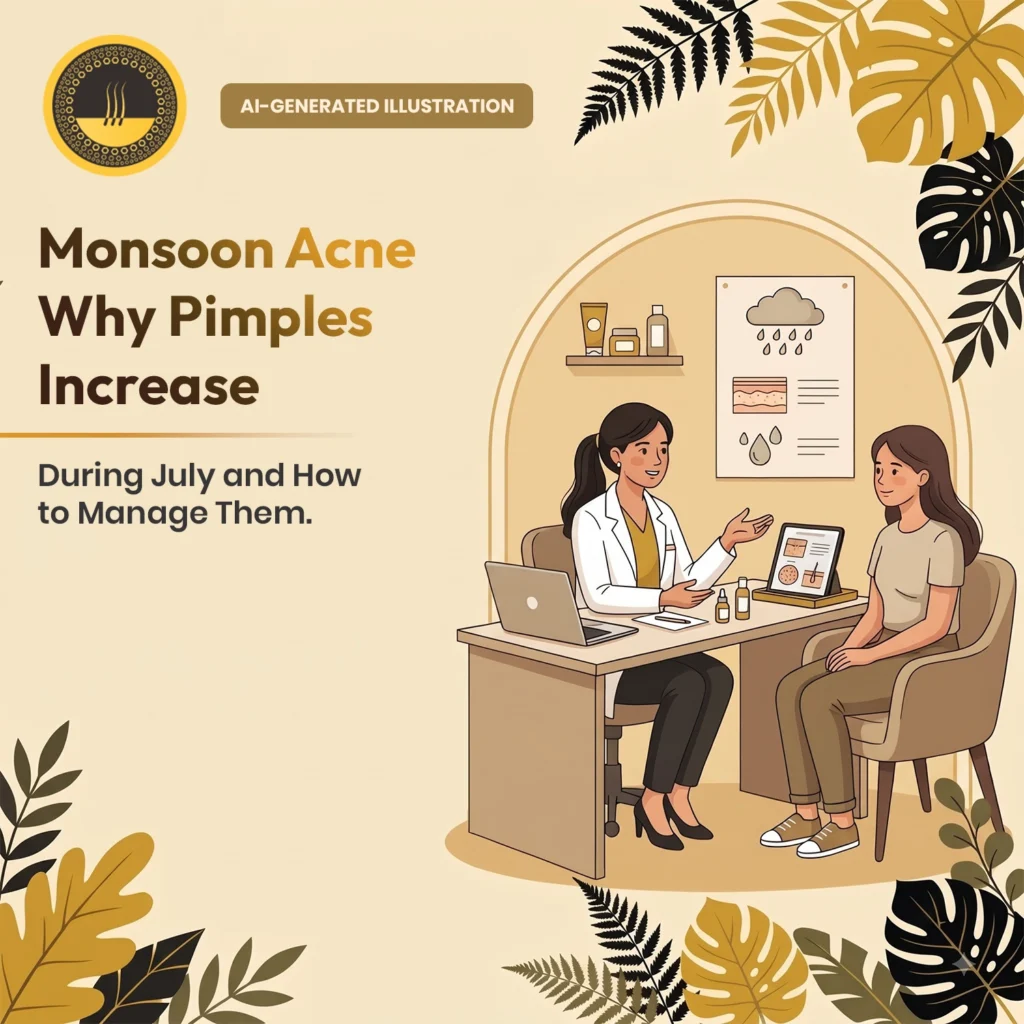
Have you noticed an increase in pimples, oily skin or clogged pores during the monsoon season? Changes in humidity, sweating and skincare habits can aggravate acne, particularly in people who already have acne-prone skin.
July often brings warm and humid weather in many parts of India, which can make the skin feel oilier and increase discomfort. Sweat, friction and unsuitable skincare products may also contribute to breakouts.
Understanding the causes of monsoon acne and following an appropriate skincare routine can help manage these concerns. People experiencing persistent breakouts can consider consulting a dermatologist for an evaluation and information about suitable acne treatment in Wakad.
Acne develops when hair follicles become blocked with excess sebum and dead skin cells. Inflammation and the activity of acne-associated bacteria also contribute to the development of pimples.
During the monsoon, certain environmental and lifestyle factors may aggravate existing acne.
Common contributing factors include:
It is important to understand that humidity alone does not cause acne. Several factors, including genetics, hormones and individual skin characteristics, influence its development.
Occasional pimples are common, but persistent or inflammatory acne may require medical evaluation.
Some symptoms to watch for include:
Early evaluation can help manage inflammation and reduce the risk of permanent acne scarring.
Acne treatment depends on its type, severity, location and underlying contributing factors. A dermatologist examines the skin and reviews medical history before recommending an appropriate treatment plan.
Depending on the condition, treatment options may include:
Medical acne treatment: Topical medications and certain oral medicines may be prescribed to manage acne and inflammation.
Chemical peels: Selected chemical peels may help manage certain types of acne and post-acne marks. Their suitability depends on the individual’s skin condition.
Acne scar treatment: Procedures such as microneedling may be considered for selected types of acne scars after active acne is controlled.
Skincare guidance: Appropriate cleansers, moisturizers and sunscreen may be recommended according to individual skin needs.
Not every person with acne requires a cosmetic procedure. Treatment should be selected based on clinical assessment rather than seasonal skincare trends.
Following a consistent skincare routine can help reduce irritation and support acne-prone skin.
These habits can support skin health but may not be sufficient to control moderate or severe acne.
Ignoring recurring acne may allow inflammation to continue and increase the risk of permanent scars and post-inflammatory pigmentation.
A dermatologist can assess whether breakouts are related to hormonal changes, excess oil production, medication or other contributing factors.
People experiencing persistent acne in Wakad, Hinjewadi, Tathawade, Punawale and nearby areas can seek dermatological evaluation to understand their skin condition and available treatment options.
Monsoon humidity, sweating and changes in skincare habits may aggravate acne, particularly in individuals with oily or acne-prone skin. Although occasional breakouts are common, persistent, painful or recurring pimples should not be ignored.
Gentle cleansing, suitable skincare products, sun protection and avoiding the habit of picking pimples can help manage everyday concerns. However, moderate or severe acne may require medical treatment based on an appropriate diagnosis.
Understanding the causes of monsoon acne and seeking timely dermatological advice can help manage breakouts and reduce the risk of long-term scarring.
Book a consultation today and take the first step toward healthier skin and hair.
High humidity, sweating, friction and certain skincare products may aggravate acne. Hormonal changes and excess sebum production can also contribute to breakouts.
Cleanse your face gently, use suitable non-comedogenic products, avoid excessive scrubbing and remove makeup before sleeping. Avoid picking or squeezing pimples.
No. Occasional mild pimples may improve with appropriate basic skincare. Persistent, painful, inflammatory or scarring acne may require evaluation by a dermatologist.
Consider consulting a dermatologist if acne keeps recurring, becomes painful, spreads to the chest or back, or leaves scars and persistent dark marks.
This article is intended for general informational and educational purposes only. It does not replace professional medical advice, diagnosis or treatment. Acne can have different underlying causes, and treatment suitability varies between individuals. Consult a qualified dermatologist for appropriate evaluation. Avoid self-medication.
Get a Free Quote
Copyright © 2026 regainhairandskin.in, design & developed by Codigix