
G11074 – BHMS, DCA(diploma in clinical aesthetics)
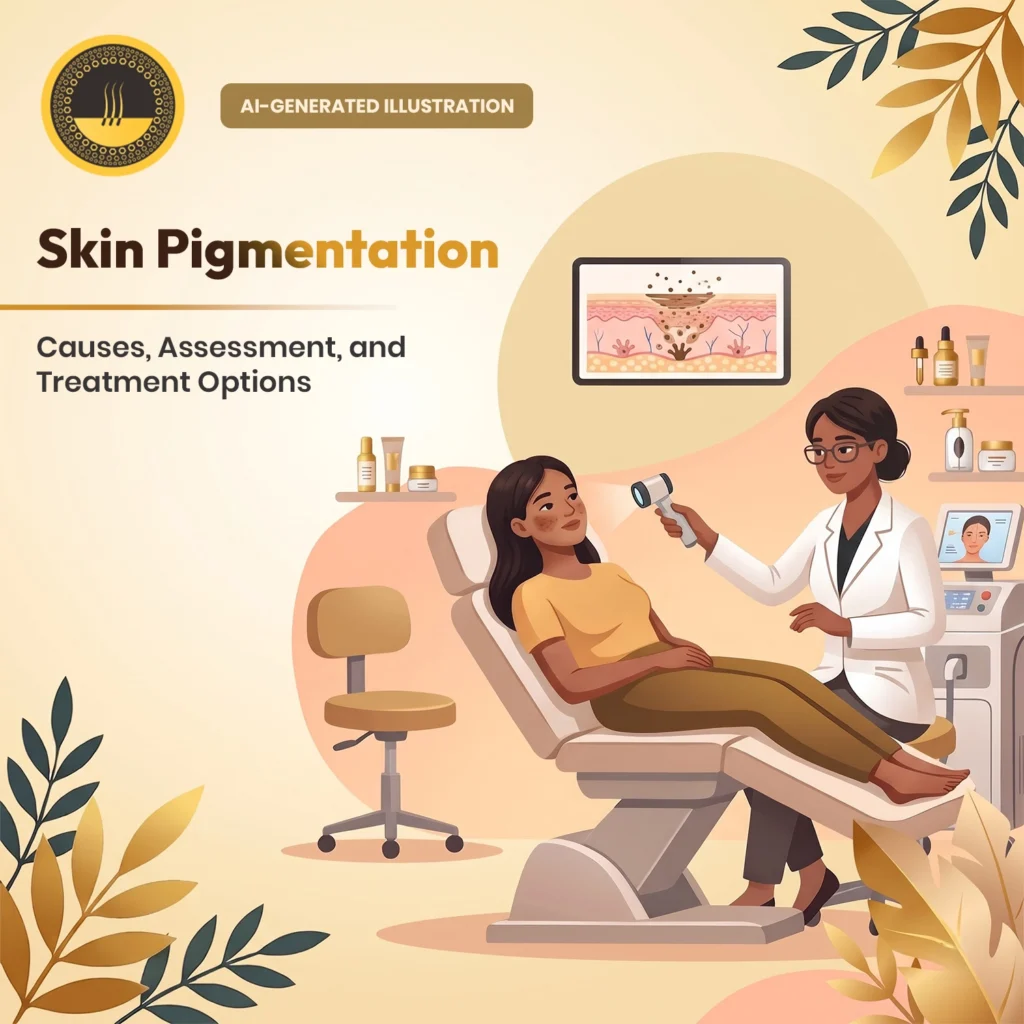
Skin pigmentation refers to changes in the color of the skin, including dark spots, patches, and uneven skin tone. It can develop following acne, skin irritation, sun exposure, hormonal influences, or certain medical conditions. Identifying the underlying cause is important because different pigmentation concerns may require different approaches.
Melanin is the natural pigment responsible for skin color. When melanin production or distribution changes, some areas may appear darker than the surrounding skin. The appearance, duration, and response to treatment vary from person to person.
1. Sun Exposure
Exposure to ultraviolet (UV) radiation can stimulate melanin production and darken existing pigmentation. Repeated sun exposure may also contribute to uneven skin tone and make certain pigmentation conditions more persistent.
Sun protection is an important part of managing many pigmentation concerns. Broad-spectrum sunscreen, protective clothing, and limiting excessive sun exposure can help reduce further darkening.
2. Post-Inflammatory Hyperpigmentation
Post-inflammatory hyperpigmentation develops when dark marks remain after inflammation or injury to the skin. Common triggers include acne, insect bites, rashes, burns, and irritation caused by skincare products.
These marks may gradually fade, but improvement can take time. Picking acne lesions or over-exfoliating or repeatedly irritating the skin may increase the risk of persistent discoloration.
3. Melasma and Hormonal Influences
Melasma commonly appears as brown or grey-brown patches, particularly on the cheeks, forehead, and upper lip. Hormonal influences and sun exposure can contribute to its development.
Melasma can be persistent and may recur even after improvement. Management often involves sun protection, suitable skincare, and treatment selected according to the individual’s skin and clinical assessment.
4. Other Causes
Some medications, inflammatory skin conditions, and other medical conditions can affect skin color. Not every dark patch is ordinary pigmentation. A new, unexplained, or noticeably changing lesion should be assessed by a qualified healthcare professional rather than treated automatically with cosmetic products.
Different pigmentation conditions can look similar but require different management approaches. A healthcare professional may ask when the pigmentation started, whether it changes with sun exposure, and whether there is a history of acne, skin irritation, medication use, or previous treatments.
The distribution and appearance of the affected skin help guide the assessment. Further evaluation may be needed when the cause is unclear or the lesion has unusual features.
An appropriate assessment can help reduce the risk of unnecessary treatments, skin irritation, and worsening discoloration.
Treatment depends on the underlying cause, depth and extent of pigmentation, skin characteristics, and previous treatment history. No single treatment is suitable for every individual.
Topical Products
Depending on the diagnosis, a healthcare professional may recommend topical products or prescription medications to address excess pigmentation, inflammation, or skin renewal.
Some ingredients can cause irritation, especially when used too frequently or combined with other active products. Unsupervised use of prescription medicines or skin-lightening products may also carry risks. Products should be selected according to the individual’s needs rather than marketing claims.
Chemical Peels
Chemical peels use selected chemical agents to exfoliate the skin in a controlled manner. They may be considered for certain pigmentation concerns following appropriate assessment.
The choice and strength of the peel are important. Irritation and post-inflammatory hyperpigmentation can occur, particularly when the treatment is unsuitable for the individual’s skin or is performed incorrectly.
Laser and Light-Based Procedures
Certain laser and light-based procedures may be considered for selected pigmentation conditions. Their suitability and outcomes depend on the diagnosis, skin tone, device, and treatment settings.
These procedures can sometimes aggravate pigmentation in susceptible individuals. Assessment by an appropriately qualified practitioner is important before considering a procedure. Results vary, and complete or permanent removal cannot be guaranteed.
Consistent sun protection can help prevent further darkening and support the management of many pigmentation conditions. A gentle skincare routine may also help reduce irritation and protect the skin barrier.
Introducing several active ingredients simultaneously, frequent exfoliation and using products that irritate the skin may worsen inflammation and discoloration. A suitable routine should be selected according to the underlying concern and individual skin characteristics.
Improvement may take several weeks or longer, and some conditions require ongoing management to help reduce recurrence.
The outcome depends on the type of pigmentation, its depth, the underlying cause, and the individual’s response to treatment.
Some dark marks may fade considerably over time, while conditions such as melasma can persist or return. Treatment may improve the appearance of pigmentation without eliminating the tendency to develop it.
Realistic expectations and consistent follow-up are important. No cream, peel or laser procedure can guarantee complete or permanent removal in every case.
Consider seeking medical advice if pigmentation persists, spreads, repeatedly returns, or develops without an obvious explanation. A new or changing dark lesion, particularly one with an unusual appearance, should be assessed before cosmetic treatment is considered.
Professional assessment helps distinguish common pigmentation concerns from other skin conditions that may require different management.
Book a consultation today and take the first step toward healthier skin and hair.
Common causes include sun exposure, acne-related inflammation, melasma, skin irritation, certain medications, and other skin conditions.
There is no single best treatment for everyone. The appropriate approach depends on the cause, depth of pigmentation, and individual skin characteristics.
Yes. Some conditions, particularly melasma, can recur. Sun protection and an appropriate ongoing skincare routine may help manage recurrence.
No. Treatment should account for individual skin characteristics and the risk of irritation or worsening pigmentation.
For general information about skin pigmentation, consult a qualified healthcare professional who can assess your individual concerns and discuss appropriate management options.
Disclaimer: This article is for general educational purposes only and does not replace professional medical advice, diagnosis, or treatment. Individual results vary. Consult a qualified healthcare professional for assessment of your skin concerns.
Get a Free Quote
Copyright © 2026 regainhairandskin.in, design & developed by Codigix