Written By Dr. Jalpa Desai
Understanding Acne Scars
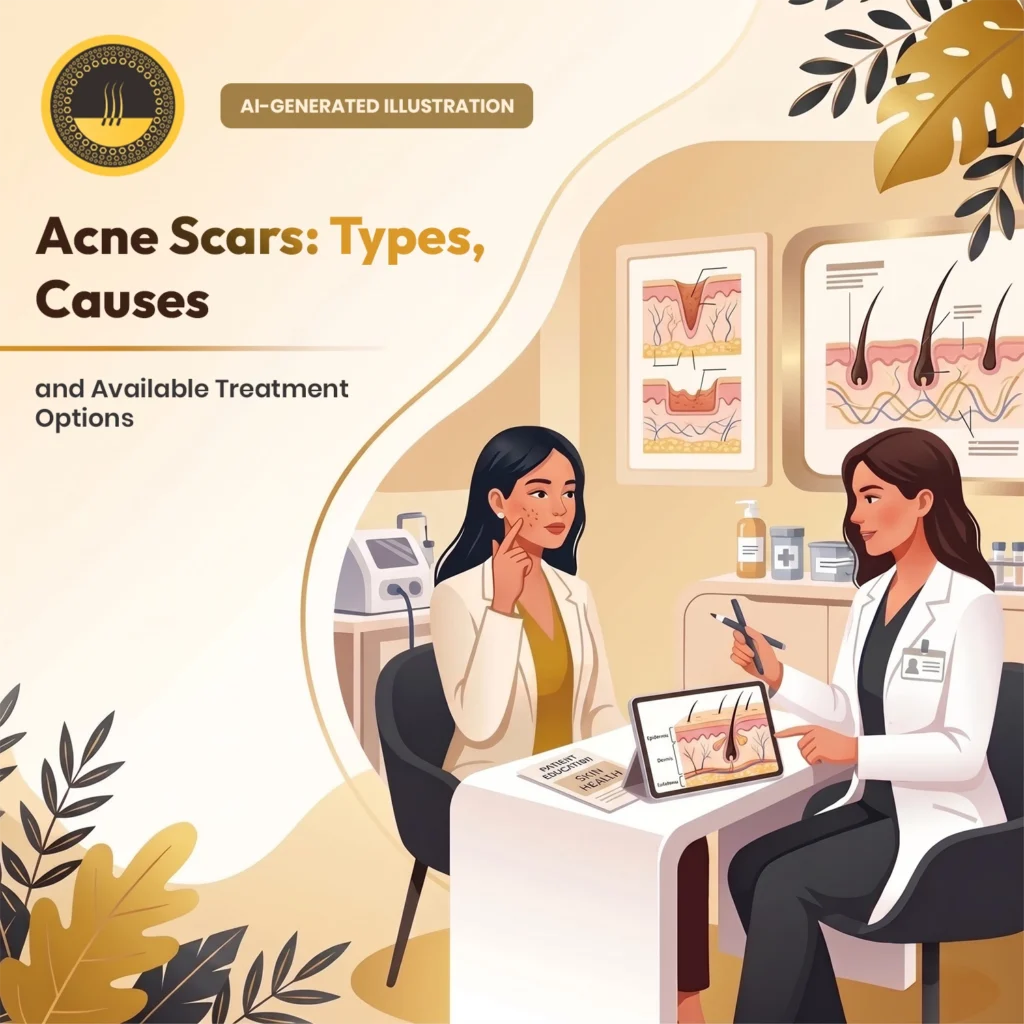
Acne may clear over time, but changes in the skin can sometimes remain long after active breakouts have settled. Some people notice dark marks, while others develop depressions, uneven texture, or raised areas. These changes can be frustrating, particularly when the acne itself is no longer present.
Not every mark left by acne is a permanent scar. Some marks are caused by changes in pigmentation following inflammation, while true acne scars involve changes to the skin’s structure. Understanding this distinction is important because the two concerns may require different approaches.
Acne scar management depends on the type of scarring, its severity, individual skin characteristics, and whether active acne is still present. Although some treatments may improve the appearance of scars, complete removal cannot be guaranteed.
What Causes Acne Scars?
Acne scars develop when inflammation associated with acne affects the skin’s normal healing process. More significant inflammation can damage the supporting structures of the skin, resulting in changes to its surface.
Picking, squeezing, or repeatedly irritating acne lesions may increase the risk of scarring. However, scars can develop even when someone avoids touching their skin. Genetics, acne severity, and individual healing responses can also influence the outcome.
There are different types of acne-related marks and scars. Identifying them correctly helps determine which treatment approaches may be appropriate.
Depressed Acne Scars
Depressed scars form when the skin loses supporting tissue during healing. They may appear as small, deep openings or broader indentations.
Common types include:
Ice-pick scars: Narrow, deep indentations that extend into the skin.
Boxcar scars: Depressed areas with relatively defined edges.
Rolling scars: Wider depressions that create an uneven or undulating skin surface.
Different scar types respond differently to treatment. A procedure that may help one pattern might provide limited improvement for another.
Post-Inflammatory Hyperpigmentation
Dark marks that remain after acne are often caused by post-inflammatory hyperpigmentation. These marks involve excess pigment rather than the loss of skin tissue associated with depressed scars.
Their appearance can vary according to skin tone, the degree of inflammation, and sun exposure. Some marks fade gradually, although the process may take time.
Distinguishing pigmentation from structural scarring is important because treatments intended for depressed scars may not be necessary for flat, dark marks.
Choosing the Right Acne Scar Treatment
The right treatment depends on the specific type of acne scar rather than simply the fact that acne scars are present. Rolling scars, boxcar scars, ice-pick scars, post-inflammatory pigmentation, and mixed scar patterns may require different approaches. Skin tone, sensitivity, active acne, previous treatments, and medical history can also influence the treatment decision. This is why searching for an Acne Scar Doctor Near Me should involve more than simply choosing the closest clinic. A qualified skin specialist should examine your skin, explain the available options, discuss potential benefits and risks, and set realistic expectations about the number of sessions that may be required.
For people searching for Acne Scar Treatment Wakad, Regain Skin Clinic offers a local option for professional skin assessment and personalized treatment planning. The focus should be on improving the appearance of scars safely and gradually rather than promising instant or complete removal. Depending on your individual concerns, your doctor may recommend one procedure or a combination of approaches. Consistent skincare and sun protection are also important components of acne scar management, particularly because pigmentation can become more noticeable with sun exposure.
Why Is a Skin Assessment Important?
Before considering a procedure, it is useful to establish whether the concern involves active acne, pigmentation, structural scars, or a combination of these conditions.
A healthcare professional may examine the skin’s texture, the distribution and depth of scars, and the presence of ongoing inflammation. Skin sensitivity, medical history, previous procedures, and earlier treatment responses may also influence the assessment.
Active acne may need to be addressed as part of overall skin management because continuing breakouts can lead to additional inflammation and new scars.
A careful assessment helps establish realistic expectations and reduces the likelihood of choosing an unsuitable procedure based solely on online information.
Treatment depends on the type of acne scar, skin characteristics, and individual circumstances. Several approaches may be considered, but no single procedure is appropriate for every person.
Microneedling
Microneedling uses a device with fine needles to create controlled micro-injuries in the skin. This activates the skin’s natural healing response and may stimulate collagen remodeling.
It may help improve the appearance of certain depressed acne scars and uneven skin texture. However, the degree of improvement varies, and treatment generally does not eliminate scars completely.
Temporary redness, swelling, sensitivity, and irritation can occur. Infection, scarring, and changes in pigmentation are also possible complications. The procedure requires appropriate assessment, suitable equipment, and careful infection-control practices.
Chemical Peels
Chemical peels involve applying selected chemical agents to the skin to produce controlled exfoliation. Depending on the formulation and depth, they may be considered for certain superficial textural concerns or acne-related pigmentation.
A chemical peel does not necessarily correct deeper, structurally depressed scars. The type and strength of the peel must be appropriate for the individual’s skin and the concern being addressed.
Irritation and post-inflammatory pigmentation are possible, particularly when the procedure is unsuitable or performed incorrectly. Stronger peels are not automatically more effective or safer.
Other Treatment Approaches
Other procedures may be considered for selected scar patterns. Their suitability depends on the characteristics of the scars, the condition of the surrounding skin, and the risks associated with each approach.
Topical products may be useful for some acne-related pigmentation concerns, although their effects on established structural scars are limited.
Treatment may involve one approach or a combination of procedures, depending on the clinical assessment. The potential benefits, limitations, recovery requirements, and risks should be understood before proceeding.
How Long Does Acne Scar Treatment Take?
Improvement is generally gradual. The timeline depends on the type and depth of the scars, the approach used, and the individual’s healing response.
Some treatments involve multiple sessions, while others may require different intervals or additional follow-up. Collagen remodeling also takes time, so immediate changes do not necessarily reflect the final outcome.
Established scars may remain partly visible even after treatment. A realistic treatment discussion should focus on possible improvement rather than promising completely smooth skin or permanent scar removal.
Following appropriate aftercare instructions and protecting the skin from excessive sun exposure may help reduce irritation and the risk of pigmentation changes.
Can Acne Scars Be Prevented?
Although not every scar can be prevented, appropriate management of active acne may help reduce the risk of further scarring.
Avoid picking or squeezing lesions, and be cautious with harsh home remedies or aggressive exfoliation. Products that irritate the skin can worsen inflammation and may contribute to persistent dark marks.
If acne is persistent, painful, or associated with developing scars, seeking medical advice can help identify appropriate management options before further skin changes occur.
Understanding Your Skin's Needs
Acne scars can affect people differently, both physically and emotionally. It is understandable to want visible improvement, but choosing a treatment based only on its popularity may not address the underlying concern.
For further general information about acne, scarring, and skin health, readers may explore the educational resources available on the Regain Skin Clinic and Hair Transplant Centre website. Online information can help explain available approaches, but individual suitability and expected outcomes require appropriate professional assessment.
The aim of acne scar management is to improve the appearance and texture of the skin where possible, while taking account of safety, realistic expectations, and individual needs.