
G11074 – BHMS, DCA(diploma in clinical aesthetics).
Uneven skin texture, excess facial oil, and dull-looking skin are common concerns that can have several underlying causes. A carbon peel facial is one cosmetic procedure that may be considered for selected skin concerns. However, its suitability and potential outcomes depend on individual skin characteristics, the condition being treated, and the laser technology used.
For people exploring pigmentation or skin texture treatments in Wakad, Pune, understanding the procedure, its limitations, possible side effects, and cost factors can help support an informed decision.
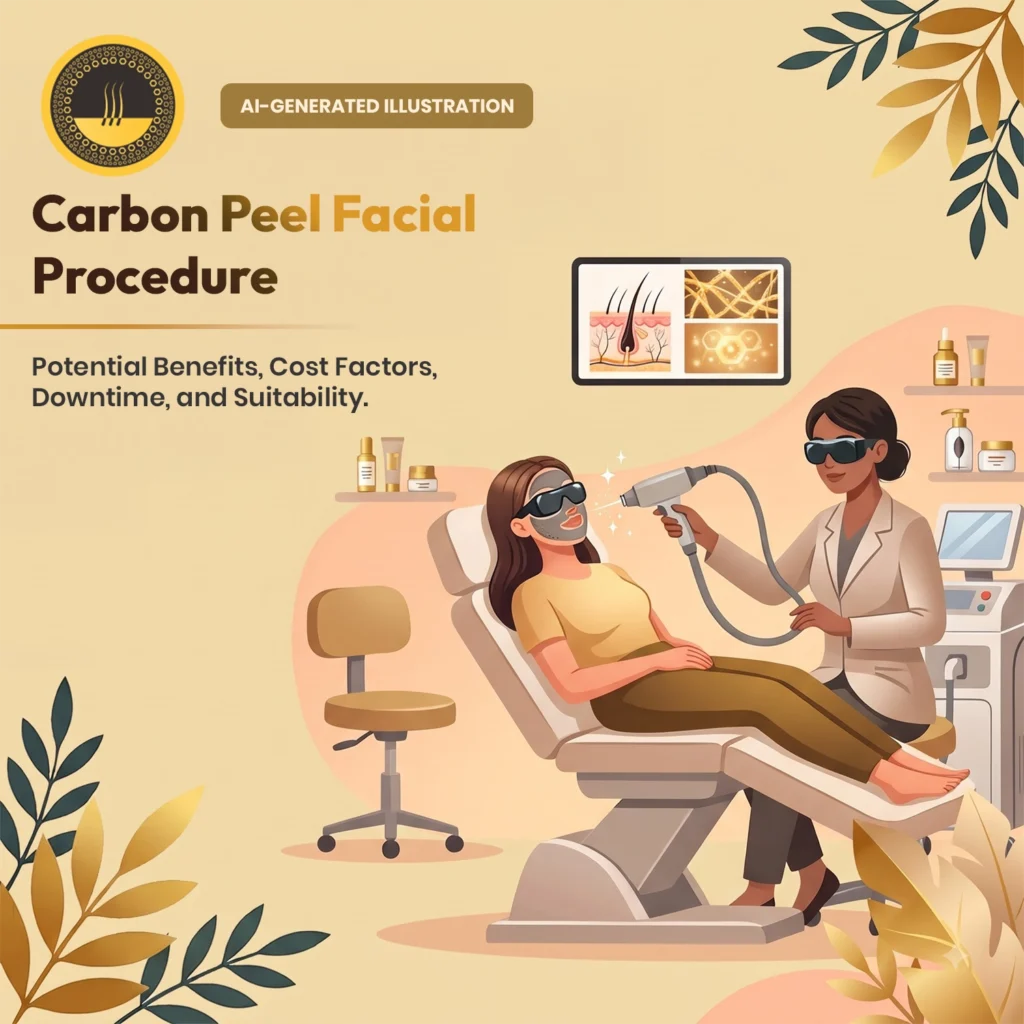
A carbon peel facial, also known as a carbon laser peel, is a cosmetic skin procedure that combines a carbon-based lotion with laser energy. It may be considered for concerns such as excess facial oil, dull-looking skin, uneven surface texture, and the appearance of enlarged pores.
During the procedure, a carbon-based product is applied to the skin and treated with a suitable laser. The laser interacts with the carbon layer, helping remove it along with some surface debris. The intended outcome is an improvement in the skin’s appearance and texture.
Unlike a conventional chemical peel, which uses chemical agents to exfoliate the skin, a carbon laser peel uses laser technology. Although the procedure is often associated with limited recovery time, temporary side effects and complications are possible.
Whether it is appropriate depends on the individual’s skin type, medical history, skin concern, and the technology used.
A carbon peel may offer cosmetic benefits for some individuals. Potential outcomes may include:
The degree of improvement varies, and not every concern responds in the same way. Evidence supporting carbon peels for specific skin concerns varies according to the treatment protocol and outcome being assessed.
A carbon peel should therefore be understood as an option for selected cosmetic concerns rather than a universal solution for skin problems.
Dull-looking skin can have several causes, including dehydration, accumulated dead skin cells, sun exposure, pigmentation and changes in texture. A carbon peel may improve the appearance of surface dullness, but it may not address the underlying cause. Persistent pigmentation or an inflammatory skin condition may require a different treatment approach.
Oily skin is another common concern. Although a carbon peel may help with surface oiliness and congestion, persistent oil production and acne are separate issues. People experiencing frequent breakouts, painful spots or inflamed acne may benefit from an assessment and an appropriate acne treatment plan. A carbon peel should not replace medically indicated acne treatment.
Enlarged pores are influenced by genetics, oil production, sun exposure and changes in skin elasticity. Pores are normal structures and cannot be permanently closed or removed. A carbon peel may make them look less prominent in some individuals, but the extent and duration of improvement are unpredictable.
Uneven skin texture can develop following acne, inflammation, sun damage, or the accumulation of dead skin cells. A carbon peel may help with certain superficial texture concerns, but it should not be assumed to correct deeper acne scars, pronounced pigmentation, or structural changes in the skin.
The appropriate approach depends on the cause and severity of the concern. A dermatologist can explain whether a carbon peel is suitable or whether another treatment may be more appropriate.
A carbon peel may be considered for adults concerned about:
However, suitability requires individual assessment. Active skin infections, significant irritation, inflammation, and certain medical conditions may mean treatment should be postponed or avoided. Medicines, recent cosmetic procedures, and a history of unusual skin reactions may also affect the decision.
People with darker skin tones should discuss the possibility of post-inflammatory hyperpigmentation, in which darker patches develop following inflammation or injury. Some laser treatments can trigger pigmentation changes, with the risk depending on individual skin characteristics, laser settings, and treatment technique.
A consultation helps establish whether the potential benefits justify the possible risks.
A consultation at a skin clinic, such as Regain Skin Clinic and Hair Transplant Centre in Wakad, may involve assessing the skin type, texture, and concerns that need attention. The clinician may review the skincare routine, medical history, previous procedures, and medicines that could affect treatment suitability.
Before proceeding, patients should receive clear information about the proposed procedure, the laser technology being used, realistic expectations, possible side effects, aftercare, and costs.
It is also reasonable to ask who will perform the procedure, what qualifications and experience they have, and what arrangements are available if an adverse reaction occurs. Treatment decisions should be based on clinical suitability rather than simply on the availability of a particular procedure.
There is no single session schedule suitable for everyone. The number of sessions depends on the concern being addressed, the treatment protocol, and the individual’s response.
Some people may notice temporary improvements in smoothness or overall appearance after one session. Other concerns may show limited improvement or require a different approach. A specific number of sessions should not be presented as a guarantee of results.
If multiple sessions are proposed, ask why they are recommended, how progress will be assessed, and what the complete course is expected to cost.
Recovery is often relatively short, but individual experiences vary. Possible temporary effects include redness, sensitivity, dryness, tightness, mild swelling, and irritation. Less common complications may include burns, blistering, infection, scarring, or pigmentation changes.
Aftercare instructions should reflect the procedure performed and the individual’s skin. These may include using gentle skincare products, temporarily avoiding irritating active ingredients, and protecting the skin from sunlight with an appropriate broad-spectrum sunscreen.
Seek advice from the treating clinician if you develop worsening pain, blistering, marked swelling, or other unexpected symptoms.
The cost of a carbon peel facial in Wakad may depend on the treatment area, laser technology, clinical protocol, and number of sessions recommended. Additional procedures, where clinically appropriate, may increase the overall expense.
When reviewing a proposed treatment plan, ask for a clear breakdown of the cost per session, the anticipated number of sessions, and any additional charges. The likely total cost is more informative than a single-session price when a course of treatment is being considered.
A verified price range for Regain Skin Clinic and Hair Transplant Centre has not been provided. Any clinic-specific price should be confirmed before publication rather than estimated.
When evaluating a clinic, consider whether it provides an appropriate skin assessment, explains the limitations and risks of treatment, uses suitable equipment and offers clear aftercare instructions. Ask who will perform the procedure and whether their qualifications are appropriate.
You should have enough information to compare alternatives, ask questions, and decide without pressure. A cosmetic procedure is a personal choice, and treatment may not be necessary if the concern can be managed through other suitable measures.
A carbon peel facial may be an option for selected concerns involving surface oiliness, dullness, and the appearance of pores or uneven texture. However, outcomes vary, and the procedure is not suitable for every skin condition.
Understanding the likely benefits, limitations, possible complications, alternatives, and total cost can help you make a more informed decision. An individual assessment is the appropriate starting point for determining whether this procedure is suitable for your skin.
Book a consultation today and take the first step toward healthier skin and hair.
A carbon peel facial is a non-invasive skin treatment that generally uses a carbon-based lotion followed by laser energy. It may help improve the appearance of dull skin, excess oil, uneven texture, and enlarged-looking pores.
Carbon peel may help exfoliate surface impurities and improve the appearance of dull or tired-looking skin. However, the underlying cause of dullness should be assessed before choosing a treatment.
Carbon peel may improve overall skin texture and make enlarged-looking pores less noticeable in some individuals. However, it does not permanently remove or close pores.
Carbon peel may be considered for people with oily or combination skin. However, if oiliness is associated with active acne or another skin condition, the underlying concern may need to be treated separately.
The number of sessions depends on the skin concern, its severity, and your response to treatment. Your dermatologist can recommend a suitable treatment schedule after assessing your skin.
Temporary redness, sensitivity, mild dryness, or irritation can occur after treatment. Recovery varies between individuals, so your dermatologist will provide specific aftercare instructions.
Clinical disclaimer: This article is intended for general educational and public awareness purposes. It does not replace an individual medical consultation or constitute a diagnosis or treatment recommendation. The suitability of laser toning, treatment parameters, session intervals, and aftercare must be determined by an appropriately qualified medical practitioner following clinical assessment. Outcomes and risks vary between individuals.
Get a Free Quote
Copyright © 2026 regainhairandskin.in, design & developed by Codigix