
G11074 – BHMS, DCA(diploma in clinical aesthetics)
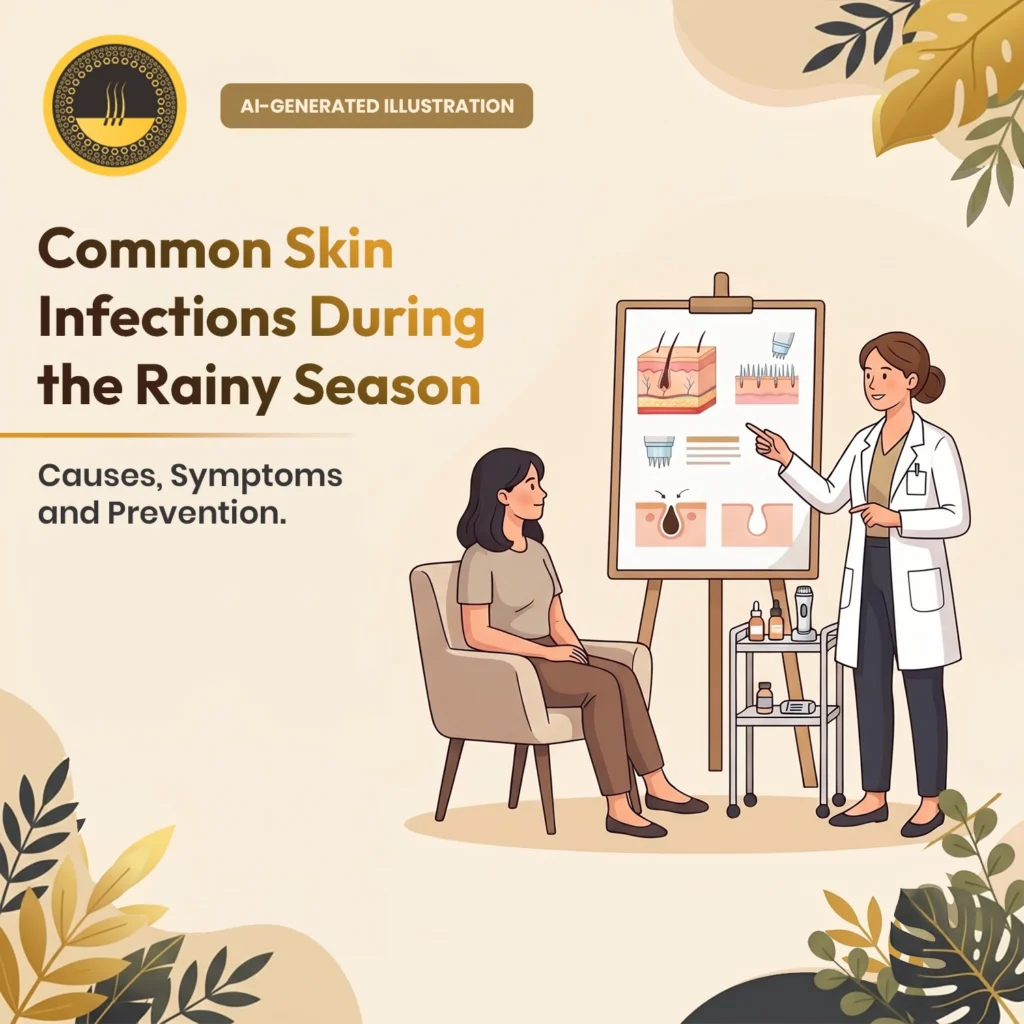
The monsoon season brings relief from summer heat, but increased humidity, sweating and prolonged moisture exposure can affect skin health. During the rainy season, some people experience fungal infections, itching, redness, skin rashes and other dermatological concerns.
Warm and humid weather can encourage fungal growth, while damp clothes and footwear may contribute to skin irritation. However, not every skin rash is caused by an infection. Allergies, eczema and other skin conditions can produce similar symptoms.
Understanding common monsoon-related skin problems, their symptoms and preventive measures can help maintain skin health and identify when medical attention is needed.
High humidity, excessive sweating and moisture trapped against the skin can increase the risk of certain fungal and bacterial infections. Wearing wet clothes or damp footwear for extended periods may also contribute to skin irritation.
Common contributing factors include:
People with diabetes, obesity or excessive sweating may be more susceptible to certain skin infections.
1. Fungal Skin Infections
Fungal infections can affect areas such as the groin, feet, underarms and skin folds. Symptoms may include itching, redness, scaling and circular or spreading rashes.
Prevention and care: Keep the skin dry, change damp clothes promptly and avoid sharing towels or footwear. Persistent or spreading rashes should be medically evaluated.
2. Bacterial Skin Infections
Bacteria can enter the skin through cuts, scratches and insect bites. Certain infections may cause redness, swelling, pain, warmth and pus formation.
Prevention and care: Keep minor wounds clean and avoid scratching affected areas. Increasing redness, swelling or pain requires medical attention.
3. Itching and Skin Rashes
Sweating, friction and damp clothing can cause irritation, heat rash and redness. People with sensitive skin may experience increased discomfort during humid weather.
Prevention and care: Wear breathable clothing, avoid scratching and keep moisture-prone areas dry. Persistent itching should be evaluated to identify its cause.
4. Allergic Skin Reactions
Certain soaps, detergents, fabrics and skincare products can trigger allergic contact dermatitis. Common symptoms include itching, redness, swelling and small blisters.
Prevention and care: Avoid suspected irritants and discontinue products that cause discomfort. Seek medical advice if symptoms persist or worsen.
5. Foot Infections
Wearing wet shoes and socks for extended periods can increase the risk of fungal infections, particularly between the toes.
Symptoms may include peeling, itching, scaling and cracks between the toes.
Prevention and care: Dry your feet thoroughly after washing, change wet socks and allow footwear to dry completely.
Some mild skin irritations may improve with basic care. However, persistent or worsening symptoms should not be ignored.
Consider consulting a qualified dermatologist if you experience:
Seek prompt medical attention if a rash is accompanied by fever, severe pain or rapidly spreading redness. Individuals with diabetes or weakened immunity should seek medical advice early when an infection is suspected.
Different skin conditions can look similar. Fungal infections, eczema and allergic dermatitis may all cause itching and redness.
A dermatologist examines the affected area, reviews medical history and may recommend additional investigations, such as skin scrapings or microbiological testing, when required.
Treatment depends on the diagnosis and may include:
Avoid using steroid-containing combination creams without medical advice, as they may mask symptoms and worsen certain fungal infections.
Following simple hygiene practices can help reduce moisture-related skin concerns:
These measures support skin health but cannot prevent every type of infection.
Skin infections and inflammatory conditions may have similar symptoms but require different treatments. For example, fungal infections, eczema and allergic dermatitis can all cause itching and redness.
People experiencing persistent skin problems in Wakad, Hinjewadi, Tathawade, Punawale and nearby areas can seek evaluation from a qualified dermatologist. A proper examination helps identify the underlying condition and determine an appropriate treatment approach.
Early assessment may also help prevent unnecessary medication use and complications associated with certain untreated infections.
Monsoon weather can increase the risk of fungal infections, bacterial infections, itching and skin irritation due to humidity, sweating and prolonged moisture exposure. Maintaining personal hygiene, keeping the skin dry and wearing breathable clothing can help reduce some of these concerns.
However, persistent, spreading or recurring skin problems should not be ignored. Identifying the underlying cause through appropriate medical evaluation is important for selecting suitable treatment and maintaining skin health.
Book a consultation today and take the first step toward healthier skin and hair.
High humidity, sweating and moisture trapped against the skin create favourable conditions for fungal growth, particularly around the feet, groin and skin folds.
Keep your skin dry, change wet clothes promptly, wear breathable fabrics and avoid sharing towels, footwear and personal hygiene items.
No. Rashes can also result from allergies, eczema, heat rash and contact dermatitis. A medical examination helps identify the underlying cause.
Consult a dermatologist if you experience persistent itching, spreading rashes, swelling, skin peeling, pus formation or recurring infections. Seek prompt medical attention if symptoms are accompanied by fever or severe pain.
This article is intended for general informational and educational purposes only. It does not replace professional medical advice, diagnosis or treatment. Skin conditions may have different underlying causes. Consult a qualified dermatologist for appropriate evaluation and avoid self-medication.
Get a Free Quote
Copyright © 2026 regainhairandskin.in, design & developed by Codigix