
G11074 – BHMS, DCA(diploma in clinical aesthetics)
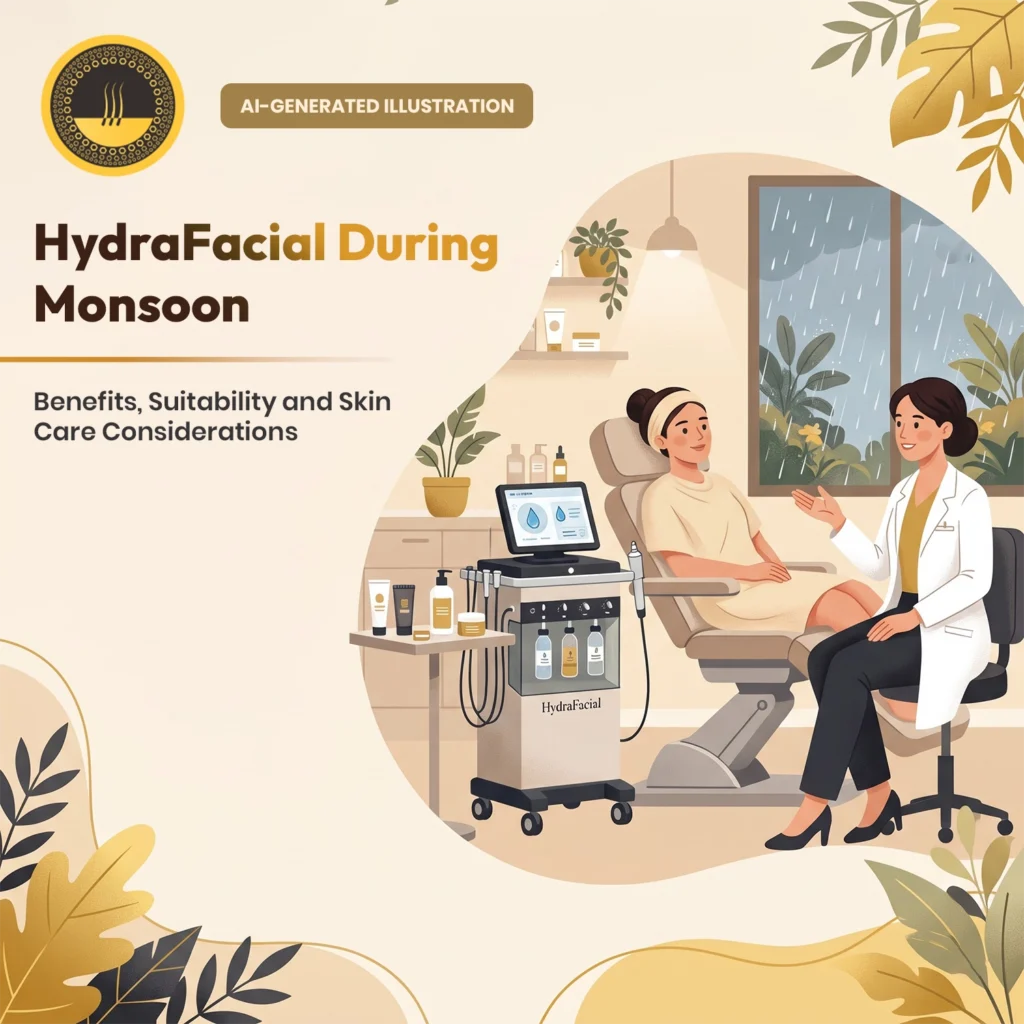
Monsoon weather can change how your skin feels. Increased humidity and sweating may make the skin feel oilier, while acne, clogged pores, irritation and uneven texture can become more noticeable in some people.
HydraFacial is a non-surgical cosmetic skin treatment that combines cleansing, exfoliation, extraction and hydration. It may help improve the appearance of skin congestion and dryness in selected individuals.
However, a HydraFacial is not necessary for everyone, and it does not treat every cause of acne, pigmentation or skin irritation. Understanding the procedure, its limitations and your skin’s current condition can help you decide whether it is appropriate.
Humidity and sweating can affect skin comfort, particularly in people with oily or acne-prone skin. Common concerns include:
Not every skin concern is caused by monsoon weather. Existing skin conditions, skincare habits and individual sensitivity can also influence how the skin responds.
HydraFacial is a cosmetic skin treatment that typically combines several steps, such as cleansing, exfoliation, extraction of surface impurities and application of hydrating products. The precise steps and products depend on the device and treatment protocol being used.
The procedure is designed to improve the appearance and feel of the skin. It is different from medical treatment for conditions such as severe acne, active skin infections or persistent pigmentation.
Although some people notice smoother or more hydrated-looking skin after treatment, results vary. A HydraFacial should not be presented as a guaranteed solution for every skin concern.
1. Cleansing and Surface Exfoliation
The treatment may help remove surface debris and dead skin cells. This can leave the skin feeling smoother and may improve the appearance of some types of skin congestion.
Gentle cleansing is important, particularly for people whose skin becomes irritated by aggressive exfoliation.
2. Removal of Surface Impurities
Some HydraFacial protocols include a step intended to extract material from clogged pores. This may help improve the appearance of blackheads and congestion in selected individuals.
However, the procedure does not guarantee that acne will be prevented or that pores will remain clear.
3. Temporary Hydration
Hydrating products used during treatment may temporarily improve skin comfort and the appearance of dryness.
People with oily skin can still experience dehydration or irritation. The choice of moisturiser and other products should reflect the individual’s skin type and needs.
4. Smoother-Looking Skin
Exfoliation and hydration may temporarily improve skin texture and make it appear smoother.
The degree of improvement varies, and a cosmetic facial cannot correct every cause of roughness, scarring or uneven texture.
5. A Refreshed Appearance
Some people notice that their skin looks more refreshed after treatment. This effect may relate to cleansing, exfoliation and hydration.
A brighter appearance should not be confused with permanent pigmentation removal or treatment of an underlying dermatological condition.
A HydraFacial may be considered by some people who want to address mild skin congestion, surface dryness or uneven texture.
It may be discussed as an option for individuals with:
Suitability depends on the person’s skin condition, sensitivity and the products or techniques used during the procedure.
People with active skin infections, significant inflammation, open wounds or an irritated skin barrier should seek professional advice before undergoing a cosmetic facial. Those with persistent or severe acne may need medical treatment rather than a facial alone.
The season itself does not automatically make a HydraFacial safer or more effective. Suitability depends on the individual’s skin and the procedure being performed.
Temporary redness, tightness, sensitivity or irritation may occur. Reactions can also depend on the products used and the intensity of the treatment.
Before proceeding, discuss any known skin sensitivities, allergies, active skin conditions and current skincare treatments with the qualified professional performing the procedure.
A treatment should be postponed or modified when the skin is not suitable for it. Follow the provider’s aftercare instructions and seek advice if significant or persistent irritation develops.
There is no single treatment schedule that is appropriate for everyone. The frequency depends on the individual’s skin, treatment goals, response and the specific protocol being used.
Repeated procedures are not necessarily better. A qualified professional can explain whether another session is appropriate and whether a simpler skincare routine may be sufficient.
Whether or not you choose a cosmetic facial, consistent everyday skincare remains important.
Cleanse Gently
Use a cleanser suited to your skin type. Avoid excessive washing or harsh scrubbing, which can irritate the skin.
Moisturise Appropriately
Choose a moisturiser that feels comfortable and suits your skin. Oily skin may still benefit from hydration.
Use Sunscreen
Continue using broad-spectrum sunscreen during the daytime, including on cloudy days. Follow the product instructions for application and reapplication.
Avoid Picking Pimples
Picking or squeezing acne lesions can increase inflammation and the risk of dark marks or scarring.
Keep Personal Items Clean
Wash towels and pillowcases regularly and clean reusable makeup tools appropriately. Avoid sharing personal skincare items.
Avoid Introducing Too Many Products
Using several new active ingredients or exfoliating products at once may increase irritation. Introduce products carefully and discontinue those that cause persistent discomfort.
Consider professional evaluation if you experience:
A dermatologist can assess the underlying concern and explain whether a cosmetic procedure, medical treatment or basic skincare is the more suitable option.
HydraFacial may help some individuals improve the appearance of skin congestion, surface texture and dryness during the monsoon. However, it is a cosmetic treatment rather than a universal solution for acne, pigmentation or other skin conditions.
The most appropriate approach depends on your skin’s current condition, sensitivity and treatment goals. Gentle cleansing, suitable moisturising and consistent sun protection remain useful foundations of everyday skincare.
For further educational information about cosmetic skin procedures and general skin health, consult reliable dermatology resources or educational material available on a dermatology clinic’s website.
Book a consultation today and take the first step toward healthier skin and hair.
It may be suitable for some people, depending on their skin condition and the treatment protocol. The monsoon season alone does not determine whether the procedure is appropriate.
It may help with surface congestion in selected individuals, but it is not a replacement for medical acne treatment. Persistent, painful or scarring acne should be assessed by a qualified healthcare professional.
Some people with oily skin may find the cleansing and hydration steps helpful. Suitability depends on skin sensitivity, active skin conditions and the products used during treatment.
A HydraFacial should not be considered a guaranteed or permanent treatment for pigmentation. The appropriate approach depends on the cause of the dark marks and may require a different treatment.
The content is for general informational purposes only, is not a substitute for professional medical advice, diagnosis, or treatment, and readers should consult a qualified healthcare professional about individual concerns.
Regain Skin Clinic And Hair Transplant Center,
Wakad, Pune
Get a Free Quote
Copyright © 2026 regainhairandskin.in, design & developed by Codigix