
Aesthetic Physician | Hair Transplant Surgeon | Specialization in Aesthetics & Trichology
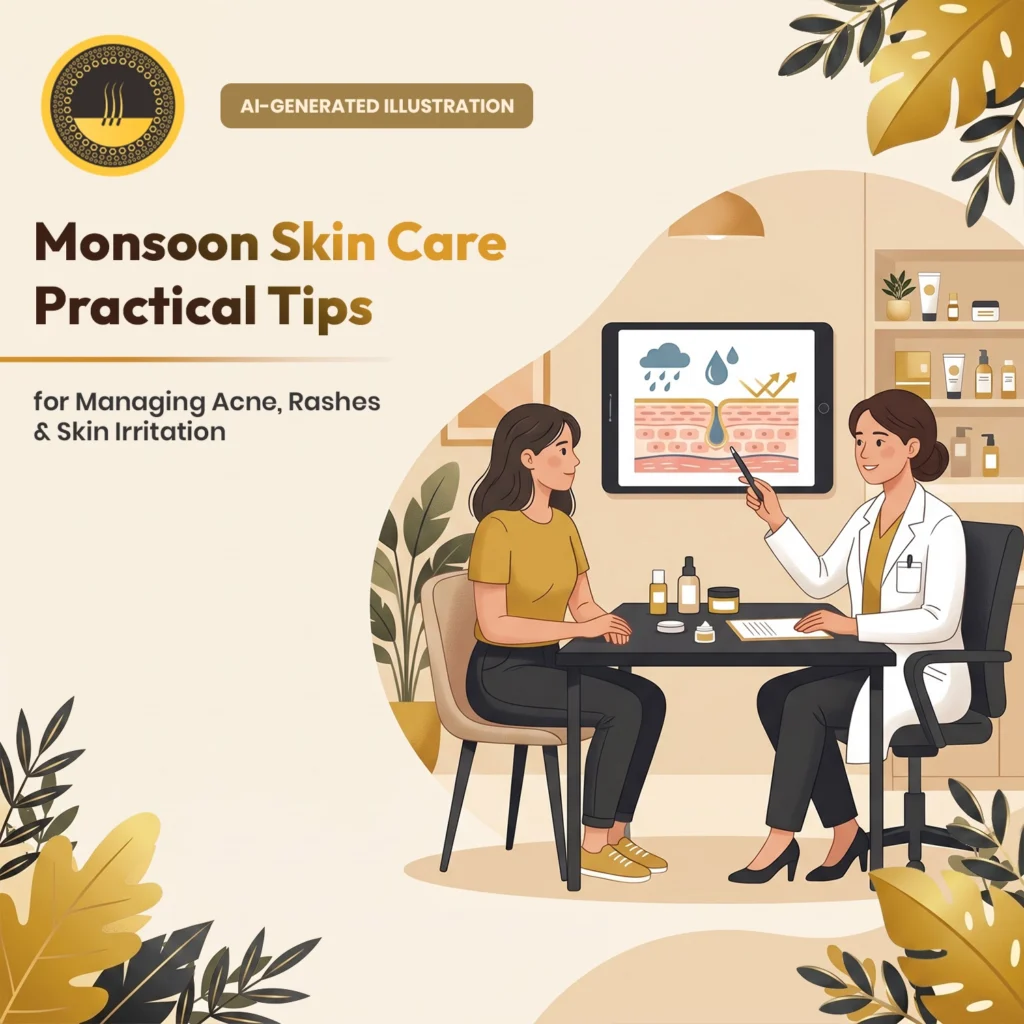
The monsoon brings relief from Pune’s summer heat, but increased humidity, sweating and frequent exposure to rain can make certain skin concerns more noticeable. Some people experience increased oiliness, acne breakouts, itching, rashes or irritation during the rainy season.
Although simple skincare habits can help maintain healthy skin, not every seasonal skin problem has the same cause. Acne, allergic reactions, eczema and fungal infections may produce similar symptoms but require different approaches.
Understanding your skin’s needs and recognising when symptoms require professional evaluation can help you avoid unsuitable products and unnecessary irritation.
Warm, humid weather can increase sweating and make the skin feel oilier. Sweat, sebum, dead skin cells and product residue may contribute to clogged pores in some people.
Moisture can also remain trapped in areas such as the underarms, groin and spaces between the toes. These conditions may contribute to irritation and can favour certain fungal infections.
Common monsoon skin concerns include:
Humidity does not automatically cause an infection or acne. Individual skin type, existing conditions, products used and other factors can influence how the skin responds.
Sweat, oil and environmental impurities can accumulate on the skin throughout the day. Using a gentle cleanser suited to your skin type can help remove this buildup.
Avoid washing your face excessively or using harsh soaps in an attempt to control oiliness. Over-cleansing can disrupt the skin barrier and contribute to dryness, irritation and sensitivity.
If your skin becomes persistently oily or acne-prone during the monsoon, consider seeking professional advice about an appropriate cleansing routine.
People with oily skin sometimes stop using moisturiser during humid weather. However, oily skin can still become dehydrated or irritated.
A lightweight, non-comedogenic moisturiser may be suitable for some people with oily or acne-prone skin. Non-comedogenic products are formulated to be less likely to block pores.
The most appropriate product depends on your skin type, existing skin conditions and other skincare products you use. If a product causes persistent burning, redness or irritation, discontinue it and seek advice if symptoms continue.
Cloudy skies do not eliminate ultraviolet (UV) exposure. Sunscreen remains an important part of daytime skin protection, including during the rainy season.
Choose a broad-spectrum sunscreen appropriate for your skin and follow its application instructions. If you spend extended periods outdoors, follow the product guidance on reapplication.
People with oily or acne-prone skin may prefer lightweight formulations. If you are receiving dermatological treatment or have a skin condition that affects sun sensitivity, ask your healthcare professional about suitable sun-protection measures.
Sweating, oiliness and pore-clogging products may contribute to breakouts in some people. A consistent skincare routine can help reduce avoidable irritation.
Helpful habits include:
Persistent or painful acne, or acne that leaves scars, may need professional assessment. Repeatedly trying different products can irritate the skin and make it harder to identify what is helping.
Remaining in damp clothing for extended periods can contribute to discomfort and moisture-related skin irritation.
After getting caught in the rain:
Pay particular attention to areas where sweat and moisture tend to accumulate. These measures support skin hygiene but cannot prevent every rash or infection.
Certain fungal skin infections are more likely to develop or persist in warm, moist areas of the body. Symptoms may include itching, redness, scaling, burning or ring-shaped patches.
However, not every itchy or ring-shaped rash is necessarily a fungal infection. Eczema, contact dermatitis and other skin conditions can look similar.
Avoid using random medicated creams, particularly steroid-containing combinations, without appropriate medical advice. Steroids can reduce redness temporarily but may mask symptoms and worsen or alter the appearance of some fungal infections.
A persistent, spreading or recurring rash should be assessed by a qualified healthcare professional so that the cause can be identified and suitable treatment considered.
During humid weather, heavy products may feel uncomfortable, particularly for people prone to clogged pores. A simple routine is often easier to maintain than frequently switching between multiple products.
A basic morning routine may include:
A basic evening routine may include:
These are general examples, not a personalised treatment plan. People with sensitive skin or existing dermatological conditions may need a different routine.
Towels, pillowcases and reusable makeup tools can collect oil, residue and microorganisms over time. Wash towels and pillowcases regularly, clean reusable beauty tools appropriately and avoid sharing personal grooming items.
Because mobile phones frequently come into contact with the hands and face, keeping the phone surface reasonably clean can also be a useful hygiene habit.
A red or itchy rash can result from irritation, an allergic reaction, eczema, a fungal infection or another skin condition.
Consider seeking medical evaluation if a rash:
Seek prompt medical attention for rapidly worsening symptoms, extensive blistering, fever associated with a rash, or swelling involving the face or difficulty breathing. Difficulty breathing or sudden facial or throat swelling requires emergency care.
Skincare products are only one part of general skin health. Maintaining adequate hydration, eating a balanced diet, getting sufficient sleep, staying physically active and following good personal hygiene habits can support overall wellbeing.
These habits should complement—not replace—appropriate medical care when a skin condition persists or worsens.
Occasional mild irritation may settle with suitable basic skincare. However, persistent or recurring symptoms should not automatically be attributed to monsoon weather.
Consider professional evaluation for persistent or painful acne, recurring rashes, suspected fungal infections, ongoing itching, unexplained redness, acne scarring or skin problems that do not improve with basic care.
A dermatologist can assess the symptoms and determine whether the likely cause is acne, infection, allergy, irritation or another condition. Treatment depends on the diagnosis and individual circumstances.
Monsoon weather can make some skin concerns more noticeable, but good skincare does not need to be complicated. Gentle cleansing, appropriate moisturising, regular sun protection, clean personal items and changing out of damp clothing are useful everyday habits.
Avoid self-medicating unexplained rashes or repeatedly changing products when symptoms persist. Recognising warning signs and seeking timely professional assessment can help you understand your skin concern and make informed decisions about care.
For further educational information, consult reliable dermatology resources or the educational material available on a dermatology clinic’s website.
Book a consultation today and take the first step toward healthier skin and hair.
Not necessarily. Increased sweating and oiliness may contribute to breakouts in some people. Gentle cleansing and suitable skincare products may help, but persistent or painful acne can require professional assessment.
Yes. Clouds do not eliminate UV exposure. Use a suitable broad-spectrum sunscreen during the daytime and follow the product instructions for application and reapplication.
Keep moisture-prone areas clean and dry, change out of damp clothing promptly and avoid sharing personal items. These habits can support skin hygiene, although they cannot prevent every infection.
Seek evaluation if a rash persists, spreads, repeatedly returns or becomes painful or intensely itchy. Rapidly worsening symptoms, fever with a rash, or severe swelling require prompt medical attention.
The content is for general informational purposes only, is not a substitute for professional medical advice, diagnosis, or treatment, and readers should consult a qualified healthcare professional about individual concerns.
Regain Skin Clinic And Hair Transplant Center,
Wakad, Pune
Get a Free Quote
Copyright © 2026 regainhairandskin.in, design & developed by Codigix