
G11074 – BHMS, DCA(diploma in clinical aesthetics)
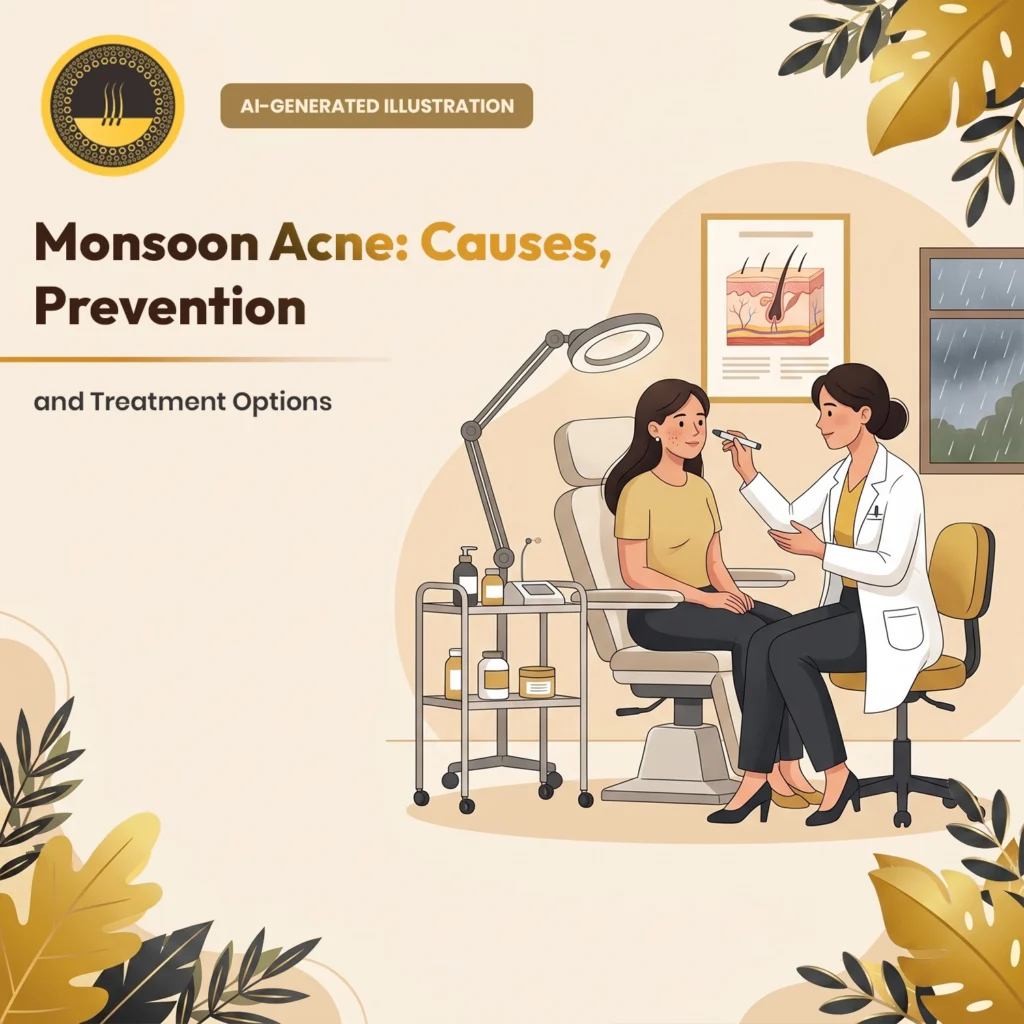
Monsoon brings relief from summer heat, but increased humidity and sweating can make acne management more challenging for some people. During the rainy season, the skin may feel oilier, and some individuals may experience more pimples, blackheads or inflamed breakouts.
Acne develops when hair follicles become clogged with oil and dead skin cells. Hormonal changes, inflammation, genetics and skincare habits can all contribute. Humid weather may aggravate symptoms in some individuals, but it is not the only cause of acne.
Understanding common triggers and maintaining a consistent skincare routine can help manage breakouts. Persistent, painful or scarring acne may require assessment by a qualified dermatologist.
1. Humidity and Skin Oiliness
Warm, humid weather can make the skin feel oilier and less comfortable. Excess sebum, combined with dead skin cells, can contribute to clogged pores and acne lesions in people who are prone to breakouts.
Humidity does not cause acne in everyone, and individual responses vary.
2. Excessive Sweating
Sweat itself does not directly cause acne. However, sweat combined with oil, friction, tight clothing or occlusive products may aggravate breakouts in some people.
After heavy sweating, gently cleanse the skin when practical and change out of damp clothing.
3. Skincare and Cosmetic Products
Heavy or pore-clogging products may contribute to breakouts in acne-prone skin. Products that are unsuitable for an individual’s skin type can also cause irritation.
Choose products labelled non-comedogenic where appropriate, and introduce new products gradually rather than changing the entire routine at once.
4. Friction and Skin Hygiene
Repeated rubbing, tight headwear, touching the face and using unclean personal items may aggravate certain skin concerns. Gentle cleansing and avoiding unnecessary friction can help support a consistent skincare routine.
Acne is not simply a result of poor hygiene. Scrubbing the skin aggressively or washing it too frequently can cause irritation and make acne management more difficult.
Acne may appear in several forms, including:
Acne commonly affects the face, chest, shoulders and back. Some people also develop persistent dark marks or scars after breakouts heal.
Not every bump or rash is acne. If the appearance is unusual, itchy or worsening, a medical assessment can help clarify the cause.
1. Cleanse Your Face Gently
Wash your face with a gentle cleanser suited to your skin, generally in the morning and evening and after heavy sweating when needed.
Avoid harsh soaps, abrasive scrubs and repeated washing throughout the day. These practices can irritate the skin barrier without necessarily improving acne.
2. Choose Suitable Skincare Products
If you have acne-prone skin, consider lightweight, non-comedogenic moisturisers and cosmetics. “Oil-free” products may feel more comfortable for some people, but the most appropriate choice depends on your skin and its individual needs.
Avoid introducing several active skincare ingredients at the same time, as this can make irritation more likely and make it difficult to identify which product is responsible.
3. Continue Using Sunscreen
Use a broad-spectrum sunscreen during the daytime, including on cloudy days. If you are prone to acne, a lightweight, non-comedogenic formulation may be a suitable option.
Sun protection is particularly relevant if acne has left dark marks or if you are using treatments that can increase skin sensitivity. Follow product instructions and seek professional advice if you are unsure which sunscreen is appropriate.
4. Avoid Picking or Squeezing Pimples
Picking, squeezing or repeatedly touching acne lesions can increase inflammation and raise the risk of scarring or persistent dark marks.
Allow lesions to heal without unnecessary manipulation. If painful or deep breakouts keep returning, seek advice rather than attempting to remove them yourself.
5. Maintain Everyday Hygiene
Wash towels and pillowcases regularly, clean reusable makeup tools appropriately and avoid sharing personal grooming items.
If you sweat heavily, gently cleanse your skin when practical and change out of damp clothing. These habits can reduce irritation but do not guarantee that acne will be prevented.
6. Follow Balanced Lifestyle Habits
Adequate sleep, a balanced diet, regular physical activity and sufficient hydration support general wellbeing.
Diet and acne relationships vary between individuals. Some dietary patterns may be associated with acne in certain people, but no single food is responsible for every breakout. Avoid restrictive diets or eliminating entire food groups without a clear reason or appropriate professional guidance.
Consider professional evaluation if you experience:
Early assessment can help determine the severity of acne and identify suitable treatment options. Treatment may also reduce the likelihood of further scarring, although individual outcomes vary.
Acne treatment depends on the type and severity of the lesions, the person’s medical history and other individual factors. Not every patient needs a procedure, and different treatments have different benefits, risks and limitations.
Medical Acne Treatments
Depending on the diagnosis, a dermatologist may consider topical treatments or oral medication. Some treatments are intended to reduce clogged pores, while others target inflammation or other contributors to acne.
Medication choice requires appropriate clinical assessment. Do not start prescription medicines or change prescribed treatment without advice from a qualified healthcare professional.
Chemical Peels
Certain chemical peels may be considered for selected patients with acne or post-acne marks. Suitability depends on the skin condition, the type of peel and the person’s risk of irritation or pigmentation changes.
Peels are not necessary for everyone with acne and can cause side effects. They should be considered only after appropriate assessment by a qualified professional.
Acne Scar Treatments
Acne scars differ in appearance and depth, so treatment options vary. Selected procedures may help improve the appearance of certain scars, but results depend on the scar type, treatment method and individual response.
Active acne may need to be addressed before scar-focused procedures are considered.
Some cosmetic facial treatments or laser-based procedures may be offered for selected skin concerns. Their suitability and evidence of benefit vary by procedure and indication.
These treatments should not be described as universally effective acne cures. A qualified clinician can explain the expected benefits, limitations, possible side effects and alternatives before any procedure.
Monsoon humidity and sweating can make acne more noticeable for some people, but acne has several contributing factors. Gentle cleansing, suitable skincare products, sunscreen and avoiding the picking of pimples are useful general habits.
Persistent, painful or scarring breakouts deserve professional assessment. The appropriate approach depends on the individual’s skin, acne severity and medical circumstances. A qualified dermatologist can help distinguish acne from other skin conditions and discuss suitable treatment options.
For additional educational information about acne and general skin health, consult reliable dermatology resources or educational material available on a dermatology clinic’s website.
Book a consultation today and take the first step toward healthier skin and hair.
Humidity and sweating may aggravate breakouts in some people, particularly when combined with friction or unsuitable skincare products. However, acne has multiple causes, and weather affects individuals differently.
Yes. Oily skin can still experience dryness or irritation. A suitable lightweight, non-comedogenic moisturiser may help maintain the skin barrier.
No. Suitability depends on the acne type, skin condition, the peel being considered and the risk of side effects. A qualified professional should assess whether a peel is appropriate.
Consider professional assessment if acne is persistent, painful, leaving scars or not improving with suitable basic skincare. Early evaluation can help guide treatment and reduce the risk of further skin damage.
The content is for general informational purposes only, is not a substitute for professional medical advice, diagnosis, or treatment, and readers should consult a qualified healthcare professional about individual concerns.
Regain Skin Clinic And Hair Transplant Center,
Wakad, Pune
Get a Free Quote
Copyright © 2026 regainhairandskin.in, design & developed by Codigix