
G11074 – BHMS, DCA(diploma in clinical aesthetics)
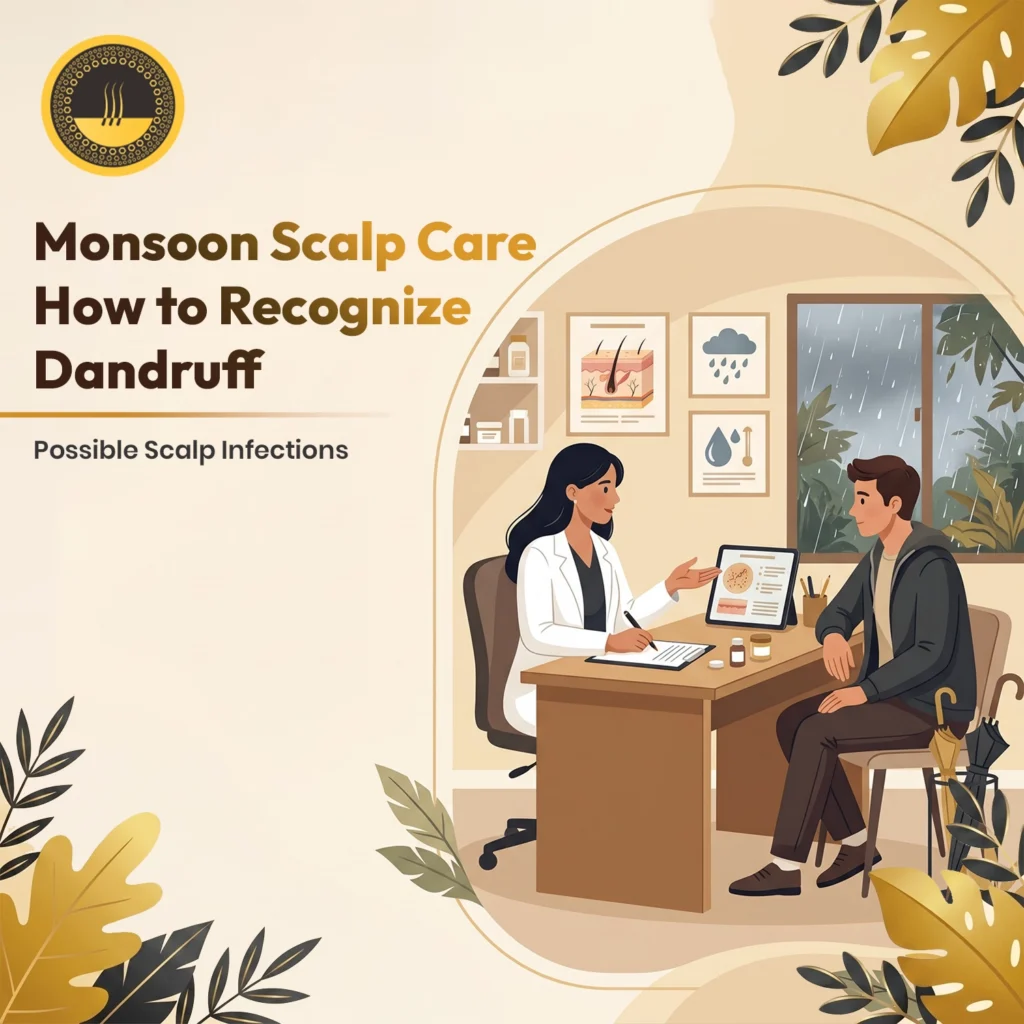
The monsoon brings relief from the summer heat in Pune, but increased humidity and sweating can make some scalp problems more noticeable. During the rainy season, people may experience dandruff, scalp itching, oiliness, irritation or increased hair shedding.
Although these symptoms can sometimes be managed with appropriate scalp care, they do not always have the same underlying cause. Dandruff, seborrheic dermatitis, eczema, psoriasis and fungal scalp infections can produce overlapping symptoms but may require different approaches.
Understanding these differences can help you avoid unsuitable products and recognize when professional evaluation may be necessary.
Humidity and sweating can affect scalp comfort, particularly in people who already experience dandruff or irritation. Sweat, excess oil and hair-product residue may accumulate and contribute to discomfort.
Keeping the scalp clean and avoiding prolonged dampness can support general scalp hygiene. However, humid weather alone does not mean that someone has a fungal infection.
Common scalp concerns during the monsoon include:
Identifying the cause is important because similar-looking symptoms can arise from different conditions.
Dandruff
Dandruff commonly causes flakes and itching. It may be associated with an oily scalp and can overlap with seborrheic dermatitis, an inflammatory skin condition that affects areas rich in oil-producing glands.
Dandruff does not automatically indicate an infection. Its severity and recurrence can vary from person to person.
Fungal Scalp Infection
A fungal infection of the scalp, known as tinea capitis, can cause scaling, itching, broken hairs and patches of hair loss. Some people may also develop redness, tenderness or more significant inflammation.
Because these symptoms can resemble other scalp conditions, it is not always possible to identify the cause by appearance alone.
Seek medical assessment if you notice localized hair loss, broken hairs, marked redness, painful swelling or worsening scalp inflammation. These symptoms should not automatically be treated as ordinary dandruff.
1. Keep Your Scalp Clean
Regular washing helps remove sweat, excess oil and product residue. Choose a shampoo suitable for your scalp and hair type.
If you experience dandruff, an appropriate anti-dandruff shampoo may help. Follow the product instructions and avoid repeatedly switching to stronger products without understanding the cause of your symptoms.
Excessive washing with harsh products may cause dryness or irritation in some people.
2. Dry Your Hair and Scalp After Getting Wet
Rainwater and sweating can leave your hair damp, particularly if you wear a helmet or head covering for extended periods.
After getting wet, gently dry your hair and scalp. Avoid tying wet hair tightly or going to bed with soaking-wet hair. Keep pillowcases and head coverings clean and dry, and allow damp helmet liners to dry properly.
These habits support scalp hygiene, although they cannot guarantee prevention of every scalp condition.
3. Avoid Repeated Scratching
Scratching may temporarily relieve itching, but repeated scratching can irritate the skin and worsen inflammation.
Persistent itching can occur with dandruff, seborrheic dermatitis, eczema, psoriasis, folliculitis or fungal infection. Instead of treating itching as an isolated problem, consider whether another scalp condition may be responsible.
If the itching continues despite basic care, seek an appropriate assessment.
4. Use Anti-Dandruff Products as Directed
Anti-dandruff shampoos can help manage certain forms of dandruff. The appropriate product, frequency of use and duration depend on the formulation and individual condition.
Follow the label instructions. If symptoms persist, recur frequently or occur alongside crusting, significant redness or hair loss, a dermatologist can assess whether a different approach is needed.
Using a stronger product does not necessarily mean that it will work better.
5. Avoid Sharing Personal Hair-Care Items
Some scalp infections can spread through direct contact or contaminated personal items. Avoid sharing combs, hairbrushes, towels, caps and hair accessories, especially when an infection is suspected.
Keep these items clean and use personal grooming products separately.
6. Keep Helmets and Head Coverings Clean
Helmets are essential for road safety, including during the monsoon. However, a damp or unclean helmet lining may contribute to discomfort for people prone to scalp irritation.
Keep helmet interiors reasonably clean and allow damp liners to dry thoroughly. Do not compromise helmet safety or stop wearing a helmet to manage scalp symptoms.
If itching or irritation repeatedly develops beneath a helmet, consider seeking medical advice to identify the cause.
7. Avoid Random Medicated Creams
Using an over-the-counter cream without knowing the cause of a rash may delay appropriate treatment. This is particularly relevant when a fungal infection is possible.
Steroid-containing creams can reduce redness and itching temporarily, but when used inappropriately on certain fungal infections, they may mask symptoms and allow the infection to worsen.
Avoid self-prescribing medicated creams for unexplained scalp symptoms. The appropriate treatment depends on the diagnosis.
Consider professional evaluation if you experience:
Seek prompt medical assessment for painful, swollen or rapidly worsening scalp lesions, particularly when accompanied by fever or feeling unwell.
An assessment can help distinguish dandruff from seborrheic dermatitis, fungal infection and other scalp conditions. Depending on the findings, further examination or testing may be required.
Treatment depends on the underlying cause.
Dandruff and seborrheic dermatitis may be managed with appropriate medicated shampoos or other clinician-recommended treatments. Fungal scalp infections may require specific antifungal medication and should not be assumed to respond to ordinary anti-dandruff products.
Other causes of itching or scaling may need different management. This is why repeatedly trying shampoos or creams without a clear diagnosis may not resolve the problem.
A healthcare professional can recommend an approach based on the symptoms, examination findings and individual circumstances.
Monsoon humidity and sweating can make existing scalp concerns more noticeable, but persistent flakes, itching or hair loss should not automatically be attributed to dandruff. Different scalp conditions can look similar, and appropriate care depends on identifying the underlying cause.
Maintaining scalp hygiene, using hair-care products appropriately and avoiding unsupervised medicated creams are useful general precautions. When symptoms persist, worsen or involve localized hair loss, professional evaluation can help clarify the cause and guide suitable treatment.
For additional educational information about scalp health and common hair concerns, readers may explore reliable dermatology resources or the educational material available on a dermatology clinic’s website.
Book a consultation today and take the first step toward healthier skin and hair.
Humidity, sweating and changes in scalp oiliness may make dandruff or seborrheic dermatitis more noticeable in some people. However, not every case of scalp itching or flaking is caused by dandruff.
No. Itching can occur with dandruff, seborrheic dermatitis, eczema, psoriasis, folliculitis and fungal infections. The cause may require professional assessment, especially when symptoms persist or worsen.
Some scalp infections, including tinea capitis, can cause broken hairs and patches of hair loss. Early assessment is important because significant inflammation may lead to complications. Not all hair shedding is caused by an infection.
Consider consulting a dermatologist if dandruff is persistent, severe or recurrent, or if it occurs with marked redness, pain, crusting, discharge, broken hairs or localized hair loss.
The content is for general informational purposes only, is not a substitute for professional medical advice, diagnosis, or treatment, and readers should consult a qualified healthcare professional about individual concerns.
Regain Skin Clinic And Hair Transplant Center,
Wakad, Pune
Get a Free Quote
Copyright © 2026 regainhairandskin.in, design & developed by Codigix