
G11074 – BHMS, DCA(diploma in clinical aesthetics)
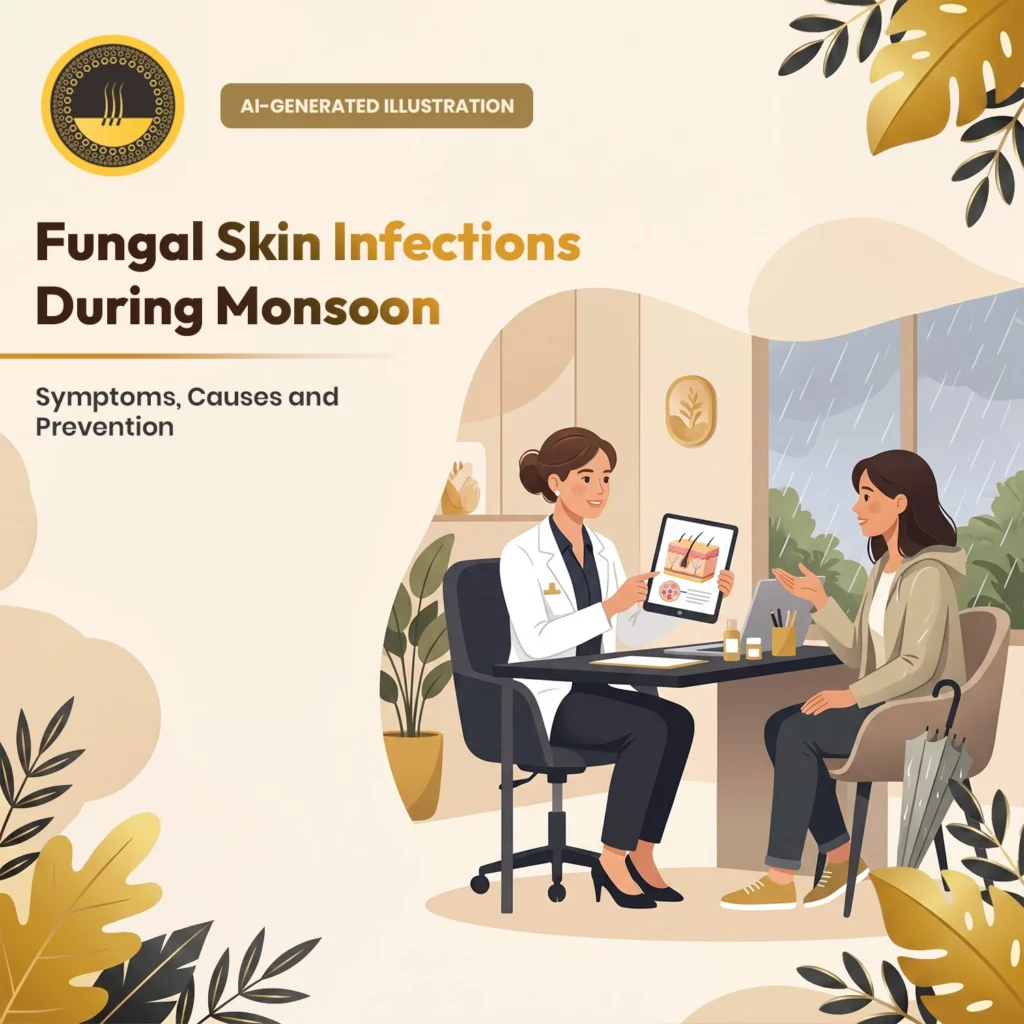
Monsoon brings relief from summer heat, but increased humidity and sweating can make certain skin concerns more noticeable. Some people experience itching, rashes, scaling, or changes in skin colour during the rainy season. In some cases, these symptoms may be associated with fungal skin infections.
Warm, humid conditions and prolonged moisture can create an environment that supports the growth of certain fungi. However, not every itchy rash or skin discoloration is caused by a fungal infection. Conditions such as eczema, dermatitis, psoriasis, and allergic reactions can produce similar symptoms.
Understanding common fungal infections, recognizing their possible signs, and knowing when to seek professional advice can help people make informed decisions about their skin health.
Fungi can thrive in warm, moist environments. During the monsoon, sweat and rainwater may remain on the skin for longer, particularly in areas where moisture becomes trapped.
Several factors can contribute to the development or spread of fungal infections:
These factors may increase the risk of infection, but exposure does not mean that an infection will necessarily develop.
Fungal infections can affect different parts of the body. Their appearance and symptoms depend on the organism involved and the area affected.
Ringworm is a fungal skin infection, not an infection caused by a worm. It may appear as a circular or ring-shaped rash with a scaly border. The affected area may itch and gradually expand.
Also known as tinea pedis, athlete’s foot commonly affects the skin between the toes or on the soles of the feet. Symptoms may include itching, peeling, scaling, cracking, and discomfort.
Tinea cruris affects the groin and nearby skin. It may cause an itchy, red or darker, scaly rash that can spread around the inner thighs.
Tinea versicolor is associated with an overgrowth of a yeast that normally lives on the skin. It can cause lighter or darker patches, often on the chest, back, neck, or shoulders. Fine scaling may be present, and the patches can be more noticeable after sun exposure.
Fungal infections of the nails may cause changes in nail colour, thickness, texture, or shape. These changes can also occur for other reasons, so an appropriate assessment may be necessary.
Some fungal infections affect the scalp and hair-bearing areas. They may cause scaling, itching, broken hairs, or patches of hair loss. Scalp infections should be assessed by a healthcare professional because they may require prescription treatment.
The symptoms of a fungal infection vary according to its type and location. Possible signs include:
These symptoms are not exclusive to fungal infections. For example, eczema and contact dermatitis may also cause itching, redness, and scaling.
Avoid diagnosing a rash based only on photographs or its appearance. A proper assessment can help distinguish between conditions that may look similar.
Different skin conditions can have overlapping symptoms, but they may require different approaches to management. Using a treatment intended for a fungal infection when the actual problem is something else may delay appropriate care.
During an evaluation, a qualified healthcare professional may ask about the duration of symptoms, the affected area, previous treatments, possible exposure, and any related medical history. The skin may be examined, and a sample of skin, hair, or nail may be tested when necessary.
The need for testing depends on the clinical situation. It may be particularly helpful when the diagnosis is uncertain, the infection keeps returning, or previous treatment has not worked as expected.
Treatment depends on the type of infection, the affected area, its extent, and the person’s health circumstances.
Depending on the diagnosis, treatment may involve antifungal creams, ointments, gels, sprays, shampoos, or prescription oral medicines. Some infections involving the scalp or nails require a different approach from infections limited to the skin.
It is important to use medication according to the instructions provided by a qualified healthcare professional. Symptoms may improve before the infection has fully cleared, and stopping treatment prematurely can contribute to incomplete treatment or recurrence.
Avoid repeatedly using random creams, particularly combination products containing steroids, without an appropriate diagnosis. Steroid-containing creams can alter the appearance of some fungal infections and may allow them to worsen or become harder to recognize.
If symptoms persist, spread, or recur despite treatment, seek further medical assessment rather than repeatedly switching products.
Simple hygiene and moisture-management habits can help reduce conditions that favour some fungal infections.
Keep Skin Dry
After bathing or getting wet in the rain, dry your body thoroughly. Pay particular attention to the spaces between the toes and areas where skin folds can retain moisture.
Change Damp Clothing
Change out of wet or sweaty clothing when possible. Clean, dry clothes can help reduce prolonged moisture exposure.
Look After Your Feet
Dry your feet before putting on socks and shoes. Allow damp footwear to dry fully before wearing it again, and avoid remaining in wet socks for extended periods.
Avoid Sharing Personal Items
Do not share towels, clothing, combs, razors, or other personal items when an infection may be present. Wash and dry personal items appropriately.
Maintain Appropriate Skin Hygiene
Keep the skin clean and dry without excessive scrubbing or using harsh products that may cause irritation. If a rash develops, avoid assuming that frequent washing alone will resolve it.
These measures can reduce some risk factors, but they cannot prevent every fungal infection.
Consider consulting a qualified healthcare professional if you experience:
Seek prompt medical assessment if a rash is rapidly worsening or accompanied by significant pain, fever, swelling, or other concerning symptoms. People with weakened immune systems or certain underlying medical conditions may need earlier assessment.
Humidity and sweating during the rainy season can contribute to conditions that favour certain fungal infections. However, an itchy rash, discoloured patch, or area of scaling does not automatically indicate a fungal problem.
Understanding the possible causes, maintaining sensible skin hygiene, and seeking professional assessment when symptoms persist can help avoid inappropriate self-treatment. An accurate diagnosis is particularly important for recurrent infections and concerns involving the scalp or nails.
For additional educational information about skin and scalp health, readers can explore the resources available on the Regain Skin Clinic website. Individual symptoms and treatment decisions should be discussed with a qualified healthcare professional.
Book a consultation today and take the first step toward healthier skin and hair.
Warm, humid conditions, increased sweating, and prolonged moisture exposure can create favourable conditions for certain fungal infections. Damp clothing and footwear may also contribute.
Some fungal infections can spread through direct skin contact or contaminated personal items. The possibility of transmission depends on the type of infection.
Treatment depends on the infection and the affected area. A healthcare professional may recommend an appropriate antifungal medicine, which could be topical or oral depending on the diagnosis.
Yes. Recurrence can occur, particularly when contributing factors remain or treatment has not fully cleared the infection. Recurrent symptoms should be assessed to confirm the diagnosis and determine the appropriate next steps.
The content is for general informational purposes only, is not a substitute for professional medical advice, diagnosis, or treatment, and readers should consult a qualified healthcare professional about individual concerns.
Regain Skin Clinic And Hair Transplant Center,
Wakad, Pune
Get a Free Quote
Copyright © 2026 regainhairandskin.in, design & developed by Codigix