G11074 – Cosmetologist
Wedding preparations often involve several decisions related to personal grooming and appearance. For individuals experiencing hair thinning, bald patches, or a receding hairline, hair loss can become an additional concern during this period.
A hair transplant is a surgical procedure that may help restore hair in areas affected by certain types of hair loss. However, it requires careful planning, recovery time, and realistic expectations.
Individuals considering a hair transplant in Wakad before marriage should understand the procedure, recovery stages, expected hair growth, and the appropriate time to undergo treatment.
Starting the consultation process early allows sufficient time to assess hair loss, determine suitability, and discuss whether surgery is appropriate before an important event.
Hair loss can affect individuals at different ages and may result from genetic factors, hormonal influences, medical conditions, or other causes.
A hair transplant may be considered by individuals experiencing:
Unlike temporary cosmetic solutions, hair transplantation involves moving hair follicles from a donor area, usually the back or sides of the scalp, to areas with reduced hair density.
The transplanted follicles may continue producing hair over time, although results depend on donor hair quality, the underlying cause of hair loss, and individual healing.
Two commonly used hair transplantation techniques are FUE and FUT.
1. FUE (Follicular Unit Extraction)
FUE involves extracting individual hair follicular units from the donor area and implanting them into the recipient area.
Some considerations include:
Individual follicular extraction.
Small extraction marks in the donor area.
No continuous linear donor scar.
Recovery requirements that vary between individuals.
2. FUT (Follicular Unit Transplantation)
FUT involves removing a strip of scalp tissue from the donor area. Follicular units are then separated and implanted into the recipient area.
The technique may be suitable for selected patients depending on donor characteristics, hair loss pattern, and surgical planning.
The choice between FUE and FUT should be based on medical assessment rather than personal preference alone.
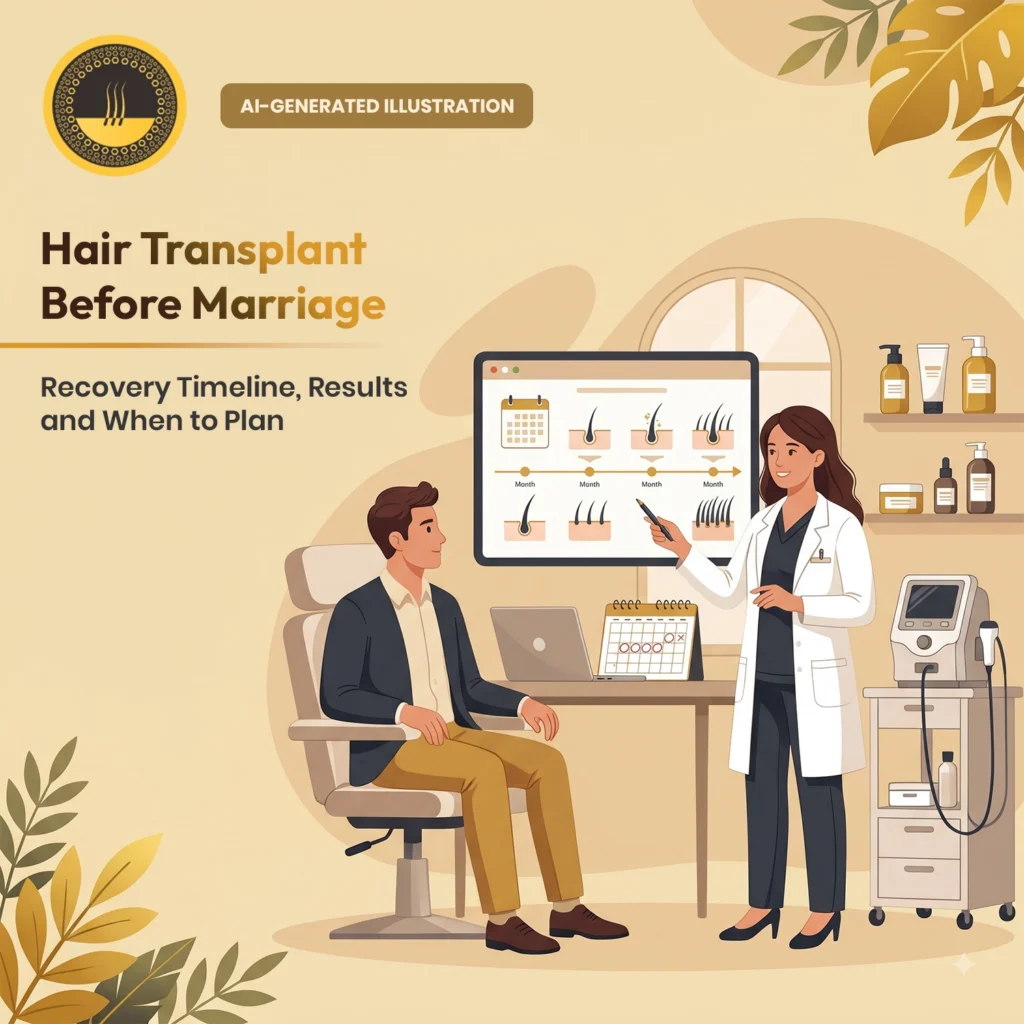
Hair Transplant Recovery Timeline: What to Expect
Hair transplantation is a gradual process. Initial wound healing occurs over days to weeks, while visible hair growth develops over several months.
First 2–3 Days: Initial Healing
During the first few days, patients may experience:
Mild swelling around the forehead.
Redness in the treated areas.
Small scabs around transplanted follicles.
Mild discomfort or scalp sensitivity.
Following post-operative instructions is important during this period.
Day 4–10: Scab Formation and Healing
Small scabs gradually develop and begin to settle. Gentle washing may be introduced according to the surgeon’s instructions.
Patients should avoid scratching, rubbing, or disturbing the transplanted area.
Week 2–4: Early Recovery
Most initial healing progresses during this period. Redness and swelling generally reduce, although some individuals may experience longer-lasting sensitivity.
Transplanted hair shafts may begin shedding. This is commonly expected and does not necessarily indicate failure of the transplanted follicles.
Month 2–3: Temporary Shedding Phase
Many patients experience a temporary shedding phase known as shock loss.
The transplanted hair shafts may fall out while the follicles remain beneath the skin. Existing native hair may also experience temporary shedding in some cases.
Month 3–6: Early Hair Growth
New hair growth may gradually become visible.
Initially, the hair may appear thin or uneven. Growth varies between individuals, and significant density should not be expected at this stage.
Month 6–12: Progressive Improvement
Hair growth and thickness generally continue to improve.
The hairline and overall coverage become more noticeable as the transplanted follicles mature.
Month 12–18: Further Maturation
Some patients continue experiencing improvements in hair thickness and appearance during this period. The final outcome varies depending on individual factors and the extent of transplantation.
Timing is one of the most important considerations for individuals planning surgery before their wedding.
A general planning guide is:
A hair transplant should not be considered a last-minute cosmetic treatment. The timing should be discussed with the treating surgeon after evaluating the expected recovery and growth pattern.
Hair transplantation outcomes differ between patients. Important factors include:
Donor Hair Quality: The density, thickness, and availability of donor hair influence the surgical plan.
Hair Loss Pattern: The extent and progression of hair loss determine the areas that may require treatment.
Age and Future Hair Loss: Younger patients may experience continued hair loss after transplantation. Long-term planning is therefore important.
Scalp Health: Existing scalp conditions may affect surgical suitability and recovery.
Post-Operative Care: Following the surgeon’s instructions helps support healing and reduce avoidable complications.
Proper preparation and aftercare are important parts of surgical treatment.
Before Surgery
Undergo a detailed scalp and donor area assessment.
Discuss medical history and current medications.
Inform the surgeon about existing medical conditions.
Avoid smoking as advised by the treating professional.
Follow pre-operative instructions carefully.
After Surgery
Follow the prescribed scalp washing routine.
Avoid touching or scratching the transplanted area.
Avoid strenuous physical activity until permitted.
Protect the scalp from direct sun exposure.
Take prescribed medication as directed.
Attend scheduled follow-up appointments.
PRP therapy or other additional treatments should only be considered when clinically appropriate. They are not necessary for every hair transplant patient and do not guarantee improved results.
Before undergoing a hair transplant, patients should evaluate the qualifications of the operating surgeon, the suitability of the procedure, donor hair availability, and the surgical facility.
Important questions to discuss during consultation include:
A detailed consultation helps patients understand the procedure and make informed decisions.
A hair transplant may be an option for individuals experiencing pattern hair loss, a receding hairline, or selected areas of baldness. However, it is a surgical procedure that requires proper assessment, recovery time, and patience.
For individuals planning a wedding, starting the consultation process 12–18 months in advance may provide a more suitable timeline for surgery and subsequent hair maturation.
Those researching hair transplant treatment in Wakad should prioritise medical suitability, donor hair assessment, realistic expectations, and appropriate post-operative care rather than focusing only on the wedding date.
Book a consultation today and take the first step toward healthier skin and hair.
Ideally, consultation should begin 12–18 months before the wedding. This allows time for surgical planning, recovery, and gradual hair growth. Individual timelines may vary.
Some new hair growth may become visible within three to six months. However, the hair may still be thin, and the final density usually takes longer to develop.
Both techniques have specific advantages and limitations. FUE involves individual follicular extraction, while FUT involves removing a strip of scalp tissue. The appropriate method depends on donor hair characteristics, scalp condition, and individual treatment requirements.
Transplanted follicles may provide long-term hair growth, but individual outcomes vary. Existing non-transplanted hair may continue thinning due to genetic hair loss. Medical follow-up and ongoing hair loss management may be recommended.
Get a Free Quote
Copyright © 2026 regainhairandskin.in, design & developed by Codigix