G11074 – BHMS, DCA(diploma in clinical aesthetics)
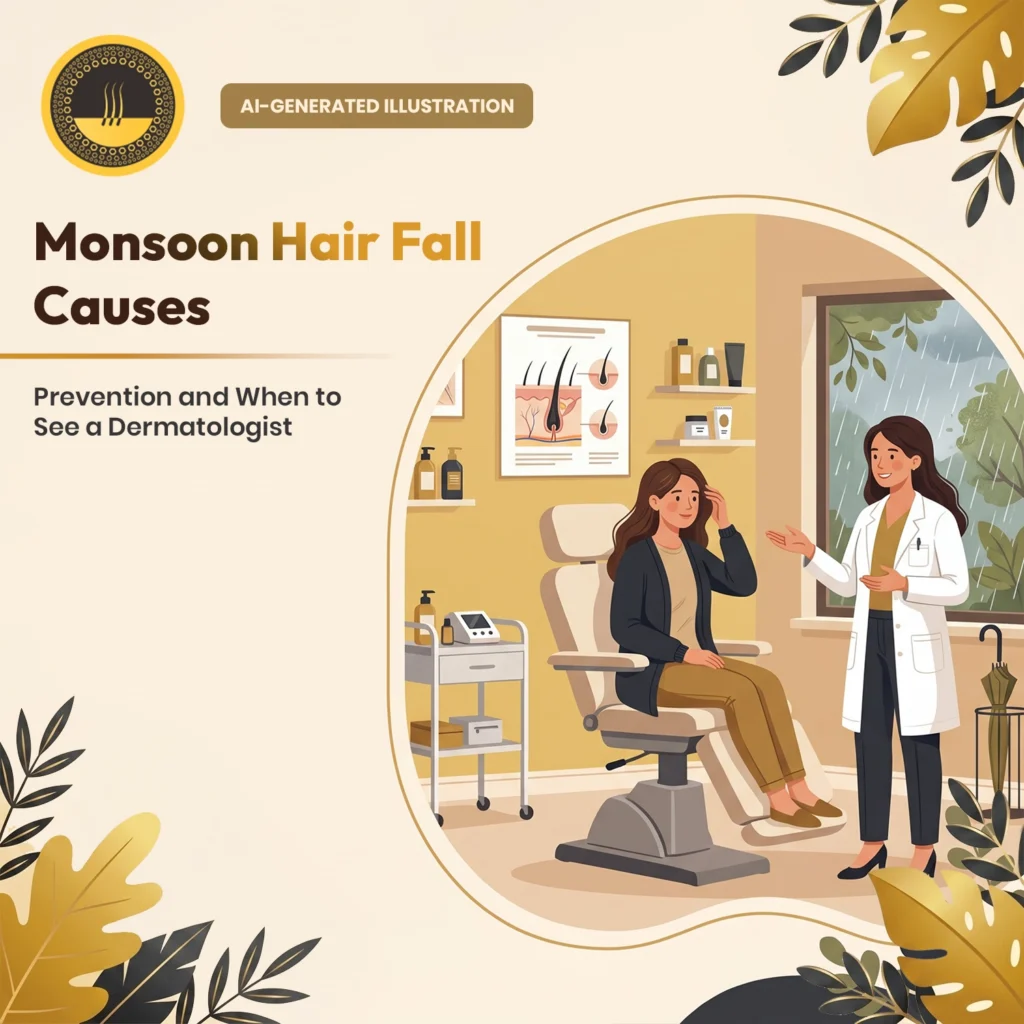
Monsoon brings relief from Pune’s summer heat, but increased humidity and sweating can make some hair and scalp concerns more noticeable. During the rainy season, people may experience an oily scalp, dandruff, itching, hair breakage, or increased hair shedding.
However, monsoon weather does not automatically cause permanent hair loss. Changes in hair shedding may be associated with scalp conditions, hair-care practices, stress, nutritional deficiencies, recent illness, or changes in the hair-growth cycle. Understanding the difference between hair shedding and hair breakage is an important first step toward understanding the problem.
For people experiencing persistent hair fall in Wakad, Pune, and nearby areas, recognizing possible causes and knowing when to seek professional advice can help guide informed decisions.
Several factors may contribute to hair and scalp concerns during humid weather.
An increase in visible hair on a comb, pillow, or bathroom floor does not necessarily mean permanent hair loss. The duration, pattern, and severity of shedding are important when assessing the cause.
During monsoon, sweat, scalp oil, and hair-product residue may accumulate and make the scalp feel uncomfortable. Some people may also notice increased flaking or itching.
Humidity can affect the hair shaft as well. Damp hair tends to tangle more easily, and rough handling can increase mechanical damage.
It is useful to distinguish between two different processes:
Hair shedding occurs when a hair naturally leaves its follicle as part of the hair-growth cycle. Increased shedding may occur with certain medical conditions or following a triggering event.
Hair breakage occurs when the hair shaft breaks before the hair completes its growth cycle. It may be associated with physical damage, heat styling, chemical processing, or rough handling.
These problems can occur together, but their causes and management may differ.
Dandruff and seborrheic dermatitis can cause scalp flaking, itching, and irritation. Frequent scratching may aggravate the scalp and contribute to hair-shaft damage.
However, dandruff alone does not explain every case of excessive hair shedding. Persistent itching, significant redness, swelling, crusting, or localized hair loss may indicate another scalp condition that needs assessment.
If symptoms continue despite appropriate scalp care, avoid repeatedly switching shampoos without understanding the possible cause. A qualified healthcare professional can examine the scalp and determine whether further evaluation is needed.
Certain scalp infections can cause scaling, itching, broken hairs, and patches of hair loss. These symptoms may resemble severe dandruff or other inflammatory scalp conditions.
A circular or patchy area of hair loss accompanied by scaling, inflammation, or broken hairs should be assessed by a healthcare professional. The appropriate treatment depends on the underlying condition, and an infection may require specific prescription medication.
Self-diagnosis can be difficult because different scalp conditions can look similar. Persistent or worsening symptoms should not be managed solely by trying routine anti-dandruff products.
Hair is more vulnerable to mechanical damage when wet. Rain exposure itself does not necessarily cause permanent hair loss, but tangling and rough handling of damp hair can contribute to breakage.
During monsoon, the following habits may help minimize avoidable damage:
These practices can help reduce hair-shaft damage, but they do not treat medical causes of hair shedding.
Telogen effluvium is a form of excessive hair shedding that can occur when a triggering event causes more hair follicles than usual to enter the resting phase of the hair-growth cycle.
The shedding may become noticeable weeks or months after the triggering event. This delay means that the cause may not be immediately obvious.
Possible triggers include:
Not every episode of hair shedding is telogen effluvium. A professional assessment can help determine whether this or another condition may be contributing to the symptoms.
Adequate nutrition supports normal hair growth. Restrictive diets, rapid weight loss, inadequate protein intake, and certain nutritional deficiencies may contribute to excessive shedding.
However, taking multiple supplements without identifying a deficiency is not always appropriate. Supplements may be unnecessary, and some can cause problems when taken inappropriately. Depending on the person’s symptoms and medical history, a healthcare professional may recommend specific investigations.
Stress can also affect the hair-growth cycle. Significant physical or emotional stress may contribute to telogen effluvium, with shedding appearing later rather than immediately after the stressful period.
A balanced diet, sufficient sleep, and sustainable daily habits support general health, but they cannot guarantee that hair fall will stop.
A consistent hair-care routine can help minimize damage and support scalp hygiene.
Keep your scalp clean: Wash your scalp according to your hair type, activity level, and individual needs.
Dry your hair after rain: Avoid leaving hair damp for prolonged periods, and dry it gently.
Avoid rough handling: Minimize vigorous towel rubbing, excessive heat styling, and hairstyles that continuously pull on the roots.
Maintain balanced nutrition: Avoid crash diets and extreme calorie restriction. Aim for a varied diet that provides adequate protein and other essential nutrients.
Keep helmets clean and dry: Regularly clean helmet interiors according to the manufacturer’s instructions and allow them to dry properly.
Address persistent scalp symptoms: Dandruff, itching, scaling, or localized hair loss may require evaluation rather than repeated experimentation with products.
These habits may reduce avoidable damage, but persistent hair loss still requires attention to its underlying cause.
There is no single treatment for every type of hair loss. Management depends on the cause identified during assessment.
For example, dandruff or seborrheic dermatitis may require appropriate medicated products. A diagnosed scalp infection may need specific treatment. Telogen effluvium involves identifying and addressing relevant triggers, while confirmed nutritional deficiencies may require correction.
Pattern hair loss may need a different medical approach, and hair breakage may be addressed by reducing physical, heat-related, or chemical damage.
There is no universal “monsoon hair fall shampoo” that works for everyone. Treatment decisions should be based on the individual’s condition rather than the popularity of a product or its advertising claims.
If you are searching for hair fall treatment near me in Wakad, hair loss treatment near me, hair fall doctor near me, hair specialist near Wakad, or dermatologist near me in Wakad, professional evaluation can help determine why you are experiencing increased shedding.
Regain Clinic Wakad provides dermatological evaluation for hair fall, hair thinning, dandruff, scalp concerns and other skin and hair conditions. The clinic is located at 203/204, ATC 126, Anandtara Properties, Swami Vivekanand Nagar, near Olive Orchard Society, Wakad, Pimpri-Chinchwad, Maharashtra 411057.
The clinic is accessible to patients from Wakad and nearby areas including Hinjewadi, Tathawade, Punawale, Pimple Saudagar, Pimple Nilakh, Thergaon, Balewadi, Baner, Aundh, Ravet, Pimpri and Nigdi.
Increased hair shedding during monsoon can be concerning, but it does not necessarily indicate permanent hair loss. Humidity, sweating, scalp irritation, and hair breakage can make hair concerns more noticeable, while conditions such as telogen effluvium, pattern hair loss, nutritional deficiencies, and scalp disorders may require a different approach.
For people in Wakad and nearby areas, understanding the possible cause is more useful than relying on a general seasonal hair-loss remedy. Professional assessment can help distinguish between shedding, breakage, and scalp conditions so that appropriate options can be discussed.
For additional educational information about hair and scalp health, readers can explore resources available on the Regain Skin Clinic website. Individual concerns should be discussed with a qualified healthcare professional.
Book a consultation today and take the first step toward healthier skin and hair.
Not always. Some shedding may be temporary, particularly when associated with a trigger such as illness or stress. However, persistent or progressive hair loss may have another cause and should be assessed.
Dandruff can cause itching and irritation, and repeated scratching may contribute to hair damage. However, significant or persistent hair loss should not automatically be attributed to dandruff.
Rain exposure does not necessarily cause permanent hair loss. Wet hair can tangle more easily and may break with rough handling, while persistent shedding may be associated with other factors.
Seek an assessment if shedding is sudden, unusually heavy, persistent, or accompanied by visible thinning, bald patches, scalp inflammation, pain, or other unexplained symptoms.
The content is for general informational purposes only, is not a substitute for professional medical advice, diagnosis, or treatment, and readers should consult a qualified healthcare professional about individual concerns.
Regain Skin Clinic And Hair Transplant Center,
Wakad, Pune
Get a Free Quote
Copyright © 2026 regainhairandskin.in, design & developed by Codigix