
G11074 – BHMS, DCA(diploma in clinical aesthetics)
The monsoon brings cooler weather and increased humidity, but some people notice changes in their skin, including uneven skin tone, dark marks, acne breakouts and a dull appearance.
Pigmentation can develop for several reasons, including sun exposure, hormonal influences, inflammation and previous acne. Humid weather may indirectly contribute to some concerns by aggravating acne or irritation, but it is not the sole cause of pigmentation.
Understanding the type of pigmentation and the factors contributing to it is important before choosing a skincare product or treatment. Different conditions can look similar but may require different approaches.
1. Ultraviolet (UV) Exposure
Cloudy weather does not eliminate UV exposure. Sunlight can contribute to the development or worsening of certain forms of pigmentation, including melasma and sun-induced dark spots.
Using suitable sun protection consistently is an important part of managing pigmentation throughout the year, including during the rainy season.
2. Acne and Post-Acne Marks
Some people experience more breakouts when sweating, humidity or unsuitable skincare products aggravate their acne.
After an inflamed pimple heals, a flat dark mark may remain. This is known as post-inflammatory hyperpigmentation. Picking or squeezing pimples can increase inflammation and the risk of persistent marks.
Managing acne and avoiding unnecessary skin irritation can help reduce the likelihood of additional dark marks.
3. Hormonal Factors
Melasma is a pigmentation condition that commonly appears as brown or grey-brown patches, often on the cheeks, forehead or upper lip. Hormonal influences and UV exposure can contribute to its development or worsening.
Melasma is not simply a result of monsoon weather, and its management may require ongoing care.
4. Skin Irritation and Inflammation
Allergic reactions, eczema, unsuitable skincare products and other inflammatory conditions may leave dark marks after the irritation settles, particularly in people prone to post-inflammatory pigmentation.
Introducing several new products at once or using harsh exfoliants may increase irritation. A gentle, consistent routine is generally preferable.
Pigmentation is not a single condition. Identifying the type helps guide appropriate management.
Melasma
Melasma causes brown or grey-brown patches, usually on the face. Hormonal influences, genetic susceptibility and UV exposure may contribute. It can be persistent and may recur even after improvement.
Post-Acne Hyperpigmentation
These are flat, dark marks that remain after acne lesions heal. They are different from acne scars, which involve changes in skin texture.
Sun-Induced Pigmentation
Long-term UV exposure can contribute to uneven pigmentation and certain dark spots. A new, changing or unusual pigmented spot should be assessed rather than automatically assumed to be harmless sun pigmentation.
Post-Inflammatory Hyperpigmentation
Dark marks may develop after inflammation caused by skin irritation, eczema, acne or other skin conditions. Treatment depends on the underlying cause and the skin’s response.
Not every dark patch is caused by pigmentation alone. If a patch is changing, bleeding, painful or noticeably different from surrounding marks, seek medical evaluation.
A dull appearance can have several possible explanations, including:
Dullness does not necessarily mean that the skin needs aggressive exfoliation or a professional facial. Identifying the cause and choosing suitable skincare are more useful than repeatedly adding new products.
1. Use Broad-Spectrum Sunscreen
Apply a broad-spectrum sunscreen during the daytime, even when the sky is cloudy. Follow the product instructions for application and reapplication, particularly when spending time outdoors.
Sun protection is an important part of managing several pigmentation conditions. A suitable formulation should feel comfortable on your skin and be compatible with your existing skincare routine.
2. Cleanse Gently
Use a gentle cleanser appropriate for your skin type to remove sweat, excess oil and residue.
Avoid scrubbing aggressively or washing your face repeatedly in an attempt to remove pigmentation. These practices can irritate the skin and may worsen some forms of post-inflammatory pigmentation.
3. Moisturise Regularly
Even oily skin may benefit from moisturising. Choose a product suited to your skin type and existing concerns.
Maintaining the skin barrier can help reduce dryness and irritation, particularly if you use products intended to treat acne or pigmentation.
4. Avoid Picking Pimples
Picking, squeezing or scratching inflamed skin can increase the risk of persistent dark marks and scarring.
If acne is recurring or leaving marks, appropriate acne management may help prevent further inflammation.
5. Introduce Products Carefully
Avoid starting several active skincare ingredients at the same time. Strong exfoliants and unsuitable products can cause irritation, especially when used too frequently.
If a product causes persistent burning, redness or swelling, discontinue it and seek medical advice if symptoms continue.
6. Maintain Healthy Daily Habits
Adequate sleep, a balanced diet, sufficient hydration and general physical activity support overall wellbeing.
These habits complement skincare but should not be presented as standalone treatments for melasma or other established pigmentation conditions.
A dermatologist may assess the appearance and distribution of the pigmentation, its duration, previous skin conditions, sun exposure, medical history and skincare products being used.
The assessment helps distinguish between conditions such as melasma, post-acne marks and other causes of dark patches.
Not every pigmentation concern requires a chemical peel or laser procedure. The appropriate approach depends on the diagnosis, skin type, potential side effects and the individual’s circumstances.
Prescription Skincare Treatments
Depending on the condition, a clinician may recommend topical treatments to help manage pigmentation. The choice depends on the diagnosis, skin sensitivity and other individual factors.
Avoid using prescription-strength products or unverified skin-lightening creams without medical guidance. Some products can cause irritation or other adverse effects when used incorrectly.
Chemical Peels
Selected chemical peels may be considered for certain pigmentation concerns. Their suitability depends on the type of pigmentation, skin type, peel formulation and risk of side effects.
Peels can also cause irritation or worsen pigmentation in some circumstances, so they are not appropriate for everyone.
Laser-Based Procedures
Certain laser or light-based procedures may be considered for selected pigmentation conditions. Outcomes vary, and some procedures may cause irritation or worsening pigmentation, particularly in susceptible skin types.
A qualified clinician should explain the potential benefits, risks, alternatives and likelihood of recurrence before treatment.
Managing Acne-Related Pigmentation
When dark marks follow acne, management may involve addressing active acne, reducing inflammation and selecting suitable pigmentation treatments when appropriate.
Treating the underlying acne can help limit the formation of new marks, although existing pigmentation may take time to fade.
Consider professional evaluation if you notice:
Seek prompt assessment for a new or changing pigmented lesion, particularly if it bleeds, develops irregular features or changes noticeably over time.
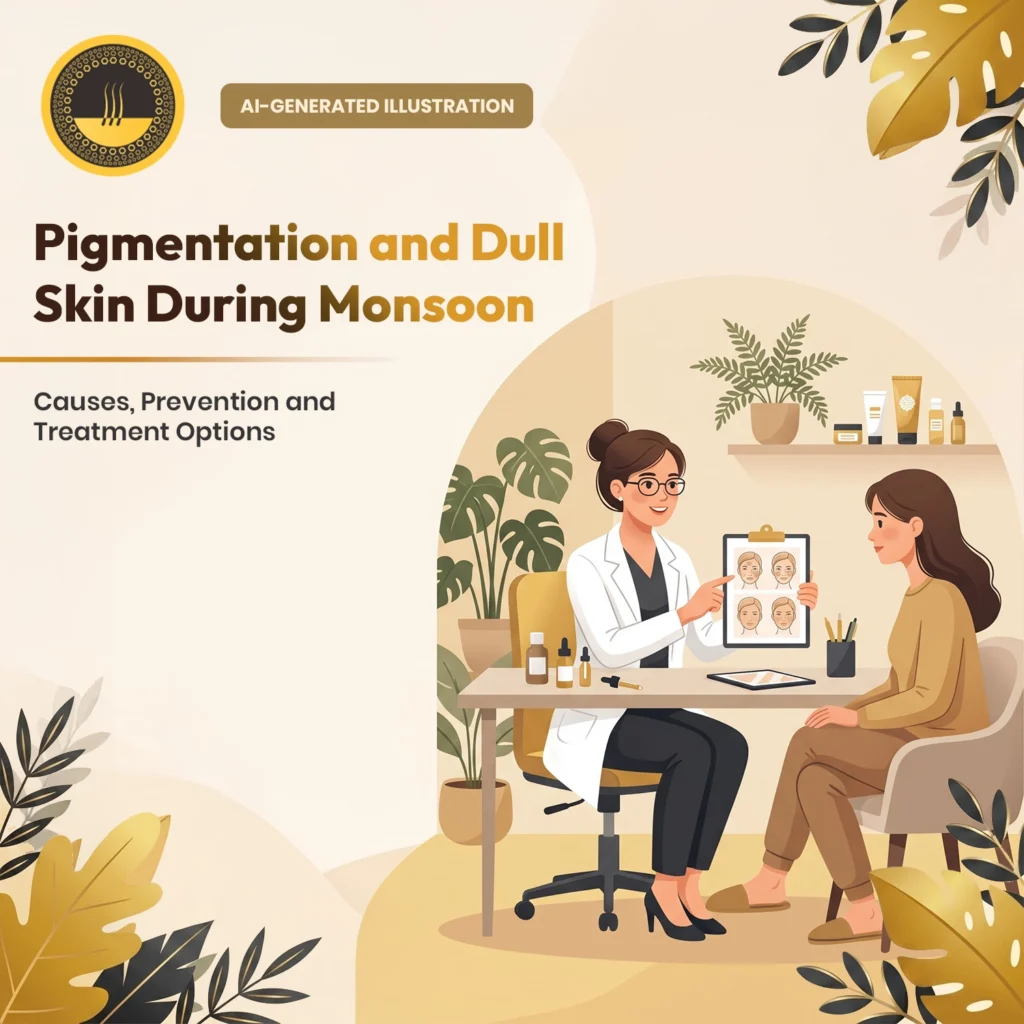
Pigmentation and dull-looking skin during monsoon can have several causes, including UV exposure, acne, hormonal influences and skin inflammation. Humidity may contribute indirectly to some skin concerns, but the right approach depends on identifying the underlying condition.
Gentle cleansing, suitable moisturising, consistent sun protection and avoiding skin irritation are useful general habits. For persistent or changing pigmentation, professional assessment can help determine which treatments may be appropriate.
For additional educational information about pigmentation and skin health, consult reliable dermatology resources or educational material available on a dermatology clinic’s website.
Book a consultation today and take the first step toward healthier skin and hair.
Dullness may be associated with dryness, excess oil, product residue, acne or uneven pigmentation. The cause varies, so aggressive exfoliation is not always appropriate.
Yes. Cloud cover does not eliminate UV exposure, and UV radiation can contribute to some forms of pigmentation. Consistent sun protection remains important.
The outcome depends on the cause. Some marks gradually fade, while conditions such as melasma may recur. No treatment can guarantee permanent removal of every type of pigmentation.
Consider an assessment if pigmentation persists, changes, repeatedly returns or occurs alongside irritation. New or changing pigmented lesions should be evaluated rather than assumed to be ordinary dark spots.
The content is for general informational purposes only, is not a substitute for professional medical advice, diagnosis, or treatment, and readers should consult a qualified healthcare professional about individual concerns.
Regain Skin Clinic And Hair Transplant Center,
Wakad, Pune
Get a Free Quote
Copyright © 2026 regainhairandskin.in, design & developed by Codigix