
G11074 – BHMS, DCA(diploma in clinical aesthetics)
Hair thinning and excessive shedding can have several causes. Understanding the underlying reason is important before choosing a treatment. Platelet-rich plasma (PRP) therapy is one option that may be considered for selected types of hair loss.
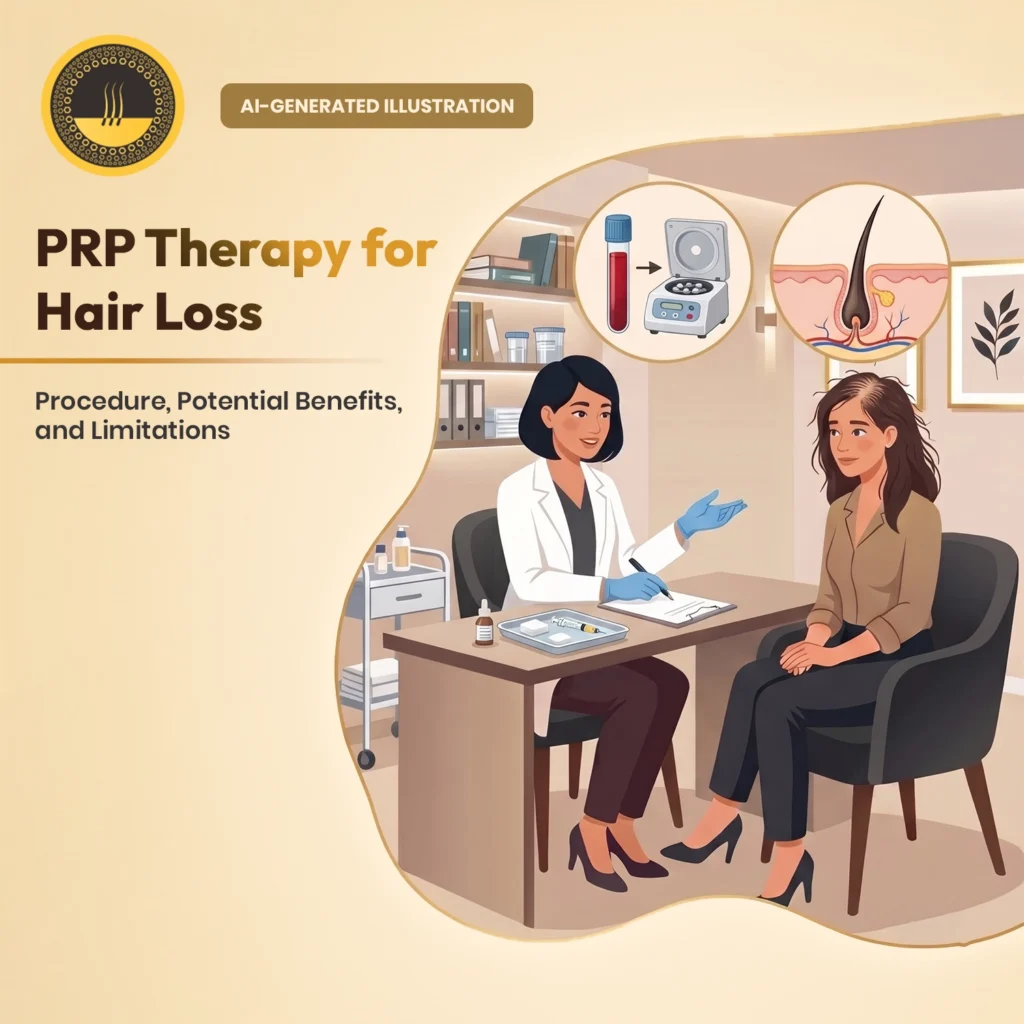
PRP involves collecting a small blood sample, processing it to concentrate platelets in plasma, and administering the prepared material into selected areas of the scalp. Platelets release growth factors involved in normal tissue repair and cellular signalling. Researchers have investigated whether these processes may support hair growth in certain conditions.
PRP is a non-surgical procedure, but it is not suitable for every type of hair loss. Its potential benefits depend on the underlying diagnosis, the condition of the hair follicles, and the individual’s response to treatment.
During PRP treatment, a blood sample is collected and processed using specialized equipment to separate the platelet-rich plasma from other blood components. The prepared plasma is then administered into selected areas of the scalp according to the treatment plan.
PRP has been studied particularly in people with hereditary pattern hair loss. Some studies report improvements in hair density or thickness, although the quality of evidence, preparation methods, and treatment protocols vary.
Because PRP procedures are not fully standardized, outcomes may differ between individuals and treatment settings. PRP should therefore be considered as one possible component of hair-loss management rather than a universal solution.
PRP may help improve hair density or thickness in some people with selected forms of hair loss. Some individuals may also notice changes in shedding, but results are variable and cannot be guaranteed.
The procedure uses a component prepared from the patient’s own blood and does not involve surgically transplanting hair follicles. However, using a person’s own blood does not eliminate the possibility of complications.
PRP may be considered alongside other appropriate treatments, depending on the diagnosis. It should not automatically replace established treatments when those are indicated. A healthcare professional can explain the available options, their limitations, and the evidence supporting their use.
PRP may be considered for selected individuals with certain types of hair thinning, particularly when functioning hair follicles remain in the affected areas.
Hair loss can result from hereditary factors, nutritional deficiencies, hormonal changes, illness, stress, medication effects, and scalp conditions. These causes require different approaches, and not all respond to PRP.
An assessment may include questions about the duration and pattern of hair loss, family history, medical conditions, medications, and previous treatments. Examination of the scalp may help determine whether additional investigations are needed.
The presence of hair thinning alone does not establish that PRP is appropriate. Depending on the findings, a healthcare professional may recommend another treatment, further evaluation, or monitoring.
PRP is commonly administered as a series of sessions rather than a single procedure. The number and frequency of sessions depend on the diagnosis, individual circumstances, and treatment protocol.
Some treatment plans include follow-up or maintenance sessions, but these are not automatically necessary for everyone. Before starting, discuss the proposed schedule, total cost, potential side effects, and how progress will be evaluated.
A clear plan should also explain what alternatives may be considered if the response is limited.
Hair growth follows a natural cycle, so improvement does not occur immediately. If PRP is effective for an individual, changes may develop gradually over several months.
The response can depend on the cause and duration of hair loss, the condition of the follicles, general health, and the treatment method used. Some people may experience improvement, while others notice little change.
PRP cannot be expected to recreate follicles that are completely absent. It should not be presented as a guaranteed substitute for hair transplantation when transplantation may be appropriate.
Monitoring changes over time helps assess whether the treatment is providing a meaningful benefit. Expectations should remain realistic, and the possibility of a limited response should be discussed before treatment begins.
PRP involves blood collection and injections into the scalp. Temporary discomfort, tenderness, redness, swelling, or bruising may occur. Infection and other complications are also possible, particularly when appropriate hygiene and procedural standards are not followed.
Medical conditions and certain medications may affect suitability. These factors should be reviewed before treatment, and patients should disclose their medical history and current medication use.
The potential benefits, uncertainties, costs, risks, and alternatives should all be considered before deciding whether to proceed.
Hair loss is a symptom rather than a single condition. Treating visible thinning without understanding its cause may not address the underlying problem.
Hair shedding associated with illness or nutritional deficiency requires a different assessment from gradual hereditary pattern hair loss. Scalp conditions may also need treatment before a hair-restoration procedure is considered.
Persistent, sudden, or patchy hair loss deserves appropriate assessment, especially when accompanied by scalp irritation or other symptoms. Identifying the cause helps guide treatment selection and establish realistic expectations.
Book a consultation today and take the first step toward healthier skin and hair.
PRP therapy involves preparing platelet-rich plasma from a person's own blood and administering it into selected areas of the scalp. It may be considered for certain types of hair loss.
No. Suitability depends on the underlying cause, scalp condition, medical history, and individual circumstances. Assessment is important before treatment.
The number and frequency vary according to the treatment plan and individual response. There is no universal schedule for every patient.
No. Some individuals may experience improvements in hair density or thickness, while others may have a limited response. Results cannot be guaranteed.
Understanding the cause of hair loss is an important first step towards choosing an appropriate management approach. A qualified healthcare professional can assess individual concerns and discuss suitable options.
Disclaimer: This article is for general educational purposes only and does not replace professional medical advice, diagnosis, or treatment. PRP outcomes vary, and hair regrowth cannot be guaranteed. Consult a qualified healthcare professional for individual assessment.
Get a Free Quote
Copyright © 2026 regainhairandskin.in, design & developed by Codigix