G11074 – BHMS, DCA(diploma in clinical aesthetics)
Some people notice increased hair shedding, scalp oiliness or changes in hair texture during the monsoon. Humidity, sweating, hair-care habits and existing scalp conditions may contribute to these concerns. However, hair loss can also be associated with hereditary factors, hormonal changes, nutritional deficiencies, illness and stress.
One treatment discussed for certain types of hair loss is Platelet-Rich Plasma (PRP) therapy. It uses a concentrated preparation of platelets obtained from a person’s own blood and is being studied and used in selected hair-loss conditions.
But does PRP work better during the rainy season? There is no established evidence that PRP is more effective simply because it is started during monsoon. Its potential benefits depend on the type of hair loss, the individual’s circumstances and the treatment protocol.
Understanding how PRP works, its limitations and who may be suitable for treatment can help people make informed decisions about hair health.
Several factors may contribute to hair and scalp concerns during the rainy season.
1. Humidity and Hair Breakage
Humid conditions can change hair texture and make strands more difficult to manage. Vigorous brushing, towel-drying or styling wet hair may contribute to breakage.
Hair breakage is different from hair shedding that occurs when a hair is released from its follicle.
2. Sweating and Scalp Conditions
Sweating may make the scalp feel oily or uncomfortable. Dandruff and other inflammatory scalp conditions can also cause itching and flaking.
Some scalp infections may cause broken hairs or patches of hair loss. Persistent itching, scaling or localised hair loss should be assessed rather than automatically attributed to seasonal shedding.
3. Stress, Illness and Nutritional Factors
Hair shedding can occur after significant physical or emotional stress, illness, major weight changes or nutritional deficiencies. In some cases, the shedding becomes noticeable weeks or months after the triggering event.
Not all hair loss during monsoon is caused by the weather. Identifying the underlying cause is important before selecting a treatment.
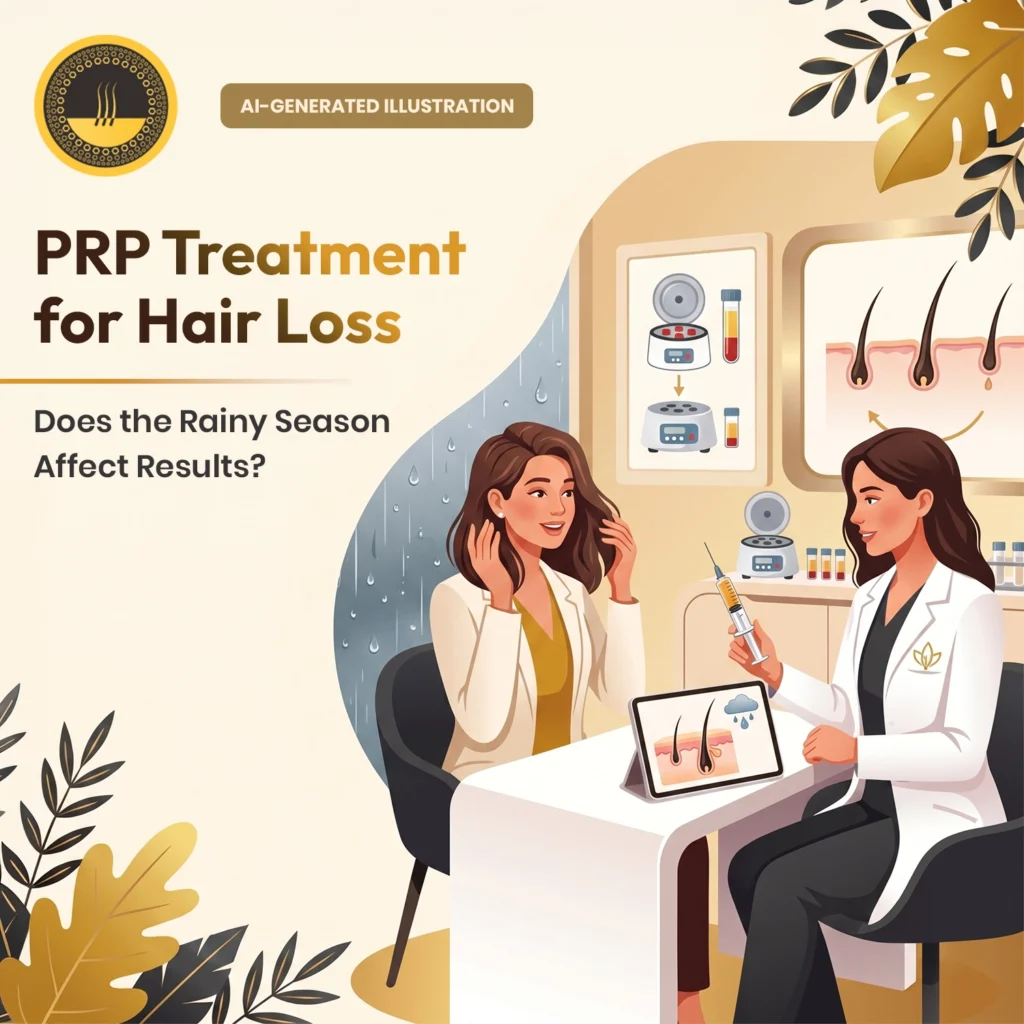
PRP therapy involves collecting a sample of a person’s blood and processing it to produce plasma with a concentrated platelet component.
Platelets contain growth factors and other signalling molecules involved in tissue repair. Researchers are investigating how these substances may influence hair follicles and the hair-growth cycle in certain conditions.
A typical PRP procedure involves:
The preparation methods and treatment protocols can vary. PRP is a medical procedure, and its suitability should be assessed before treatment.
There is currently no established evidence that PRP produces better results during the rainy season than during other times of the year.
PRP may be considered for selected forms of hair loss, particularly certain cases of androgenetic alopecia, also known as pattern hair loss. Research suggests that some patients may experience improvements in hair density or other hair-growth measures, but study results vary.
PRP should not be assumed to treat every type of hair shedding. For example, temporary shedding related to illness, nutritional deficiencies or another underlying trigger may require a different management approach.
The key consideration is the diagnosis, not the season. A clinician should assess the cause of hair loss before recommending PRP.
PRP may be discussed with some people experiencing:
It is not automatically suitable for every person with seasonal hair fall, stress-related shedding, a scalp infection or unexplained hair loss.
A clinician may review the duration and pattern of shedding, medical history, current medications, scalp condition and family history. Examination and selected investigations may be appropriate depending on the findings.
This assessment helps determine whether PRP, another treatment or further investigation is more suitable.
Research into PRP for hair loss has reported potential benefits in selected patients, but outcomes are variable.
Potential benefits
It uses a preparation derived from the patient’s own blood.
It is performed without hair-transplant surgery.
Some patients may experience improvements in hair density or thickness in appropriate hair-loss conditions.
It may be considered as part of an individualised hair-loss management plan.
Important limitations
Results are not guaranteed.
It does not address every cause of hair loss.
The number and timing of sessions vary according to the treatment protocol and clinical assessment.
Evidence and treatment methods are not uniform across all studies.
Multiple sessions and follow-up may be needed.
Temporary pain, tenderness, swelling, bruising or bleeding can occur at injection sites. Infection and other complications are possible, although appropriate clinical precautions help reduce risks.
A qualified practitioner should explain the expected benefits, uncertainties, costs, alternatives and potential risks before treatment.
Whether or not PRP is appropriate, general hair-care habits can help reduce avoidable damage.
1. Cleanse Your Scalp as Needed
Use a shampoo suited to your scalp and hair type. Washing frequency depends on oiliness, sweating, hair texture and any underlying scalp condition.
If you have persistent dandruff or itching, seek advice about suitable treatment instead of repeatedly switching products.
2. Handle Wet Hair Gently
Wet hair can be more vulnerable to mechanical damage. Gently remove excess water with a soft towel and avoid aggressive rubbing, forceful brushing or tight hairstyles while the hair is wet.
3. Maintain Balanced Nutrition
A balanced diet with adequate protein and a variety of nutrient-rich foods supports general health. If a nutritional deficiency is suspected, a healthcare professional can determine whether testing or supplementation is appropriate.
Avoid taking high-dose supplements without a clear indication.
4. Address Persistent Scalp Symptoms
If you experience persistent itching, redness, significant scaling, pain or patches of hair loss, seek professional assessment. Scalp conditions may need specific treatment before other hair-restoration procedures are considered.
5. Follow Procedure-Specific Instructions
If you undergo PRP, follow the instructions provided by the treating practitioner regarding scalp care, activities and follow-up. Recommendations may differ depending on the procedure and individual circumstances.
Hair-loss evaluation usually begins with a medical history and examination of the scalp and hair. A clinician may ask about the onset of shedding, family history, recent illness, stress, dietary changes and medication use.
Depending on the symptoms, further investigations may be needed to identify contributing factors such as a nutritional deficiency or an underlying medical condition.
The treatment plan should follow the assessment. Options may include treating a scalp condition, addressing a confirmed deficiency, medical management or discussing procedures such as PRP when appropriate.
Hair transplantation may be considered for selected forms of established hair loss, but it is not generally the first response to temporary shedding.
PRP therapy is being used and studied for selected forms of hair loss, but there is no established evidence that it works better during the monsoon. Its potential benefits depend on the underlying diagnosis, individual factors and treatment protocol.
If you notice persistent shedding, visible thinning or patches of hair loss, consider professional evaluation before choosing a procedure. Understanding the cause of hair loss helps guide a more appropriate approach than selecting treatment based on the season alone.
For additional educational information about hair-loss conditions and treatment options, consult reliable dermatology resources or educational material available on a dermatology clinic’s website.
Book a consultation today and take the first step toward healthier skin and hair.
PRP may benefit selected forms of hair loss, particularly certain cases of pattern hair loss. It is not a proven treatment for every cause of seasonal shedding, and suitability depends on the diagnosis.
There is no established evidence that PRP is more effective during monsoon. The underlying type of hair loss and the individual's clinical circumstances are more important considerations.
The number and timing of sessions vary according to the protocol, diagnosis and individual response. A qualified practitioner should explain the proposed schedule and follow-up plan.
No procedure is completely risk-free. PRP injections can cause temporary pain, tenderness, swelling, bruising or bleeding, and other complications are possible. Discuss the risks and expected benefits with the treating practitioner.
The content is for general informational purposes only, is not a substitute for professional medical advice, diagnosis, or treatment, and readers should consult a qualified healthcare professional about individual concerns.
Regain Skin Clinic And Hair Transplant Center,
Wakad, Pune
Get a Free Quote
Copyright © 2026 regainhairandskin.in, design & developed by Codigix