
G11074 – Cosmetologist
Summer in Pune often brings high temperatures, humidity, increased sweating, and prolonged sun exposure. These environmental changes can affect skin health and contribute to concerns such as tanning, acne, sunburn, pigmentation, and heat rashes.
During warmer months, changes in oil production, moisture levels, and skin sensitivity may also make existing skin conditions more noticeable.
Understanding common summer skin problems and knowing when to seek professional advice can help prevent complications. Individuals searching for a dermatologist clinic in Wakad, Pune, should understand the available treatment options and the importance of choosing skincare according to their skin type and medical needs.
Hot and humid weather can influence the skin in several ways:
These effects vary between individuals depending on skin type, lifestyle, outdoor exposure, and existing medical conditions.
1. Sun Tanning and Pigmentation
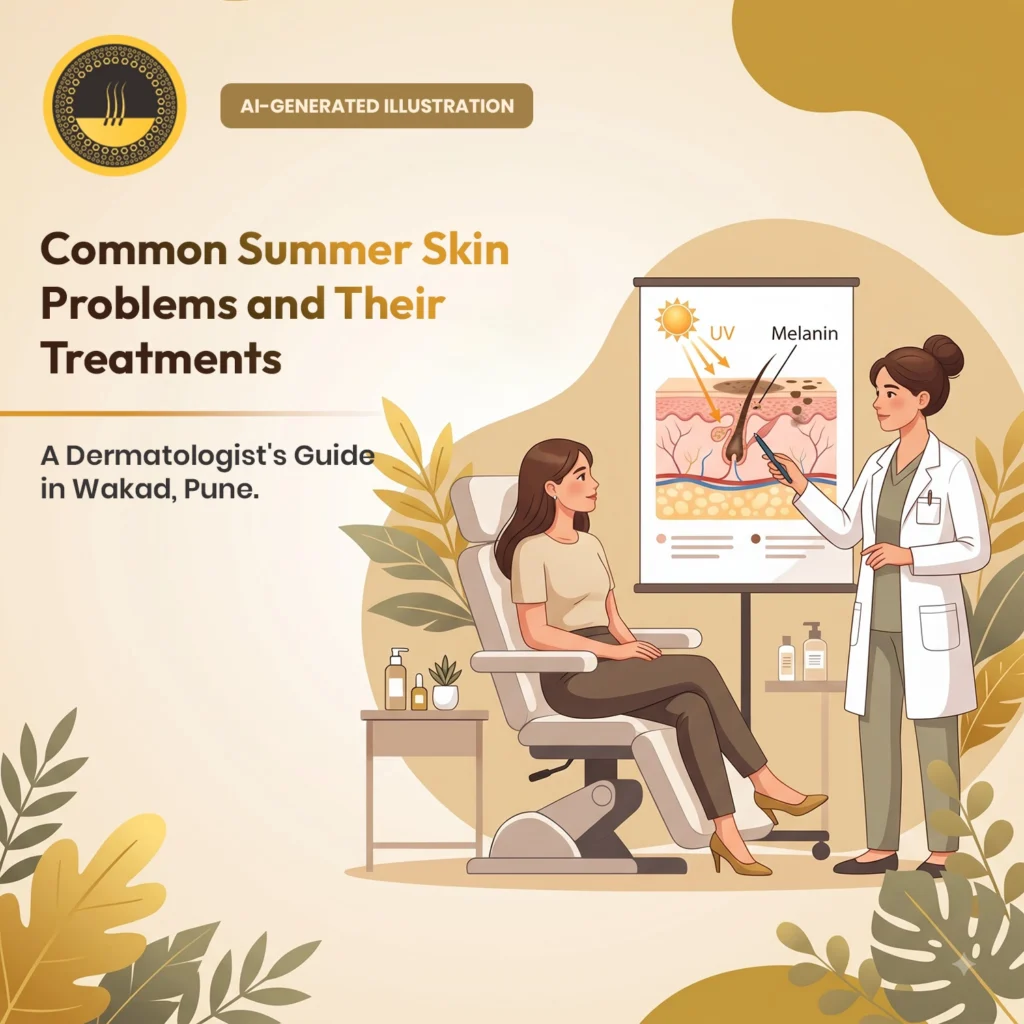
Prolonged exposure to ultraviolet (UV) radiation can increase melanin production, resulting in tanning and uneven skin tone. Repeated sun exposure may also worsen existing pigmentation, including melasma and dark spots.
Possible treatment approaches:
Broad-spectrum sunscreen with SPF 30 or higher.
Dermatologist-recommended topical treatments for pigmentation.
Chemical peels in selected cases.
Appropriate laser treatments for specific pigmentation conditions.
Treatment depends on the type and depth of pigmentation. Some procedures may worsen pigmentation if performed on unsuitable skin or without proper precautions.
Prevention tips:
Apply sunscreen before going outdoors.
Reapply sunscreen approximately every two hours when outdoors and after swimming or excessive sweating.
Wear protective clothing and sunglasses.
Prefer shade during peak sunlight hours.
2. Acne and Excessively Oily Skin
Heat and humidity can increase sweating and make oily skin feel more uncomfortable. Sweat, friction, and unsuitable skincare products may contribute to acne breakouts.
Common symptoms include blackheads, whiteheads, inflamed pimples, and occasional painful acne lesions.
Possible treatment approaches:
Topical acne medications such as retinoids or benzoyl peroxide, when appropriate.
Medicated cleansers.
Prescription treatments for moderate or severe acne.
Chemical peels in selected cases.
Individualised skincare recommendations.
Repeated breakouts, painful acne, or acne scarring should be evaluated by a dermatologist rather than treated with random over-the-counter products.
3. Sunburn and Skin Irritation
Sunburn occurs when the skin receives excessive UV radiation. It may cause redness, tenderness, warmth, swelling, and sometimes blistering.
Mild sunburn can often be managed with appropriate home care.
Recommended care includes:
Moving away from direct sunlight.
Applying cool, damp compresses.
Using a gentle moisturiser.
Drinking sufficient fluids.
Avoiding exfoliation and irritating skincare products.
Severe blistering, fever, dizziness, or significant pain requires medical evaluation. Blisters should not be deliberately popped.
A dermatologist can assess more serious reactions and recommend appropriate treatment.
4. Dehydrated and Dull Skin
Hot weather, excessive sweating, and inadequate fluid intake may contribute to dehydration. Frequent washing and harsh skincare products can also disrupt the skin barrier.
Possible symptoms include tightness, dryness, rough texture, and increased sensitivity.
Possible treatment approaches:
Gentle cleansing.
Moisturisers containing ingredients such as ceramides, glycerin, or hyaluronic acid.
Appropriate hydration.
Avoiding excessive exfoliation.
Professional assessment if dryness or irritation persists.
Hydration-based cosmetic procedures may be considered for selected individuals, but they are not necessary for everyone.
5. Heat Rashes and Skin Allergies
Heat rash, also known as miliaria, develops when sweat ducts become blocked, trapping sweat beneath the skin.
It commonly appears as small red bumps or itchy spots, particularly around the neck, chest, back, and skin folds.
Management may include:
Staying in cool and well-ventilated surroundings.
Wearing loose, breathable clothing.
Keeping the affected area clean and dry.
Avoiding heavy creams that may block sweat ducts.
Using dermatologist-recommended medication when necessary.
Not every summer rash is a heat rash. Persistent itching, spreading redness, swelling, or recurring eruptions may indicate another skin condition that requires diagnosis.
Depending on the skin condition, a dermatologist may recommend different treatment options.
Chemical Peels
Chemical peels use selected exfoliating agents to improve certain types of acne, pigmentation, and uneven skin texture.
The peel strength and suitability depend on skin type and the condition being treated. Sun protection is particularly important after treatment.
Laser Treatments
Certain laser procedures may be considered for pigmentation, selected acne scars, and other skin concerns.
Laser selection requires assessment of skin tone, pigmentation type, and the risk of post-inflammatory pigmentation.
Hydration-Based Skin Treatments
Professional hydration treatments may help improve temporary skin dryness and appearance. Their suitability depends on individual skin sensitivity and existing skin conditions.
Medical Skincare
Prescription creams, topical medications, and suitable skincare products may be recommended for acne, pigmentation, and inflammatory skin conditions.
Not every skin concern requires an in-clinic procedure. In many cases, appropriate medical skincare and sun protection are sufficient.
Essential Summer Skincare Tips
Maintaining a simple and consistent skincare routine can help protect the skin during hot weather.
Morning routine:
Cleanse with a gentle face wash.
Apply a suitable moisturiser.
Use broad-spectrum SPF 30 or higher sunscreen.
During the day:
Reapply sunscreen when required.
Stay hydrated.
Avoid unnecessary direct sun exposure.
Cleanse gently after excessive sweating.
Night routine:
Remove sunscreen and makeup.
Use a gentle cleanser.
Apply a suitable moisturiser.
Use prescribed skincare products as directed.
Avoid introducing several new active skincare ingredients at the same time, particularly if your skin is sensitive.
Professional evaluation may be helpful if you experience:
Early assessment can help identify the underlying condition and determine an appropriate treatment approach.
Individuals looking for a dermatologist clinic in Wakad, Pune, can consider a consultation at Regain Skin Clinic and Hair Transplant Center for assessment of skin and hair concerns.
Summer can aggravate several skin concerns, including tanning, acne, pigmentation, dehydration, and heat rashes. Understanding these conditions and following appropriate skincare practices can help maintain skin health during warmer months.
Daily sun protection, gentle cleansing, suitable moisturisation, and adequate hydration form the foundation of summer skincare.
For persistent or recurring skin problems, consulting a qualified dermatologist can help identify the cause and determine suitable treatment options. Choosing treatments according to individual skin requirements is more important than following seasonal skincare trends.
Book a consultation today and take the first step toward healthier skin and hair.
Common summer skin concerns include tanning, sunburn, acne, oily skin, pigmentation, dehydration, heat rashes, and skin irritation. High temperatures, humidity, sweating, and UV exposure can contribute to these problems.
A broad-spectrum sunscreen with SPF 30 or higher is generally recommended. Choose a formulation suitable for your skin type and reapply approximately every two hours when outdoors, or after swimming and excessive sweating.
Some chemical peels and laser treatments can be performed during summer, depending on the skin condition, treatment type, and individual skin tone. However, sun exposure, pigmentation risk, and post-treatment care must be considered before proceeding.
Consult a dermatologist if you experience persistent acne, worsening pigmentation, recurring rashes, severe sunburn, unusual skin irritation, or symptoms that do not improve with basic skincare. A professional assessment helps identify the cause and guide treatment.
Get a Free Quote
Copyright © 2026 regainhairandskin.in, design & developed by Codigix