
G11074 – Cosmetologist
Hair thinning often develops gradually. You may notice more hair on your pillow or in the shower, a widening parting, a receding hairline, or increased visibility of the scalp. These changes can be concerning, especially when the cause is unclear.
Hair thinning can occur for several reasons, including hereditary factors, hormonal changes, nutritional deficiencies, illness, stress and scalp conditions. Because these causes can differ considerably, the same treatment may not be appropriate for everyone.
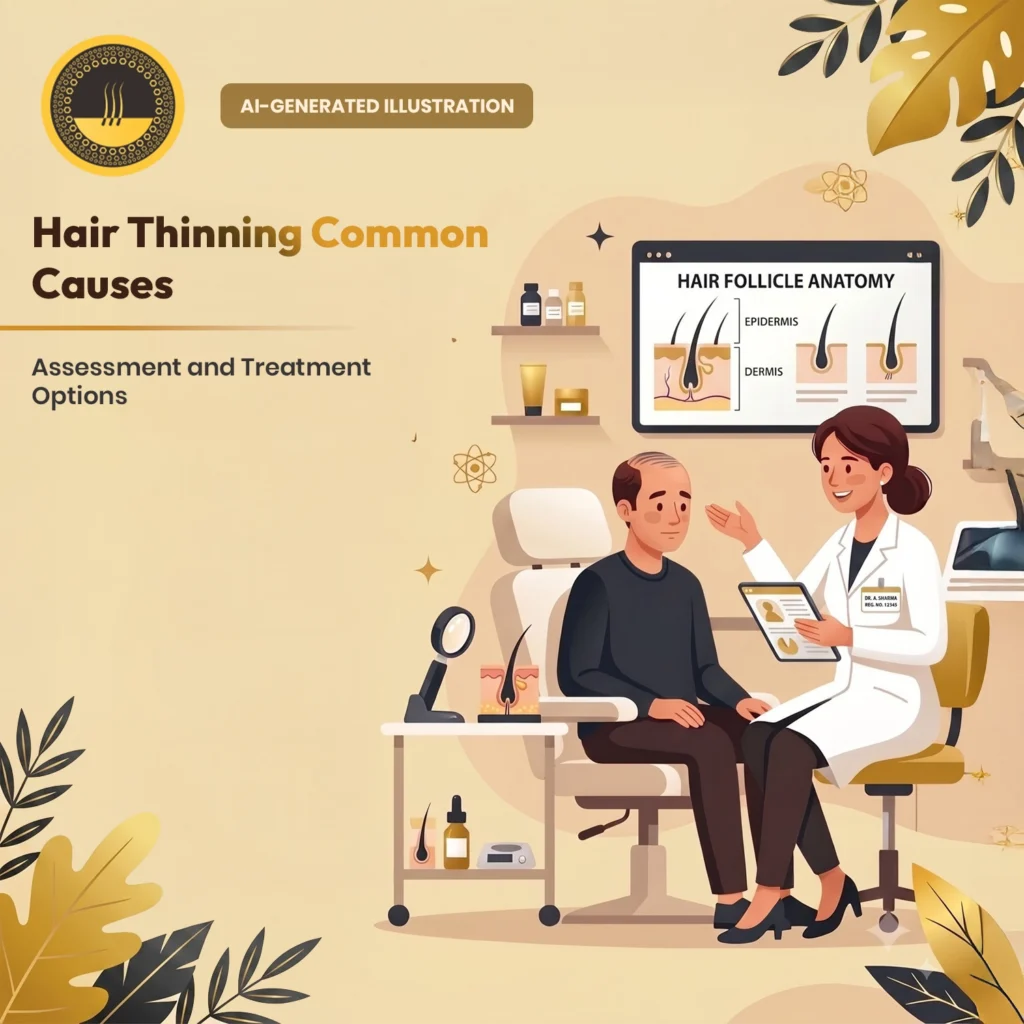
Understanding why hair loss is happening is an important first step towards managing it. A clinical assessment can help distinguish between temporary shedding, progressive hair loss and conditions that may require further investigation.
Hereditary Pattern Hair Loss
Hereditary pattern hair loss is a common cause of gradual thinning. It may affect the temples, crown or hairline in men, while women may notice thinning around the central parting. The pattern and progression vary between individuals.
Genetic factors can influence how hair follicles respond to hormones over time. Although this type of hair loss may progress gradually, appropriate management can sometimes help slow its progression.
Stress, Illness and Temporary Hair Shedding
Significant physical or emotional stress can affect the hair growth cycle. Some people experience increased shedding following a fever, illness, surgery, substantial weight loss or major dietary changes.
This type of shedding may become noticeable after the triggering event rather than immediately. Recovery depends on the underlying cause, and hair density may take time to improve.
Nutritional and Hormonal Factors
Inadequate dietary intake and certain nutritional deficiencies may contribute to hair loss. Hormonal changes and some medical conditions can also affect normal hair growth.
However, hair thinning does not automatically indicate a nutritional deficiency or hormonal imbalance. The cause should be evaluated rather than assumed, and supplements should not be taken indiscriminately.
Scalp Conditions and Other Factors
Inflammation, infections and other scalp conditions may contribute to shedding or hair loss. Certain medications can also affect hair growth in some individuals.
Sudden hair loss, distinct bald patches, scalp pain, marked itching or visible inflammation may indicate a condition that requires medical evaluation.
The pattern, duration and severity of hair loss can provide useful information, but appearance alone may not establish the cause.
During an assessment, a qualified healthcare professional may ask when the shedding began, whether it is progressing, whether there is a family history of hair loss, and whether there have been recent changes in health, diet, weight or medication.
The scalp and hair distribution may also be examined. Depending on the findings, further investigations may be considered to assess possible underlying causes.
Some individuals experience more than one contributing factor. For example, hereditary hair loss and temporary shedding can occur together. Identifying these factors helps inform decisions about appropriate management.
Treatment depends on the underlying diagnosis, the extent of hair loss and the individual’s circumstances. There is no single treatment that works for every type of thinning.
Depending on the cause, management may involve medically appropriate topical or oral treatments, addressing an identified nutritional deficiency, treating an underlying scalp condition or considering selected procedures.
Any medication should be discussed with a qualified healthcare professional because suitability, potential side effects and precautions vary.
Platelet-Rich Plasma (PRP) Therapy
Platelet-rich plasma, commonly called PRP, is a procedure in which a portion of a person’s blood is processed to concentrate platelets. The prepared material is then administered to selected areas of the scalp.
PRP has been studied for certain types of hair loss, particularly hereditary pattern hair loss. However, research findings and treatment protocols vary, and the degree of benefit is not predictable for every individual.
PRP is not suitable for all causes of hair thinning. Its potential benefits, limitations, risks and costs should be considered before it is chosen.
Hair Restoration Procedures
Hair restoration procedures may be considered in selected cases, depending on the diagnosis, the availability of suitable donor hair and the individual’s overall circumstances. They are not necessary for everyone experiencing hair loss.
The appropriate approach depends on the condition being treated. A procedure should not be selected solely because hair thinning is visible or because a particular treatment is widely advertised.
Hair growth follows a natural cycle, so changes in shedding and density may take time to become noticeable. The timeline varies according to the underlying condition, the treatment used and the individual’s response.
Some treatments require ongoing use to maintain their effects, while others may involve repeated sessions or follow-up assessments. In progressive hair loss, continued management may be necessary.
A responsible treatment discussion should include realistic expectations, potential adverse effects, likely timelines and the possibility that improvement may be limited. No treatment can guarantee a particular degree of hair regrowth.
Consider seeking medical advice if hair shedding persists, hair density is decreasing, the scalp is becoming more visible or the hairline is changing noticeably.
Sudden hair loss, distinct bald patches, scalp discomfort or signs of inflammation also warrant assessment. These symptoms can have different causes, and early evaluation may help identify an underlying condition.
Avoid relying solely on unverified online remedies or supplements. Hair loss can be associated with several medical and non-medical factors, so understanding the cause is more useful than choosing a treatment based on symptoms alone.
Hair thinning can affect confidence and emotional well-being. It is understandable to want a quick solution, but a careful assessment is often more useful than starting multiple products or procedures without a clear understanding of the cause.
At Regain Skin Clinic and Hair Transplant Centre in Wakad, Pune, the clinic’s website may be consulted for further general information about hair and scalp health. Educational information can help explain available options, but individual treatment decisions require appropriate professional assessment.
The central principle is simple: hair thinning has multiple possible causes, and effective management depends on identifying the factors involved and setting realistic expectations.
Book a consultation today and take the first step toward healthier skin and hair.
Consider seeking medical advice if shedding persists, hair density decreases, the scalp becomes more visible, or bald patches or scalp symptoms develop.
No. Hereditary factors are one possible cause. Illness, stress, nutritional deficiencies, hormonal changes, medications and scalp conditions can also contribute.
PRP may help some individuals with selected types of hair loss, but the evidence and outcomes vary. Its suitability depends on the underlying condition and individual circumstances.
No. Management depends on the cause and severity. Some cases may improve as a temporary trigger resolves, while others may require ongoing management or further investigation.
Healthcare Disclaimer: The content is for general informational purposes only, is not a substitute for professional medical advice, diagnosis, or treatment, and readers should consult a qualified healthcare professional about individual concerns.
Get a Free Quote
Copyright © 2026 regainhairandskin.in, design & developed by Codigix