
G11074 – Cosmetologist
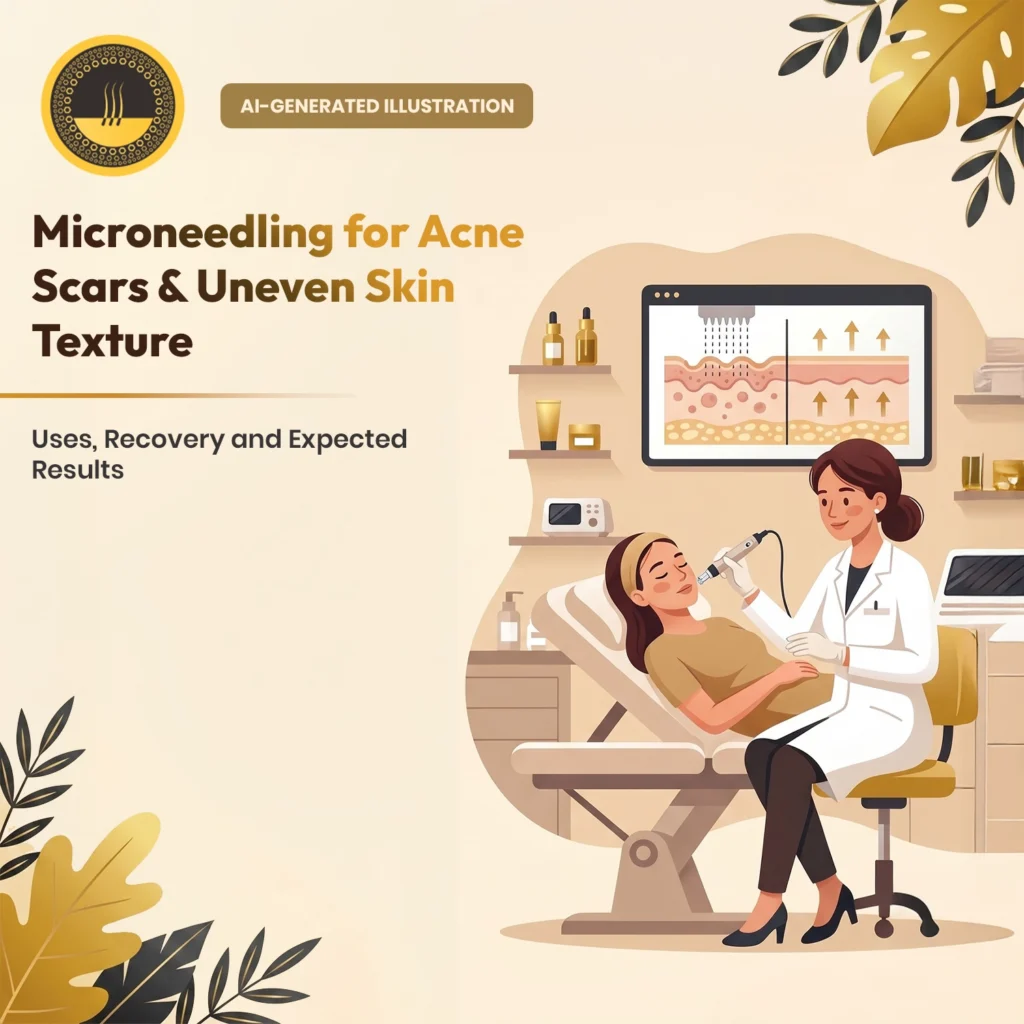
Microneedling is a minimally invasive skin procedure that uses fine needles to create controlled, tiny punctures in the skin. These micro-injuries activate the skin’s natural wound-healing response and may stimulate collagen production, which plays an important role in maintaining skin structure and firmness.
The procedure is used to address certain skin-texture concerns, including some types of acne scars, uneven skin texture and fine lines. Its effectiveness depends on the concern being treated, the characteristics of the skin and the individual’s response to the procedure.
Although microneedling is often discussed as a cosmetic treatment, it is still a procedure that requires appropriate assessment, hygienic technique and an understanding of its potential risks. Not everyone is a suitable candidate, and results can vary.
Acne scars can remain long after active acne has settled. They develop when inflammation associated with acne affects the skin’s normal healing process. Depending on the extent and nature of the damage, scars may appear as depressions, uneven areas or changes in the skin’s surface.
Microneedling may help improve the appearance of certain depressed acne scars by stimulating collagen remodeling. Over time, this process may make some scars less noticeable and improve overall skin texture.
However, acne scars are not all alike. Rolling scars, boxcar scars and deeper scars have different structural characteristics and may respond differently to treatment. Microneedling does not guarantee complete scar removal, and improvement may be gradual.
Active acne and ongoing skin inflammation are also important considerations. A proper skin assessment helps establish the nature of the concern and whether microneedling is appropriate.
Pores are normal openings in the skin that allow sebum, or natural skin oil, to reach the surface. Their visibility varies from person to person and may be influenced by genetics, oil production, sun exposure and changes in skin elasticity.
Microneedling may improve the surrounding skin texture and, in some individuals, make enlarged-looking pores less noticeable. However, it does not permanently remove pores or guarantee a visibly smoother complexion.
Pore appearance can have several contributing factors, so the most appropriate approach depends on the individual’s skin characteristics and concerns.
Uneven skin texture may result from previous acne, scarring, inflammation, sun damage or natural changes in the skin over time.
By stimulating the skin’s healing response, microneedling may support gradual improvements in certain textural irregularities. The extent of improvement depends on the underlying cause and severity of the concern.
It is also important to distinguish textural irregularities from pigmentation concerns. Dark spots and uneven skin tone may require a different assessment because changes in skin color do not necessarily respond to microneedling in the same way as depressed scars.
A realistic understanding of the concern is essential when discussing possible outcomes.
Microneedling may be considered for individuals concerned about certain acne scars, uneven skin texture, fine lines and other superficial textural changes.
Suitability cannot be determined from a person’s skin concern alone. Relevant factors may include skin type, existing skin conditions, medical history, previous procedures and the presence of active inflammation or infection.
Certain conditions may increase the risk of complications or require additional evaluation before the procedure is considered. These include active skin infections, inflamed acne, a tendency to develop abnormal scars and some medical conditions that affect healing.
The procedure should be performed by an appropriately qualified professional using suitable equipment and infection-control practices. At-home microneedling devices may carry risks, particularly when used incorrectly or at inappropriate depths.
The process varies depending on the device used and the individual’s skin concerns. The skin is assessed before treatment, and the procedure should be explained, including its limitations and possible adverse effects.
The practitioner may discuss the individual’s skin history, current skincare products, previous procedures and relevant medical conditions. These details help inform an assessment of suitability and potential risks.
After the procedure, the skin may appear red and feel sensitive, similar to a mild sunburn. Temporary swelling, dryness, irritation or peeling may also occur. The duration and intensity of these effects vary.
Infection, prolonged irritation, scarring and changes in pigmentation are possible complications. People with darker skin tones may be particularly concerned about post-inflammatory pigmentation, making appropriate assessment and technique important.
Following the aftercare instructions provided by the treating professional can help support recovery. These instructions may include guidance on gentle skincare, sun protection and avoiding products that could irritate the skin while it heals.
Microneedling does not produce its full effects immediately. The skin’s healing and collagen-remodeling processes take time, so any improvement may develop gradually.
Some people may notice changes in skin texture as the skin recovers, while improvements in acne scars can take longer and may require a series of treatments. The number and spacing of sessions depend on the individual’s skin, the concern being addressed and the response to treatment.
Results are not uniform. The depth of scarring, skin characteristics, healing response and other contributing factors can influence the outcome. Microneedling may improve the appearance of selected concerns, but complete correction should not be expected.
Microneedling is one of several procedures used to address certain skin-texture concerns. Its potential benefits should be considered alongside its limitations, recovery requirements and possible complications.
Online information can help readers understand the procedure, but it cannot establish whether a treatment is appropriate for a particular person. Individual skin concerns may have different causes and may require different approaches.
For further general information about skin health and aesthetic procedures, readers can explore the educational resources available on the Regain Skin Clinic and Hair Transplant Centre website.
Book a consultation today and take the first step toward healthier skin and hair.
No. Microneedling may improve the appearance of certain acne scars, but results vary, and complete scar removal cannot be guaranteed.
No. Pores are normal skin structures. Microneedling may make their appearance less noticeable in some individuals, but it does not permanently eliminate them.
No. Active infections, inflamed acne and certain skin or medical conditions may affect suitability. Individual assessment is important.
Temporary redness and skin sensitivity can occur after the procedure. Persistent or worsening symptoms should be assessed by an appropriate healthcare professional.
Healthcare Disclaimer: The content is for general informational purposes only, is not a substitute for professional medical advice, diagnosis, or treatment, and readers should consult a qualified healthcare professional about individual concerns.
Get a Free Quote
Copyright © 2026 regainhairandskin.in, design & developed by Codigix