
G11074 – Cosmetologist
Uneven skin tone, dark spots, and persistent patches of discoloration are common dermatological concerns. Pigmentation can develop due to several factors, including sun exposure, hormonal changes, acne-related inflammation, and other skin conditions. Identifying the underlying cause is an important first step in determining the most appropriate treatment.
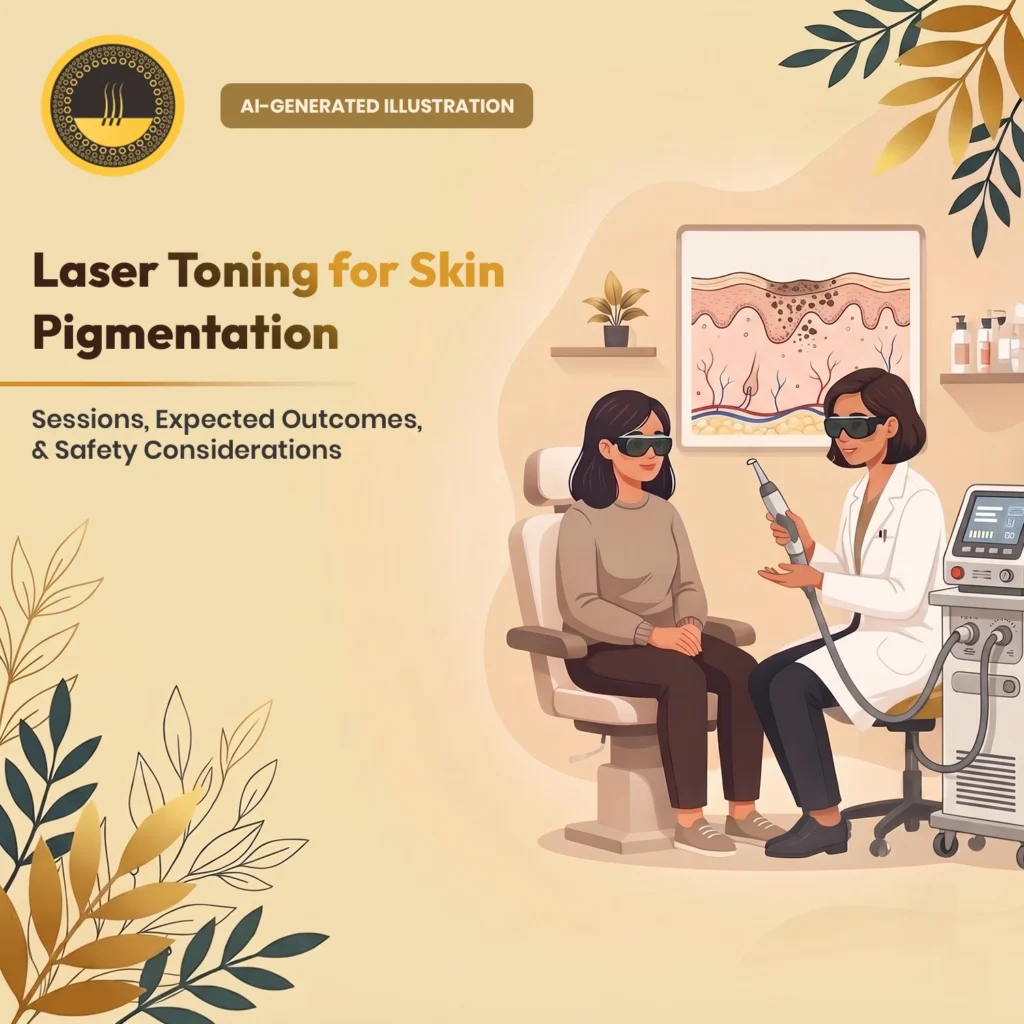
Laser toning is one of the procedures that may be considered for selected pigmentary conditions. However, its suitability, the number of sessions required, the degree of improvement, and the risk of recurrence vary from person to person.
This article provides an educational overview of laser toning for pigmentation, including treatment expectations, clinical suitability, potential risks, and aftercare considerations for individuals exploring pigmentation treatment in Wakad, Pune.
Laser toning is a non-ablative laser procedure commonly performed using a low-fluence, Q-switched Nd:YAG laser at a wavelength of 1064 nm. It delivers controlled energy to melanin-containing structures in the skin without intentionally removing the outer skin surface.
The treatment aims to reduce selected pigment deposits gradually. The clinical response depends on the type and depth of pigmentation, the laser parameters used, and individual skin characteristics.
Laser toning may be considered in selected cases involving:
Laser toning is not suitable for every type of pigmentation. Since several skin conditions can look similar, a clinical assessment by a qualified dermatologist is important before any laser procedure.
There is no fixed number of laser toning sessions that is appropriate for everyone. Treatment planning depends on the diagnosis, pigment depth, skin type, previous treatments, the device used, and the skin’s response to initial sessions.
Multiple sessions may be required, but the number and spacing should be determined individually. A dermatologist may adjust the treatment plan or recommend an alternative approach depending on the clinical response.
The following factors influence treatment planning:
Melasma, post-acne marks, and sunspots have different underlying mechanisms and may respond differently to treatment.
Some superficial pigmentary conditions may respond more readily than deeper or mixed pigmentation. Long-standing pigmentation may require a more comprehensive management plan.
People with darker skin phototypes, including many individuals with Indian skin, may have a higher risk of post-inflammatory hyperpigmentation after procedures that irritate or injure the skin. Conservative treatment parameters and appropriate follow-up are therefore important.
Previous use of topical retinoids, exfoliating acids, pigment-reducing medicines, chemical peels, or other procedures may influence skin sensitivity and treatment planning.
The skin should be reassessed before subsequent sessions. Treatment should not continue automatically if there is persistent irritation, worsening pigmentation, or another adverse response.
Laser toning should be considered only after the underlying pigmentary condition has been identified.
1. Melasma
Melasma commonly presents as brown or grey-brown patches on the cheeks, forehead, upper lip, or other areas of the face. It is associated with factors such as ultraviolet radiation, visible light, hormonal influences, and individual susceptibility.
Melasma is a chronic condition that can recur even after improvement. Treatment generally prioritises sun protection and appropriate medical therapies. Laser toning may be considered in selected resistant cases, but it is not usually the first-line treatment.
Potential complications include rebound pigmentation, post-inflammatory hyperpigmentation, and mottled hypopigmentation. Patients should understand these risks before proceeding.
2. Post-Inflammatory Hyperpigmentation (PIH)
Post-inflammatory hyperpigmentation develops after inflammation or injury to the skin. Common triggers include acne, eczema, dermatitis, and certain cosmetic procedures.
Management should focus on controlling the underlying condition and reducing further irritation. Depending on the diagnosis, topical treatments and sun protection may be appropriate before considering procedural options.
Laser treatment is not necessary for every case of PIH and may worsen pigmentation in susceptible individuals if poorly selected or performed.
3. Sunspots and Lentigines
Sunspots, also known as solar lentigines, are localised pigmented lesions associated with cumulative sun exposure. Some benign lesions may respond to pigment-targeting procedures, depending on their characteristics.
However, new, changing, asymmetric, irregular, or otherwise suspicious pigmented lesions must be assessed before cosmetic treatment. Clinical examination and dermatoscopy may be required to rule out lesions that need further investigation.
A consultation with a qualified dermatologist should take place before starting laser toning.
The evaluation may include:
A Wood’s lamp examination may assist in selected cases, but it does not reliably determine pigment depth in every patient. The diagnosis should be based on the overall clinical assessment.
Laser toning is generally considered a non-ablative procedure, and many patients can resume routine daily activities soon after treatment. However, the degree of redness, sensitivity, and recovery time varies.
Common temporary effects may include:
Mild redness.
A sensation of warmth or tingling.
Temporary skin sensitivity.
Mild perifollicular swelling in some cases.
These effects often settle within hours, although recovery may take longer in some individuals.
Less common but important complications include:
Blistering or burns.
Persistent irritation.
Post-inflammatory hyperpigmentation.
Rebound worsening of melasma.
Mottled or persistent hypopigmentation.
The likelihood of complications depends on the diagnosis, device, treatment parameters, operator expertise, and individual skin characteristics. Conservative settings reduce certain risks but do not eliminate them.
Following the treating clinician’s instructions is important for reducing irritation and supporting recovery.
General aftercare considerations include:
The timing for stopping or restarting retinoids, glycolic acid, salicylic acid, and other potentially irritating products should be individualised. There is no single schedule that is suitable for every patient or laser protocol.
If significant pain, blistering, worsening discolouration, or persistent redness develops, seek advice from the treating clinician.
Laser toning aims to produce gradual improvement rather than an immediate or guaranteed transformation. The degree of response varies according to the pigmentary condition, skin characteristics, and treatment approach.
Progress should be evaluated at appropriate follow-up visits. If pigmentation worsens or adverse effects occur, the treatment plan should be reassessed rather than continuing sessions automatically.
Yes. Pigmentation may recur, particularly in chronic conditions such as melasma. Sun exposure, visible light, hormonal influences, ongoing inflammation, and individual susceptibility may contribute to recurrence.
Long-term management may involve:
Laser toning should not be presented as a permanent cure for chronic pigmentary disorders.
Many people with Indian skin have Fitzpatrick skin phototypes III to V, although skin phototype varies considerably between individuals. Higher baseline melanin activity can increase susceptibility to post-inflammatory hyperpigmentation following skin irritation or injury.
To support safer treatment, a dermatologist may consider:
No single laser setting is appropriate for every patient. Treatment should be individualised, and alternative approaches should be considered when the risks outweigh the likely benefits.
When considering a laser procedure, patients should verify that:
A careful assessment and realistic expectations are important parts of responsible pigmentation management.
Book a consultation today and take the first step toward healthier skin and hair.
Many patients experience mild tingling, warmth, or a snapping sensation during treatment. The degree of discomfort varies. Whether cooling or another comfort measure is needed depends on the procedure and individual circumstances.
Many people can resume routine activities soon after treatment. However, the skin may be temporarily sensitive or red. Strenuous exercise, saunas, steam rooms, and other heat-intensive activities may need to be avoided temporarily, according to the treating clinician's advice.
No. Laser toning does not guarantee permanent clearance. Some lesions may improve substantially, but conditions such as melasma can recur. Long-term sun protection and appropriate maintenance treatment may be necessary.
The timing depends on the laser procedure and the skin's recovery. Retinoids, exfoliating acids, and other potentially irritating ingredients may need to be paused temporarily. They should be restarted according to the treating clinician's instructions once the skin has recovered sufficiently.
No. The cause of the pigmentation should be established before treatment. Some conditions respond better to topical therapies or other approaches, while suspicious pigmented lesions require medical evaluation before cosmetic procedures.
Clinical disclaimer: This article is intended for general educational and public awareness purposes. It does not replace an individual medical consultation or constitute a diagnosis or treatment recommendation. The suitability of laser toning, treatment parameters, session intervals, and aftercare must be determined by an appropriately qualified medical practitioner following clinical assessment. Outcomes and risks vary between individuals.
Get a Free Quote
Copyright © 2026 regainhairandskin.in, design & developed by Codigix