
G11074 – Cosmetologist
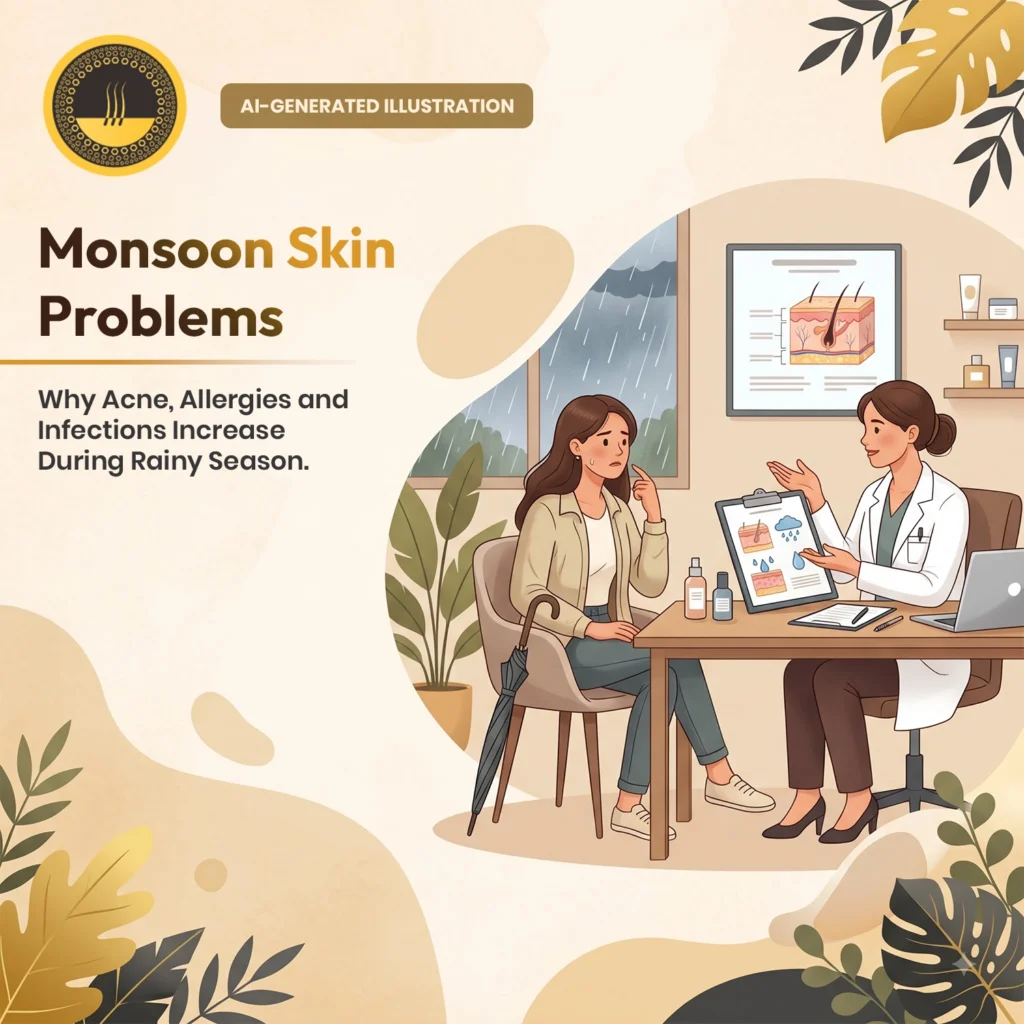
The monsoon season brings relief from summer heat, but increased humidity, sweating and prolonged moisture exposure can affect skin health. During this period, some people experience acne breakouts, skin allergies, fungal infections, itching and different types of rashes.
Changes in weather, damp clothing and unsuitable skincare products may aggravate existing skin conditions. People with oily, sensitive or acne-prone skin may notice changes in their skin during the rainy season.
Understanding the causes of these concerns and following appropriate skincare practices can help maintain skin health. Individuals experiencing persistent symptoms can consider consulting a qualified skin specialist in Wakad for proper evaluation.
Warm and humid weather can increase sweating and moisture accumulation on the skin. These conditions may encourage fungal growth, contribute to irritation and aggravate certain existing skin conditions.
Common factors associated with monsoon skin problems include:
Not every monsoon-related skin concern is an infection. Allergies, eczema and other inflammatory conditions can produce similar symptoms.
1. Acne and Pimples
Humidity and sweating may aggravate acne in individuals who are already prone to breakouts. Excess sebum, dead skin cells and certain skincare products can contribute to blocked pores.
Common symptoms include:
Whiteheads and blackheads.
Inflamed pimples.
Painful breakouts.
Acne on the face, chest and back.
Skin care tips: Cleanse gently, avoid excessive scrubbing and choose non-comedogenic skincare products. Persistent or painful acne should be evaluated by a dermatologist to reduce the risk of scarring.
2. Skin Allergies and Irritation
During monsoon, sweat, friction, detergents, fabrics and certain skincare products may trigger skin irritation or allergic contact dermatitis.
Symptoms can include redness, itching, swelling, burning and small rashes.
Skin care tips: Avoid suspected irritants, wear breathable clothing and use gentle skincare products. Persistent or recurring rashes require medical evaluation to identify the underlying cause.
3. Fungal Skin Infections
Fungal infections are relatively common in warm, moist areas of the body. They may affect the feet, groin, underarms and skin folds.
Common symptoms include:
Persistent itching.
Red or circular patches.
Skin peeling.
Scaling and irritation.
Cracks between the toes.
Skin care tips: Keep moisture-prone areas dry, change damp clothes promptly and avoid sharing towels or footwear. Suspected fungal infections should be diagnosed before starting treatment.
4. Bacterial Skin Infections
Bacteria can enter the skin through minor cuts, scratches and insect bites. Certain infections may cause redness, swelling, tenderness, warmth and pus formation.
Skin care tips: Keep minor wounds clean and avoid scratching affected areas. Increasing pain, swelling or spreading redness should be assessed promptly.
Different skin conditions can have similar symptoms but may require different treatments. A dermatological examination helps identify the underlying problem.
Consulting a qualified skin specialist in Wakad may help with:
Accurate diagnosis: Identifying whether a skin concern is related to fungal infection, bacterial infection, allergy, acne or another condition.
Appropriate treatment: Selecting medicines and skincare products according to the diagnosis and severity of symptoms.
Prevention of complications: Early assessment may help reduce the risk of acne scarring, infection-related complications and recurring skin problems.
Personalized skincare guidance: Understanding suitable cleansing, moisturization, sun protection and hygiene practices for individual skin needs.
A simple and consistent skincare routine can help reduce irritation and support the skin barrier.
These practices can support skin health but cannot prevent every skin condition.
Some mild skin concerns may improve with appropriate basic care. However, professional evaluation is advisable if you experience:
Seek prompt medical attention if a rash is accompanied by fever, severe pain or rapidly spreading redness.
Using random creams, home remedies or over-the-counter products without identifying the cause of a skin problem may delay appropriate treatment.
For example, steroid-containing creams may temporarily reduce redness and itching but can worsen certain fungal infections or disguise their symptoms.
A proper dermatological assessment helps distinguish between conditions with similar appearances and guides appropriate treatment.
Monsoon weather can aggravate several skin concerns, including acne, allergic reactions, fungal infections and bacterial skin problems. Increased humidity, sweating and moisture accumulation are some of the contributing factors.
Maintaining personal hygiene, keeping the skin dry and using suitable skincare products can help manage everyday concerns. However, persistent, spreading or recurring symptoms should not be ignored.
People experiencing skin problems in Wakad, Hinjewadi, Tathawade, Punawale and nearby areas can seek consultation from a qualified dermatologist for appropriate diagnosis and treatment.
Book a consultation today and take the first step toward healthier skin and hair.
Increased humidity, sweating and moisture accumulation can aggravate acne, skin irritation and certain fungal infections during the rainy season.
No. Rashes can also result from allergies, eczema, heat rash and contact dermatitis. A dermatological examination helps identify the actual cause.
Keep your skin folds and feet dry, change damp clothes promptly, wear breathable fabrics and avoid sharing towels or footwear.
Consult a dermatologist if you experience persistent itching, recurring rashes, painful acne, skin swelling, spreading infections or symptoms that do not improve with basic care.
Healthcare Disclaimer: The content is for general informational purposes only, is not a substitute for professional medical advice, diagnosis, or treatment, and readers should consult a qualified healthcare professional about individual concerns.
Get a Free Quote
Copyright © 2026 regainhairandskin.in, design & developed by Codigix