
G11074 – BHMS, DCA(diploma in clinical aesthetics)
Acne may improve over time, but the scars, enlarged pores and uneven skin texture left behind can continue to affect skin appearance. Many people try different skincare products and home remedies to improve these concerns, but deeper acne scars may require dermatological treatment.
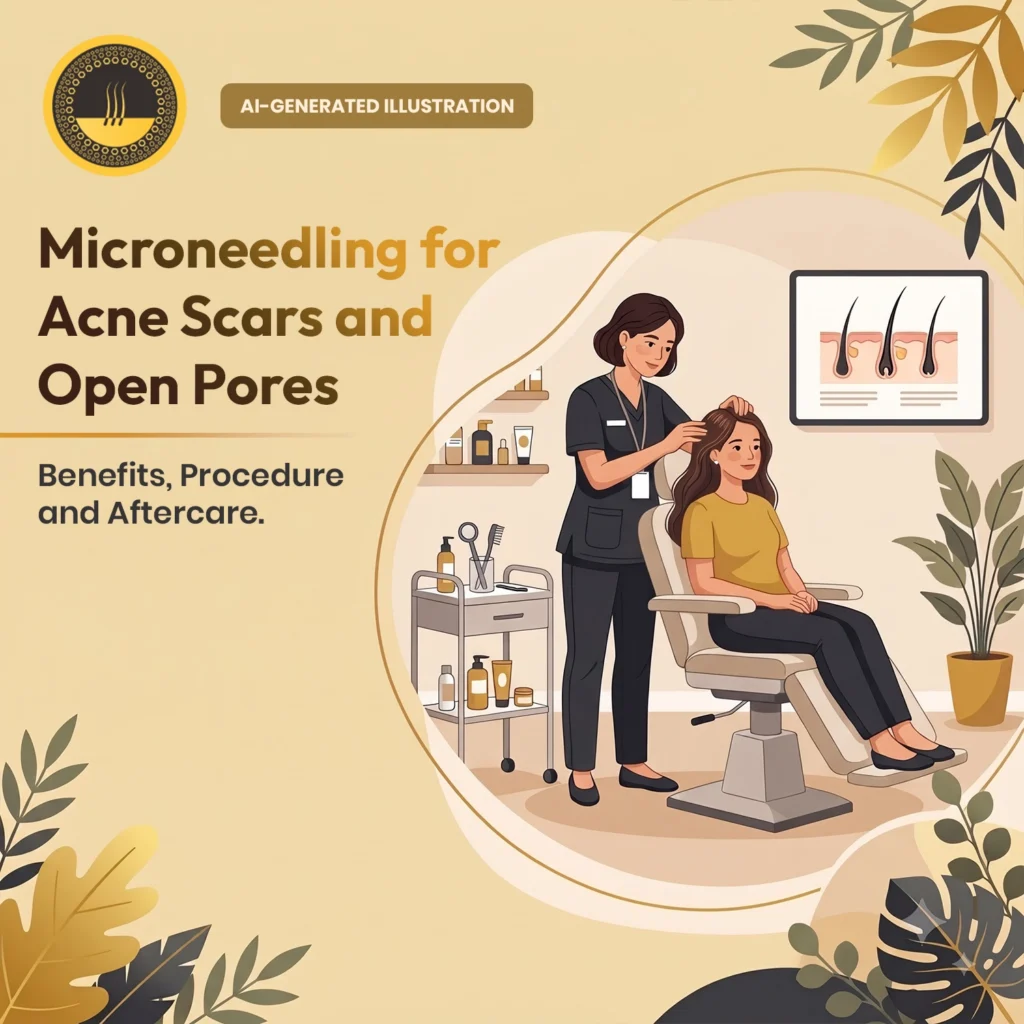
Microneedling is a minimally invasive dermatological procedure used to improve certain types of acne scars, uneven skin texture and fine lines. It works by creating controlled micro-injuries in the skin, stimulating the natural wound-healing process and collagen production.
People researching a Microneedling Clinic in Wakad may benefit from understanding how this procedure works, who may be suitable for it and what results can reasonably be expected.
Microneedling is a dermatological procedure performed using a device equipped with fine, sterile needles. These needles create controlled microscopic channels in the skin, triggering the body’s natural repair response.
This process stimulates collagen and elastin production, which are important proteins involved in maintaining skin structure and elasticity.
Microneedling may be considered for certain skin concerns, including:
The suitability of treatment depends on the individual’s skin condition, medical history and type of scarring.
Acne scars can develop when inflammation damages the deeper layers of the skin and affects normal collagen formation. This may result in depressed or uneven areas on the skin.
Microneedling stimulates the skin’s repair process and encourages collagen remodeling. Over time, this may improve the appearance of certain depressed acne scars and uneven skin texture.
Enlarged pores can be influenced by excess oil production, genetics, age and reduced skin elasticity. Microneedling may improve the surrounding skin texture and make pores appear less noticeable, but it cannot permanently close or eliminate pores.
Results generally develop gradually and may require multiple treatment sessions.
Microneedling may be considered for individuals experiencing:
However, microneedling is not suitable for everyone. Individuals with active acne breakouts, skin infections, open wounds, certain inflammatory skin conditions or a tendency to develop abnormal scars may need alternative treatments.
A dermatologist should assess the skin and medical history before recommending the procedure.
Microneedling requires appropriate equipment, needle-depth selection and infection-control measures.
Professional treatment allows the procedure to be adjusted according to the treatment area, skin condition and type of scarring.
Using home microneedling devices without appropriate guidance may cause skin irritation, infection, pigmentation changes or scarring.
A qualified dermatologist can assess whether microneedling is appropriate and explain its possible benefits, limitations and risks.
Most patients experience mild redness for a short period after treatment, which usually settles within a few days. Since collagen production continues gradually, skin improvements become more noticeable over the following weeks.
Your dermatologist may recommend:
Multiple sessions may be advised depending on the severity of acne scars and open pores.
Patients searching for a Microneedling clinic in Wakad often appreciate that the treatment requires minimal downtime while offering gradual, natural-looking skin improvement.
Although microneedling is generally considered a minimally invasive procedure, it can have side effects.
Possible complications include:
Microneedling may not improve every type of acne scar. Deep or tethered scars may require other dermatological procedures or a combination of treatments.
Not all acne marks are scars. Some are dark spots caused by post-inflammatory hyperpigmentation, while others involve changes in the skin’s texture.
A dermatologist can distinguish between these conditions and recommend appropriate management. Depending on the diagnosis, treatment options may include topical medications, chemical peels, microneedling or other scar-management procedures.
Individuals researching a Microneedling Clinic in Wakad should consider the importance of professional assessment, appropriate equipment and suitable infection-control practices before undergoing treatment.
Microneedling is a dermatological procedure that may help improve certain acne scars, uneven skin texture and the appearance of enlarged pores by stimulating collagen production.
However, its suitability and results depend on the individual’s skin condition and type of scarring. It does not permanently eliminate pores or guarantee complete acne scar removal.
A proper dermatological assessment helps determine whether microneedling or another treatment is appropriate for individual skin concerns.
Book a consultation today and take the first step toward healthier skin and hair.
Microneedling may improve certain depressed acne scars by stimulating collagen production and supporting skin remodeling. Results vary depending on scar type and severity.
No. Pores are natural skin structures and cannot be permanently closed. Microneedling may improve surrounding skin texture and make enlarged pores less noticeable.
The number of sessions depends on skin condition, scar severity and individual response. A dermatologist determines the treatment schedule after evaluating the skin.
Microneedling is generally avoided over active inflammatory acne, infected areas and certain irritated skin conditions. A dermatologist should assess the skin before treatment.
The content is for general informational purposes only, is not a substitute for professional medical advice, diagnosis, or treatment, and readers should consult a qualified healthcare professional about individual concerns.
Get a Free Quote
Copyright © 2026 regainhairandskin.in, design & developed by Codigix