G11074 – BHMS, DCA(diploma in clinical aesthetics)
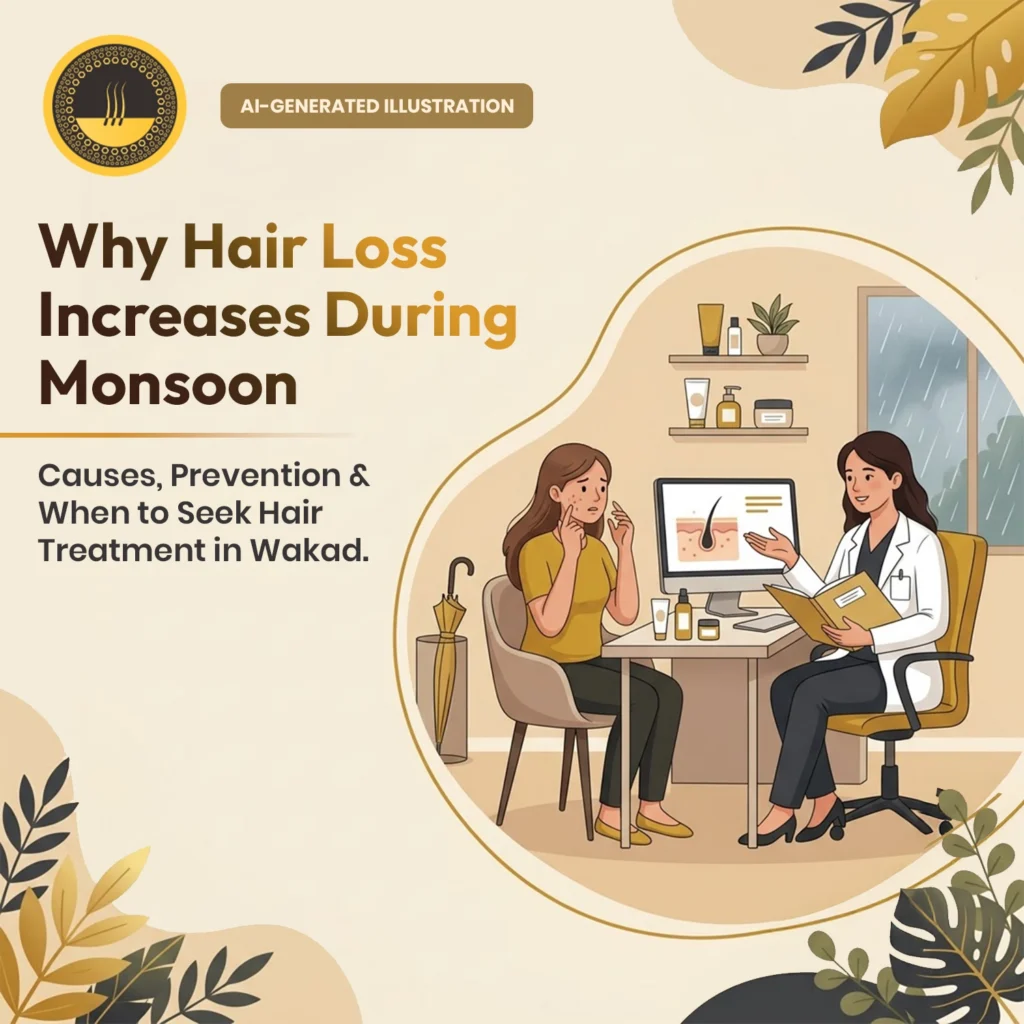
Hair fall can become more noticeable during the monsoon season. Increased humidity, sweating, scalp irritation and changes in hair care habits may contribute to hair-related concerns during rainy weather. Finding more hair on your pillow, comb or shower drain can be worrying, particularly when shedding continues for several weeks.
Losing approximately 50–100 hairs daily is generally considered normal, although individual hair shedding varies. A temporary increase may occur due to seasonal changes, but persistent or excessive hair loss requires proper evaluation.
Understanding the causes of monsoon hair fall, identifying associated scalp conditions and following appropriate hair care practices can help maintain scalp health. People experiencing persistent hair thinning can also seek information about suitable hair treatment options in Wakad and surrounding areas.
Several environmental, lifestyle and medical factors may contribute to increased hair shedding during the rainy season.
1. High Humidity and Excessive Sweating
High humidity can make the scalp feel oily and uncomfortable. Sweat, oil and product residue may accumulate on the scalp, particularly when hair is not washed regularly. This can contribute to irritation and discomfort, although humidity alone does not necessarily cause hair follicle damage.
What may help: Wash your hair according to your scalp’s needs and avoid excessive use of styling products.
2. Scalp Infections and Dandruff
Warm, humid conditions may aggravate certain scalp conditions, including dandruff and seborrhoeic dermatitis. Some people may also develop fungal scalp infections.
Symptoms can include itching, redness, scaling and discomfort. Certain inflammatory scalp conditions may contribute to hair shedding, while untreated scalp infections can sometimes cause more significant hair loss.
What may help: Maintain scalp hygiene, avoid sharing combs and seek medical evaluation for persistent itching, scaling or patchy hair loss.
3. Seasonal Hair Shedding
Some individuals notice changes in hair shedding during seasonal transitions. However, seasonal shedding is not the only explanation for increased hair fall.
A condition called telogen effluvium can cause temporary excessive shedding, often several weeks or months after a triggering event such as fever, illness, significant stress or nutritional deficiency.
What may help: Identify possible triggers and seek medical advice if excessive shedding continues.
4. Nutritional Deficiencies
Hair growth depends on adequate nutrition. Insufficient protein intake and deficiencies involving iron or certain vitamins and minerals may contribute to hair loss.
Restrictive diets, nutritional imbalances and certain medical conditions can affect the normal hair growth cycle.
What may help: Maintain a balanced diet containing adequate protein, vegetables, fruits and other nutrient-rich foods. Supplements should only be considered when medically indicated.
5. Stress and Lifestyle Changes
Physical and emotional stress, inadequate sleep, illness and hormonal changes can influence the hair growth cycle. Increased hair shedding may become noticeable after a stressful period rather than immediately.
What may help: Maintain regular sleep habits, follow a balanced diet and incorporate appropriate physical activity into your routine.
Occasional hair shedding is normal, but certain symptoms may indicate an underlying condition requiring evaluation.
Consider consulting a dermatologist if you notice:
Sudden patchy hair loss, scalp pain, inflammation or signs of infection should be assessed promptly.
If you are exploring hair treatment in Wakad, understanding the underlying cause should be the first step rather than selecting a treatment based only on visible symptoms.
Hair loss treatment depends on its cause, pattern, severity and the individual’s medical history. A dermatologist may examine the scalp, assess the hair loss pattern and recommend blood investigations when clinically indicated.
Common treatment approaches include:
Medical hair loss treatment: Depending on the diagnosis, prescribed topical or oral medications may be considered for conditions such as pattern hair loss.
PRP therapy: Platelet-rich plasma (PRP) involves using a preparation derived from the individual’s blood. It may be considered in selected cases of hair thinning, although treatment response varies and evidence differs according to the condition being treated.
Scalp condition management: Dandruff, seborrhoeic dermatitis and confirmed fungal infections require condition-specific treatment.
Hair transplant assessment: Hair transplantation may be considered for selected individuals with established pattern hair loss. Suitability depends on the cause, stability of hair loss and availability of donor hair.
Not every person experiencing monsoon hair fall requires advanced treatment. Appropriate diagnosis helps determine whether medication, scalp care, observation or another intervention is necessary.
Following consistent hair care habits can help maintain scalp hygiene and reduce avoidable hair damage.
These measures support general hair care but cannot prevent every type of hair loss.
People searching for hair treatment near me in Wakad should consider the importance of medical evaluation before starting treatment.
Hair loss can result from several conditions, including androgenetic alopecia, telogen effluvium, alopecia areata, nutritional deficiencies and scalp disorders. Since these conditions require different management approaches, a dermatologist’s assessment can help establish an appropriate treatment plan.
Treatment selection should be based on clinical findings, medical history and individual suitability rather than seasonal trends or unverified hair growth claims.
Increased hair shedding during the monsoon may be associated with humidity, scalp conditions, seasonal changes, nutritional deficiencies and stress. Although some forms of hair shedding are temporary, persistent thinning, patchy hair loss or scalp inflammation should not be ignored.
Maintaining scalp hygiene, following healthy hair care habits and addressing underlying medical conditions can support hair health. Individuals experiencing ongoing hair loss can seek a dermatological assessment to understand the cause and explore suitable hair treatment options in Wakad.
Book a consultation today and take the first step toward healthier skin and hair.
Some people notice increased hair shedding during seasonal transitions. However, persistent or excessive hair fall may have other causes, including nutritional deficiencies, stress or scalp conditions.
Humidity does not directly cause hair follicle damage in everyone. However, increased sweating, oiliness and scalp irritation may aggravate existing scalp conditions.
Treatment depends on the underlying cause. Options may include prescribed medications, scalp treatments and selected procedures such as PRP therapy. A dermatologist should determine suitability after evaluation.
Consult a dermatologist if hair shedding persists, visible thinning develops, bald patches appear or scalp symptoms such as itching, redness and scaling continue. Early evaluation can help identify the cause and guide appropriate treatment.
Regain Skin Clinic And Hair Transplant Center,
Wakad, Pune
The content is for general informational purposes only, is not a substitute for professional medical advice, diagnosis, or treatment, and readers should consult a qualified healthcare professional about individual concerns.
Get a Free Quote
Copyright © 2026 regainhairandskin.in, design & developed by Codigix